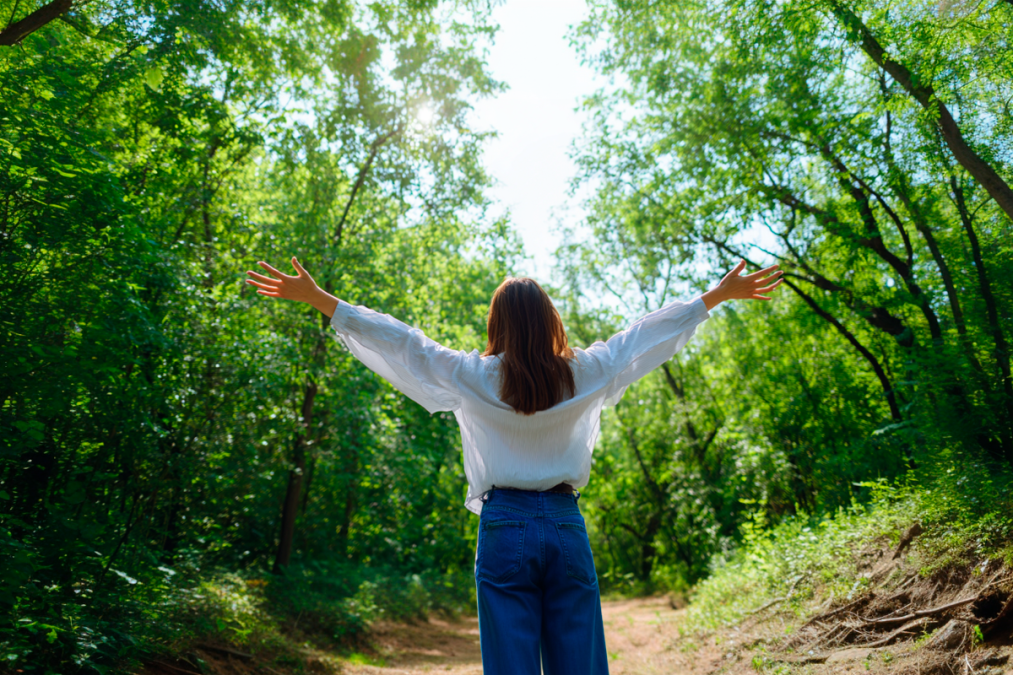
“The trees are like the lungs of a city. They absorb carbon dioxide, filter the polluting particles and produce the oxygen of the air,” says pathologist Gabriel Mendoza Castillo. Its assertion is clear: without green areas, the cities ill. And its inhabitants too.
In the trunk axis of Bolivia -La Paz, Cochabamba and Santa Cruz -that lack is not just a theory. It is a palpable reality. In these big cities, where the jungle is cement, trees fulfill vital functions that usually go unnoticed.
“They absorb rainwater for their roots and prevent floods such as landslides; they give shade regulating the temperature of the environment; and a detail that many forget: parks and gardens are not only landscapes, they are ecosystems that house birds and insects, in addition to being recreation points,” recalls Mendoza, also a teacher in the Medicine race in Unifranz.
A green deficit
International standards point out that, in cities, there must be between nine and 12 square meters of green area per inhabitant. This is the minimum necessary to maintain an acceptable urban quality of life. On the trunk axis of Bolivia, that goal is far from being fulfilled.
In La Paz, data from the municipal government, indicate that the total area of green areas of the municipality – public parks and gardens – reaches for three square meters per inhabitant. However, a report from the UMSA Institute of Ecology indicates that the most optimistic estimate of citizen vegetation is 2.42 square meters.
In Cochabamba, the situation is not encouraging either. The city has about 140 hectares of green areas, which gives an approximate relationship of a square meter of green area per inhabitant.
These figures indicate that, despite the speeches and some local efforts, the cities of the trunk axis are in severe deficit of green areas. They have between a third and tenth of the recommended minimum.
The impact on health when they are missing
Mendoza warns that “this deficit has negative impacts on physical and mental health, such as stress and anxiety for the noise of the city.”
In peace, pollution is not only noticeable, but documented. The loss of trees in paths, squares and avenues increases exposure to dust, smog and noise. In districts with zero natural shadows, walking in the sun becomes a load.
“Air quality is less, worsening diseases such as asthma, bronchitis and even raise the risk of heart infarction and brain spills,” he adds.
He points out that, with such a minimum green area, people use parks, walks, outdoor activities. Thus, sedentary lifestyle, overweight and obesity rates grow. In addition, respiratory and cardiovascular diseases find fertile ground when air does not find natural filters.
And not only that: the lack of trees and green spaces contributes to these cities suffering more with urban heat waves (heat islands), sudden floods when it rains and visual and emotional degradation of the daily environment.
The benefits of the parks are multiple and backed by science. For the mind, they are an escape valve. “It reduces stress and anxiety by having more contact with nature, it helps to mental rest especially on weekends,” says Mendoza.
For the body, they are natural and free gyms. Running, bicycle walking, playing or simply breathing fresh air are routines that strengthen the cardiovascular system, improve respiratory health and reinforce defenses. Even the doctor highlights, “they favor the fastest recovery of patients.”
Why do we remain so far from the standard?
Several reasons are intertwined. One of them is the messy growth of cities, which has to do with the expansion of urban spot, illegal settlements, lotations, constructions that occupy originally green spaces. In La Paz, for example, the pure pure forest lost about 7% of its surface between 2013 and 2018 due to illegal invasions, according to municipal data.
Another factors is the unequal distribution. Some districts have good proportions of green (pure pure forest or peripheral districts with natural forests), others almost nothing, such as the central districts that are dense, with few places and wide paths. This, the result of disorganized development.
The weak maintenance and little strategic afforestation is also causing. The trees that are planted do not always survive; The species are not always native or appropriate to the weather; The parks age, need renewal, care.
Green spaces: a public policy issue
It is not, then, simple places adorned with lawn, but of essential infrastructure for urban life. “That is why urban green spaces are essential public health places,” says Mendoza.
The final reflection is inevitable: protecting and multiplying green areas in cities is not an environmental whim, but an urgent need for public health. Because every tree that is talked, every park that is reduced, is also a less respite for the city and for those who inhabit it.