In the summer of 1990, when Relations between Spain and Cuba They had a tense because 18 Cubans took refuge in the Spanish embassy to leave the island, the residents of a neighborhood of Madrid launched an unusual proposal and asked the government of Fidel Castro political asylum because the City Council of the Spanish capital wanted to expropriate their houses.
On August 9, 1990, a delegation from the Madrid neighborhood of Cerro Belmonte, in the current Valdezarza neighborhood of Madrid, arrived in Havana to spend ten days on the island, invited by the Cuban president.
Two months before, the neighbors had begun to adopt pressure measures against the authorities of the Spanish capital, which tried to expropriate homes that they had built with their own hands.
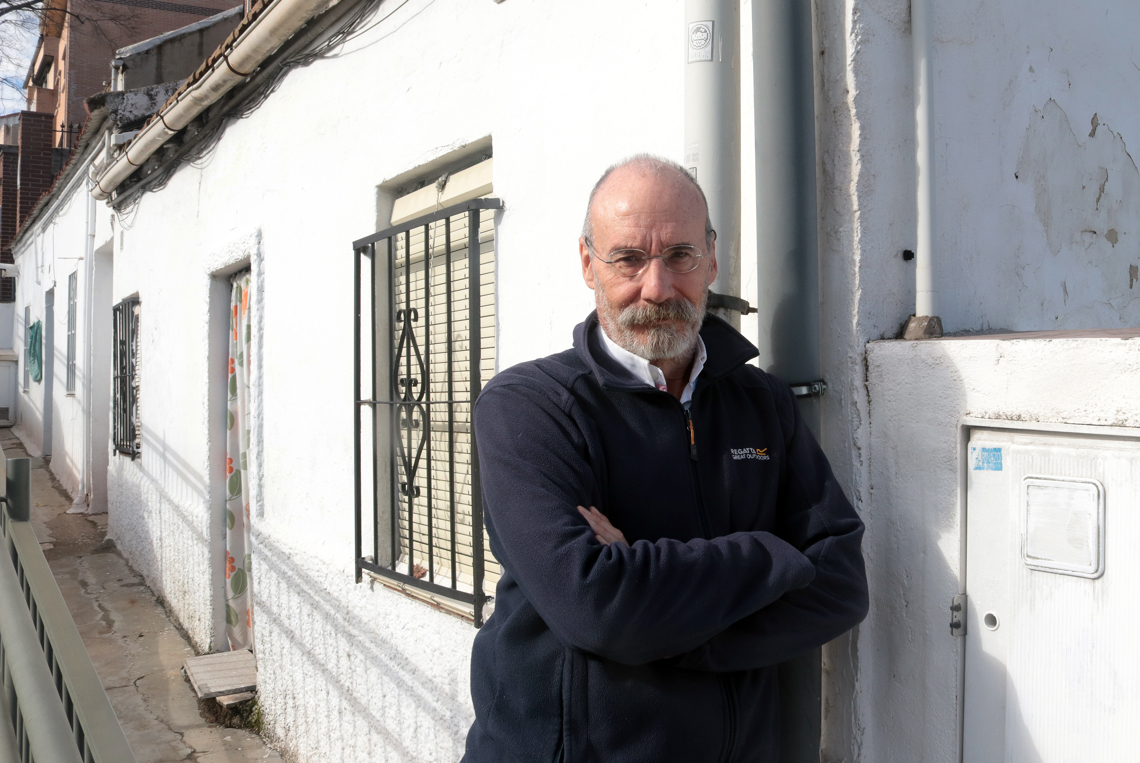
“The first success was to relate to Cuba,” he explains to EFE Alfonso Mateo-Sagasta, author of the book The kingdom of Belmonte. An urban utopiain which he tells how this neighborhood of the northern periphery of Madrid, built by emigrants from the countryside in the sixties, declared himself independent of the rest of Spain.
This story, which is currently “little known” by Madrid, had episodes as surprising as the visit of the neighbors to Cuba or a request for a recognition of independent state to the UN decolonization committee.
Cuban asylum
“These humble Spaniards have made an honor of Cuba with their confidence and demonstrate what the true Spanish people is,” Fidel Castro proclaimed in his speech on July 26, 1990 for the anniversary of the assault on the Moncada barracks during the Cuban revolution.
The Cuban leader echoed the asylum application that the inhabitants of Cerro Belmonte had presented at the embassy of his country in Madrid the day before and took the neighborhood conflict to the first page of the newspapers.
“They got out of hand because Castro was very funny, he came wonderfully and invited Cuba,” Mateo-Sagasta details, who believes that the Cuban government and the neighbors “used each other.”
The writer argues that the neighbors did not want to go to Cuba, but “outsourcing the conflict” with the Madrid City Council to get their claim to have media reach.
Even so, 24 people accepted Castro’s invitation and spent ten days to expenses paid in the Caribbean country, where they met with their president that “he was interested in the problems of the neighborhood,” they related to his return.
Only one of them decided to stay on the island: a 29 -year -old girl who was offered a scholarship of genetic biology at any university in the country.
The declaration of independence
After returning from Cuba, the inhabitants of Cerro Belmonte continued to lead with the refusal of the Madrid City Council to negotiate the conditions of expropriation of their homes.
Thus, at the beginning of September they fulfilled the threats if the Consistory did not meet their demands and, after celebrating a referendum, they declared independence. The self -proclaimed “Kingdom of Belmonte” was born.
The new “State” had a government, constitution, flag, hymn and currency program (which was worth between 3,000 and 5,018 pesetas, between 18 and 30 euros, price at which the City Council paid the square meter).
“It was a very funny independence, they had a wonderful imagination,” recalls Mateo-Sagasta.
Finally, the City Council was forced to reverse when some neighbors declared a hunger strike. “There were municipal elections and they were afraid that some old man was dying,” says the writer.
The expropriation file was paralyzed and each neighbor was allowed to negotiate the conditions for their land and, today, there are still houses of that time in Cerro Belmonte, Matthew-Sagasta says excitedly: “They triumphed.”
The neighbors did not forget the support provided by the Cuban government and, when the threat of expropriation was lifted, they sent a letter to Fidel Castro.
“We, that in difficult times we find affection and understanding in your great country, we cannot, for less, to remember you in the sweet hours of triumph,” they said in that letter.