Havana/During the early hours of this Saturday, the city of Baracoa, province of Guantánamo, was marked by a disaster that the community already knows by heart: floods. The intense rains that hit the first town founded in Cuba caused a new flood of the Miel River, whose overflowing waters invaded entire neighborhoods and left many residents fishing for belongings in the mud.
Citizen reports – photographs, videos and complaints – agree that the scenario is critical in at least six areas: streets 7 and 9 in the Bohorque neighborhood; streets 13 and 15 of Cabacú; the DAP Distribution; Two Paths; the Combined Meat area (Matadero); and the Vega Larga community. In Bohorque, according to local media, “the situation on Calle 7 continues to be very critical,” given the unstoppable advance of water entering homes.
“They are waiting for the worst to happen,” a resident denounces the inaction of the authorities. In Vega Larga the suspension bridge –the only access road to the community– was already in poor condition long before Hurricane Melissa hit, and the flooding made it unusable, leaving the site isolated. Requests for help, calls for late evacuation and criticism for the lack of a plan to protect vulnerable areas are accumulating on social networks.
Despite the prior warning of rain, there was no mass evacuation or quick response
Baracoa was hit just weeks ago by Hurricane Melissa, whose damage has not yet been repaired in many parts. The flooding of the Miel River, which has affected a basin well known for recurrent flooding, shows how little progress has been made in risk mitigation.
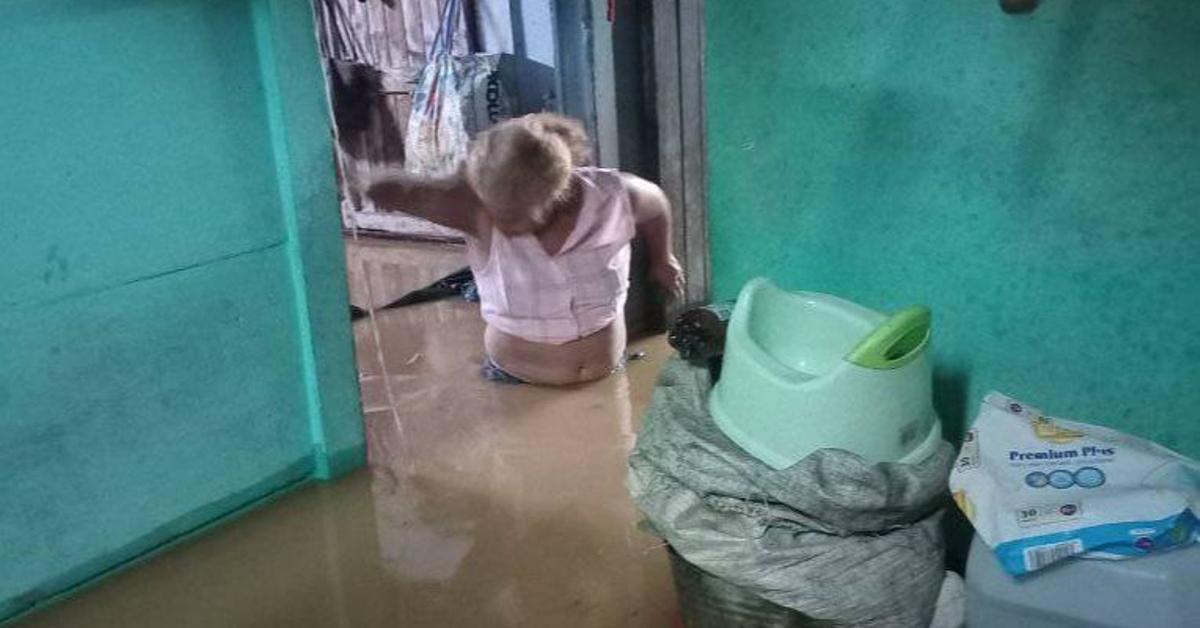
The images shared by several users show homes with water at window level, people submerged up to their waists, streets that become streams of water and mud, and families trying to save the little they have.
Those affected point out that, despite the prior warning of rain, there was no mass evacuation or quick response. The official page local television on Facebook warned to evacuate “immediately” in flooded areas, but for many it was too late, as the water was already rising and they had to wait to be helped from the roofs of their houses. “If water touches plugs, cables or appliances, the risk of electrocution is fatal,” the telecenter warned.
In a country where the official media almost always report late, it is through social networks where the people of Baracoa have denounced persistent abandonment. The Miel River – which occupies more than 17% of the municipal basin of Baracoa – has a high risk margin when combined with intense rains. But what is serious is not only the nature but also the institutional response capacity, which remains insufficient.