Santa Clara, Cuba. – From passions condemned by morals, alleged adultery and marriage disagreements is full of the history of Cuba, although little is reviewed in the books or in the official press, more dedicated to entertaining the love trajectory “without spot” of heroes, heroes or figures relevant.
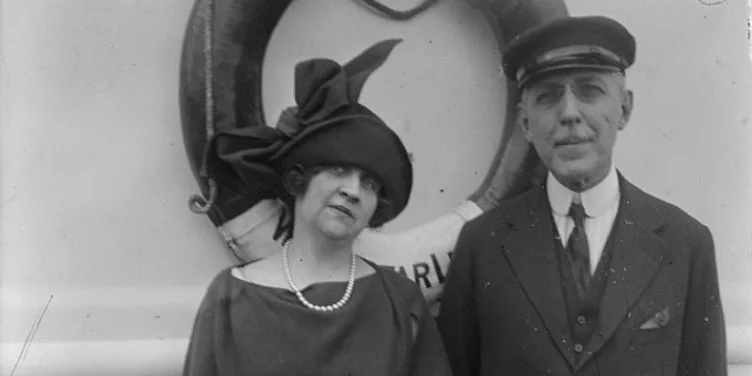
Around the family of “the benefactor” of Santa Clara, Marta Abreu de Estévezone of the most famous scandals of the early twentieth century was warp, a blow from which the generous woman never managed to recover despite her obvious progressive character. The protagonist of such disgust was the wealthy lady Matancera Catalina Lasa del Río, who had married Pedro Estévez, the only son of Marta and Luis Estévez.
Catalina was described as a woman of deep blue, cultured and elegant eyes who wore Parisian haute couture. The social chronicle recognized her as the “flattering magician.” At that time, Pedro, who was supposed and lord of the heart of his wife, used to exhibit her orondo in busy gatherings and dance halls, but the providence played against him when he appeared in the scene of the capital high society the wealthy landowner Juan Juan Pedro Baró, Marqués de Santa Rita and Viscount of Canet de Mar.
The already forty Juan Baró immediately won the sympathy of the young Catalina, taking a sudden, secret and prohibited relationship, worthy of an argument of a novel. Just as if it were a Creole version of Ana Karenina, lovers tried at all costs to keep their romance hidden and used to frequent a suite of the England hotel, not without raising suspicions among their own relatives. It is said that it was Marta’s sister, Rosalía Abreu, the owner of the spectacular palace of the farm of the Monos, who hired a private detective to confirm the rumors of infidelity and outrage towards her nephew.
Catalina’s affairs were considered an attack on family decorum, taking into account the prestige gained by Marta due to their countless charities. They also had a certain impact on the political sphere, because Mr. Luis Estévez Romero had held the position of first vice president of the Republic of Cuba. Even the newspaper The Figaro He dedicated an article to repudiate this specific case of adultery that in a short time practically became public domain.
As narrated in An article signed by Augusto Prieto On the criticized romance, on one occasion, during an opera function in the Grand Theater, “the public retired in protest for their presence, and Catalina stripping of their jewels threw them on stage so that the company continued singing only for them ”.
Although Catalina tried to request formal separation from her husband, she refused flatly but not before withdrawing the custody of her three children. Pedro until he opened a judicial file against her, including an arrest warrant for Bigamia, so the new couple was forced to flee disguised towards Europe.
Based on the then more unprejudiced Parisian field came to request Pope Benedict XV the religious annulment of marriage. With the consent and blessing of the Vatican they managed to contract nuptials by the Church, although they would not yet be willing to return to the island, until the civil separation between Catalina and Pedro itself was legally approved.
There are several historical and biographical references of these lovers who review the immeasurable passion that they professed and that in some way justified all the ruthless public suspicion that they had to suffer until they authenticate their relationship. It turns out that the insistence of Baró himself to the then Cuban president, Mario García Menocal, was so to approve some regulations that benefit them, that he finally achieved that in July 1918 the Divorce Law was promulgated in Cuba, also the first in Latin America.
Catalina Lasa and Pedro Estévez would go down in history as the first spouses separated by law in the history of the island. After the fructifers efforts in their favor, Lasa and Baró returned to Havana to get their new marriage status and were even invited to dinner to the presidential palace as readmission in society that had previously rejected them.

In boasters of its wealth and perhaps to a large extent to demonstrate that the love between the two had not been the product of the whim, Baró ordered to build an extravagant mansion in the veiled, of an eclectic style, with Renaissance and interior facade Art Deco in which Marbles de Carrara was used and even sand from the Nile River. As if it were not not Another Cuban, yellow with pink tones.
However, happiness lasted little for the married couple, who could barely enjoy for a brief period of the luxurious housing: Catalina became ill and was taken by her husband to Paris. It was so much the physical deterioration that the woman suffered, which Baró covered the mirrors of the house that lived in an act of deep idyll and devotion.
Catalina finally died in the arms of her beloved, in 1930, at 55, and her embalmed body was brought to Cuba to bury her with all her jewels in another mortuary palace, also in style Art Deco With architectural displays, on Central Avenue of the Colón necropolis, and that cost Juan Baró the sum of one million gold pesos. The widower visited the grave daily until his death in 1940, when he said they buried him standing as an eternal guardian of the woman who loves so much.
The mausoleum, which still does not usually go unnoticed by any visitor to the field, was desecrated and vandalized on multiple occasions. In 2018 the playwright and essayist Norm Espinosa denounced the state of the pantheon in which the crystals of the screens and the bouquet of roses made with jewelry had suspiciously disappeared. “Celebrated and commented on as many tourist guides as one of the most outstanding examples of the Art Deco Cuban, it must amaze and scare, for its deterioration, to whom they try to discover it and photograph it so close to the gate of the necropolis, ”said Espinosa in Your article.
On the later life of the “aggrieved” Pedro Estévez is known that he was in charge of his three children with Catalina: Luis, Pedro and Marta, and that, after the death of his mother, he got married again in France.