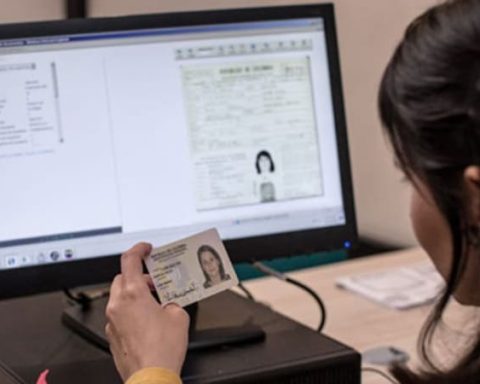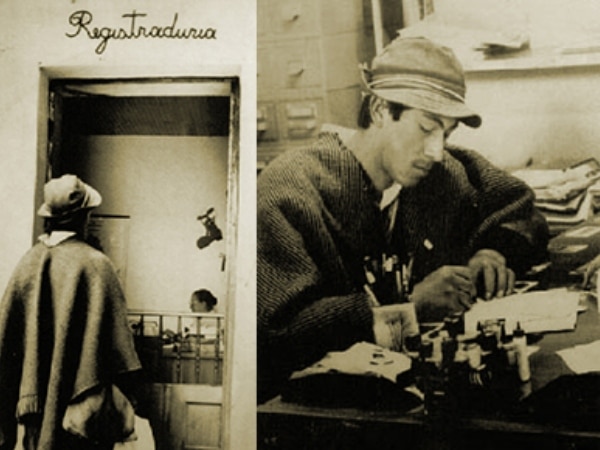
Of its creation in 1853 with the “Elector title” to the digital card of 2020, through changes in format, security and mandatory use.
News Colombia.
In 1853, during the Government of General José María Obando and after the approval of the new Constitution, the voter’s title was created, a simple document that served only to exercise the right to vote.
Nine years later, in 1862, a more detailed format was introduced: a “qualification” document that proved that the citizen knew how to read and write, and included data such as his name, age, marital status and place of residence. This requirement was maintained with the Constitution of 1886, which established indirect vote to elect president and direct vote for councilors and deputies.
In 1929, Law 31 ordered that every registered citizen received a citizenship card with name, filiation, photo and signature.
Five years later, Decree 944 of 1934 defined its characteristics: 17 centimeters long, fine paper, national shield and the fingerprint printed on the back. As there is no plasticization, the document was fragile and should be completed by hand.
That same year, under the government of Alfonso López Pumarejo, it was established that the card would be mandatory to participate in political and civil acts as of February 1, 1935, although only for over 21 years.
In 1952, and thanks to the recommendations of a Canadian technical mission, Colombia began the expedition of the laminated card. The first was delivered to President Laureano Gómez Castro. In 1956, the first woman to receive her was Carola Correa de Rojas, wife of General Gustavo Rojas Pinilla.

Law 39 of 1961 consolidated the laminated white card as the only valid identification document for adults. In 1975, a change in the law reduced the age of 21 to 18 years, allowing more young people to obtain their ID.
In 1993 the plasticized coffee, smaller (8.5 x 5.5 cm) card appeared and made with three synthetic sheets. He incorporated security elements such as microtext, microliners, protective borders and special funds to avoid falsifications.
The jump to biometry: the yellow card with hologram
With the change of the century, in 2000, the yellow card with holograms arrived, which included a bar code with biometric information and color photography. Keeping the same size, it significantly improved the security and resistance of the document.
In December 2020, the expedition of the digital card began, which positions Colombia to the world avant -garde in citizen identification. Made of polycarbonate for your physical version and also available in digital format for mobile devices, it offers higher levels of safety, durability and comfort.
In 1952, ID numbers were assigned by gender and region: men received numbers from 1 to 19,999,999; Women, from 20,000.001 to 69,999,999. When the male quota was exhausted, a new range was enabled: from 70,000.001 to 99,999,999. Over time, this classification was unified.
Information taken from the National Registry of Civil Status.
You can also read: