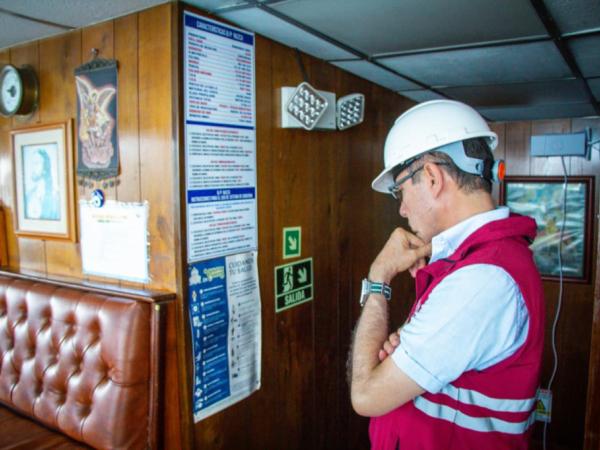
He Minister of Labor, Antonio Sanguinoannounced the findings of the inspection carried out at three boats (Sandra C, Amanda S and Nazca) at the Seatech International Inc. headquarters, and which belong to the Van Camp’s tuna company.
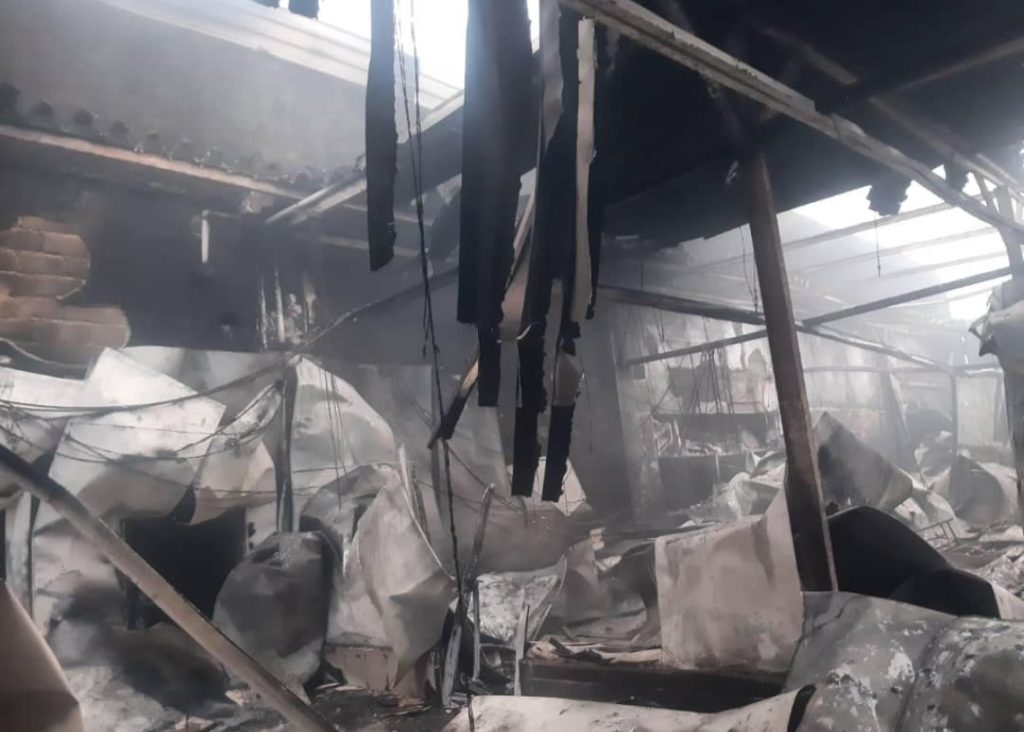
Sanguino pointed out that the temporary closure of the vessels occurred due to the lack of minimum guarantees for the crew members, as they were precarious physical conditions, security risks and possible irregularities in the hiring of personnelwhich, in his words, “does not provide a decent or safe environment for maritime work”.
(Further: Minlabor orders the closure of three Van Camp’s tuna vessels: these are the reasons).
Van Camp’s boat inspection
Ministry of Labor
Deficiencies in the inspected vessels
According to the minister, each ship had a capacity of close to 20 crew members, the majority without affiliation to social security or training in health and safety at work.
In the case of the Sandra C ship, Sanguino indicated that the entire crew was foreign, despite the fact that Colombian regulations only allow up to 20% foreign personnel.
In addition, broken floors, routes with risk of falls, presence of uncontrolled dangerous substances, poor ventilation and overcrowded bedrooms were found. Scattered medications and evidence of sick people were also found. None of the 20 crew members were affiliated with the social security system or an ARL.

Antonio Sanguino, Minister of Labor
Ministry of Labor
The minister added that, during the inspection, food was observed being prepared for numerous people, although the captain stated that only he and the chief engineer were on board. Of the 20 workers registered on this vessel, 16 were Ecuadorian, three Mexican and one Portuguese.
Critical conditions at Amanda S and Nazca
Sanguino also revealed that the Amanda S and Nazca vessels had serious deficiencies in safety and maintenance.
(You may be interested in: Substantive Labor Code would allow dismissal of sick workers).
The personal protective elements (PPE) They were broken, dirty and in poor condition; fire systems, including fire extinguishers, were found to be unmaintained; and wet, slippery floors posed a high risk of accidents.
Likewise, the warehouses lacked signage and safety railings, and there was no emergency room or first aid kit.
According to the minister, no employment contracts or social security affiliations were found either. The Ecuadorian captains only had navigation licenses without valid registration in Ecuador or Colombia.

Van Camp’s boat inspection
Ministry of Labor
Sanguino explained that the risk matrix and work at height certificates were outdatedand that during interviews with several crew members (including people over 60 and 70 years old), it was found that none of them had an employment contract or social coverage. He even mentioned that a Salvadoran worker with a motor disability was found operating machinery without protective equipment.
The minister also denounced unsanitary conditions: the fish storage tanks gave off strong and unpleasant odors, and a widespread electrical risk was identified throughout the vessel, with rusty cables, no insulation and exposure to water.
(You may be interested in: Rappi and Iberia launch alliance so that users accumulate Avios with their purchases).
During the visit, Only one worker was found on board. The others arrived later, claiming to have attended a training, although the versions about the place and time were contradictory..
The record of the ship Amanda S, the minister added, recorded a crew of 18 people: 16 Ecuadorians, one Mexican and one Salvadoran.
Possible transnational crimes
Antonio Sanguino explained that the inspection also detected signs of possible illegal labor intermediation of a transnational nature, in which both national and foreign companies would be involved.
One of them, identified as Logimarwould be a Panamanian agency through which staff salaries are paid.
Sanguino explained that, after the inspection, an awareness dialogue was carried out with the captains and engineers, to whom it was clarified that the irregularities detected are the responsibility of the company Seatech International and not of the operational personnel. Some workers expressed fear of retaliation for collaborating with the inspection team..
(Besides: Siigo would be in the process of acquiring a digital media in Colombia).

Van Camp’s boat inspection
Ministry of Labor
The minister was emphatic when stating that “the crews lack decent working conditions” and that during the visit attempts to deceive and hinder the work of the inspectors were evident, which further aggravates the situation.
Finally, Sanguino warned that the ships will not be able to set sail until the imposed seals are lifted, which will only be possible once the company formalizes the hiring and affiliation of workers in accordance with current labor legislation.
PORTFOLIO