The bill that seeks to reform articles 86 and 87 of Law 30 of 1992, advances in his legislative procedure after being approved in the first debate in the Senate Commission.
(Read: The measures that universities are implementing to travel to the world of work)
The initiative, which will now become discussion in plenary, aims to correct a historical debt with public higher education through a modification in the formula and methodology for the calculation of the budget of higher education institutions. This, seeks to guarantee its financial sustainability and strengthen coverage, quality and access to education in the country.
During the debate, the president of the Sixth Commission, Senator Pedro Flórez, highlighted the importance of the project and the broad consensus achieved between different sectors. “This project is the result of a broad and inclusive dialogue with students, teachers, rectors and experts. We are building a national agreement for the financing of public higher education“said the congressman.
(See more: Icesi receives accreditation as one of the best business schools in the world)
The reform also raises ensure resources for infrastructure and institutional development, and introduces for the first time the financing of technical and technological institutionswith the aim of expanding educational opportunities at various levels of training.
For the Minister of Education, Daniel Rojas Medellín, this project represents an unprecedented commitment to improve the competitiveness and development of the country through a more equitable and robust educational system. “We are committed to a structural transformation that guarantees appropriate resources for universities and, in turn, contributes to the growth of the country“The official said.
(Read: ‘We must understand that the mixed model in education must take care of it’: UPB)
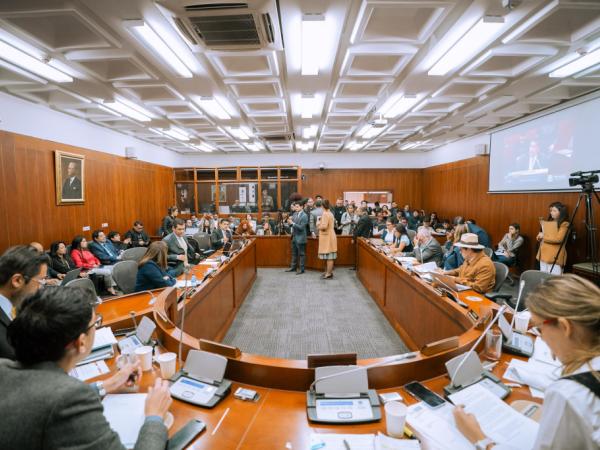
Debate in the Senate of the Financing Project for Higher Education
Courtesy
The lag in the financing of public higher education has been a recurring topic in the educational debate. Between 2000 and 2023, Registration in these institutions grew 176%, while transfers of the nation only increased 62% in real termswhich has generated difficulties in coverage and quality of education.
(See also: This is the top 5 of the best universities in Colombia, according to AI)
“When we arrived at the government, only 0.4 percentage points of GDP were allocated to the operation of public higher education institutions. This government, making an effort, led it to 0.54. With political will and support from Congress, we seek to reach 1% and continue to approach the OECD average“The minister explained.
For its part, Senator Sandra Jaimes also expressed her support for the initiative, underlining her relevance for equity and social justice. “Education must be a universal and free right. This government is committed to strengthening the public university, eliminating access barriers and allocating public resources for growth. Advancing coverage and structural financing is key to equity and social justice“He said.
(Read: The performance of Colombian universities in the sustainability ranking)

Debate in the Senate of the Financing Project for Higher Education
Courtesy
The debate had the active participation of students and representatives from different universitieswho expressed their support for the project and highlighted the need for adequate financing to guarantee the sustainability of public education.
(See: Master’s Scholarships: OAS will finance more than 1,000 Colombians and can apply)
The next step in the legislative process will be the discussion and vote in the Senatewhere it is expected to continue with the analysis of the proposal in a broad and informed debate.