In collaboration with Caroline Dettling
listen to the newsText converted to audio
Artificial intelligence
In Peru, where sexist stereotypes are deeply rootedwomen like taxi driver Rosario Cubas, FIFA referee Vera Yupanqui, heavy equipment driver at Komatsu-Mitsui, Jakelin García, and rugby player Flavia Connearn, break barriers every day. Each of them faces different types of violence just for carrying out activities or jobs considered “only for men.”
WE RECOMMEND YOU
CITIZEN INSECURITY AND THE DRAMA OF DELIA ESPINOZA | WITHOUT SCRIPT WITH ROSA MARÍA PALACIOS
In it International Day for the Elimination of Violence against Womenwe present their stories, which reflect the fight for equality in a society that still seeks to limit them.
Despite the multiple barriers that Vera Yupanqui faced to become one of the FIFA’s most recognized Peruvian refereeshis determination and discipline were key to staying in this sport for 23 years, considered only for men.
“It was very difficult, because it was rare to see a woman on the court,” says Vera, who decided to face the challenge and focus on her career. In his first games, the comments from the fans were not kind at all. “If you gave a score in favor of the opposing team, the fans would send you to cook, wash, insult you and even spit on you.” But that violence did not discourage her and she continued with her passion for refereeing.
Vera decided to be a referee because of her father, who was also one. However, he did not want his daughter to follow in his footsteps, knowing what she would have to face. But being good was not enough, she had to be excellent, at the level of the greatest. “I don’t want to demean the work of a man, but we have to do everything like them. Train like them, work like them.” The demand was greater and the effort much more intense.
But it wasn’t just the physical work that he had to face. Vera says that when men made mistakes in the field they were called by name: “Juan, why did you make a mistake?” However, when she was the one who made a mistake, the comment was different: “It had to be a woman!”
And, for Vera, being a referee is not just a job, it is a mission. It must demonstrate that refereeing, like any other discipline, is a space where women have the right to be, compete and, of course, excel.
Vera Yupanqui has been a Fifa referee for 23 years. He followed his father’s path. Photo: Caroline Dettling
Heavy machinery driver
Just like Vera, in the toughest spaces of companies, Jakelin García Geldres found his true passion. At the age of 14, when he first saw heavy machinery in action, he decided that this would be his future. But, it wasn’t easy.
Although she initially studied modeling, Jakelin soon realized that her calling lay in another field. “My true passion has always been heavy machinery. Since I saw a machine on a construction site, I knew that was my world.”
However, in such a male-dominated field, she had to face prejudice. “It was very difficult for me to get a job, due to the fact that I was a woman. Companies were looking for men, they didn’t hire you. It is a sector marked by the idea that men are the ones who should be in charge of heavy machinery.”
Today he works as technician in quality control in heavy machinery at Komatsu-Mitsui. Jakelin is the only woman in her section. “My job excites me a lot. I am passionate about being surrounded by machinery, seeing how each one works and making sure everything is in order. For me it is enormously satisfying.”
Jakelin is convinced that her story can help transform social norms. “Helping to close gender gaps is something that motivates me. An economically independent woman is free.”

Jakelin García has been a heavy machinery technician for 6 years. Photo: Caroline Dettling
Transport for children and women
Like Jakelin, there are other women who, with courage and effort, have decided to challenge the limits imposed by society. Like Rosario Maribel Cubas, who, despite the stereotypes and difficulties, has decided to take the reins of a traditionally male sector: public transportation.
In a city like Lima, women generally do not get behind the wheel, and even fewer offer taxi services. Rosario is one of the few who has decided to venture into this challenging world.
“Taxi driver? But that’s something for men!”, they told her when she talked about her job, says Rosario, who two years ago decided to dedicate herself to this field after finding a company that offers transportation exclusively for women and children.
At first, I was afraid of this new challenge. The rules that most drivers on the streets of Lima follow do not coincide with those practiced by female drivers. “We follow the traffic rules. We stop at the red light, we give way when we have to.”
For respecting these rules, Rosario has received derogatory comments. “They tell you: “Go to the kitchen! Woman, you have to be! Clumsy, you’re very slow!”, but she remains calm.
The taxi has given Rosario the chance to balance her life, taking care of her two children while working. In addition, it has allowed him personal growth. As she herself says: “Sometimes I find myself on the Panamericana and I say to myself: “When did I get here, to the Panamericana? It wouldn’t have even occurred to me here! And I feel happy.”
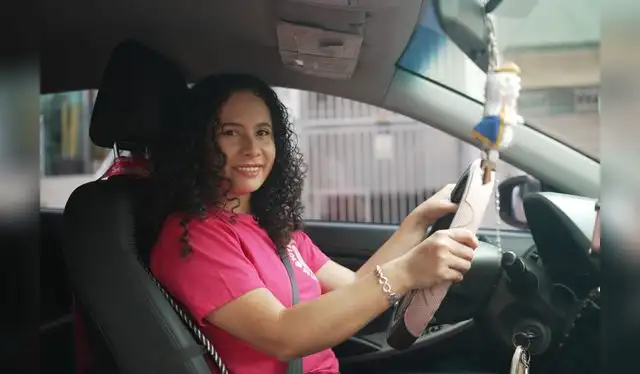
Rosario Maribel Cubas, is a taxi driver and has been traveling the streets of Lima for 2 years. Photo: Caroline Dettling
Rugby as a lifestyle
Flavia Connearn Díaz is made for a high intensity sport. She is a woman with a strong character, who speaks quickly and with great conviction. She is 1.70 meters tall and has overflowing energy. All this was what a friend of Flavia observed at university and that is why she suggested she practice rugby.
“When I have to give a presentation at work, I think about the most difficult games I have ever played, with hundreds of people watching me, seeing how I make mistakes and how I also do things right.”
Obviously, practicing this sport has led her to confront several stereotypes. According to her, there are micro-machismos, especially in the gym, when comments are made about the weight she lifts. «Then there are much bigger things.
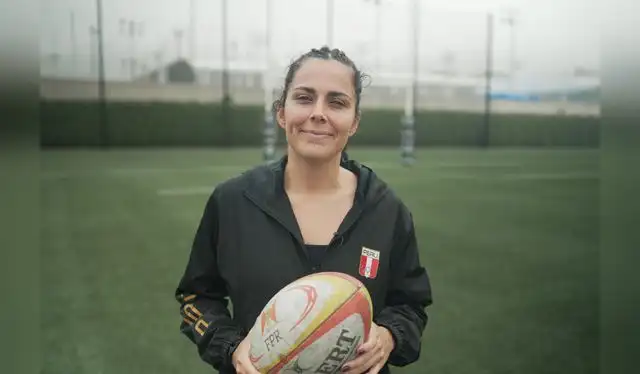
Flavia Connearn has been a rugby player since she was 18 years old. Now he represents Peru. Photo: Caroline Dettling
“Girls who try to be referees often face a lot of resistance in important matches, as they can be subject to much harsher criticism.” However, in the federation there are measures to protect women and, within the group, the players also try to eradicate these behaviors.
They advance strongly, despite everything. Their stories remind us that when one woman breaks a limit, she opens the way for many more. In a country that still faces high levels of gender violence, their example not only inspires: it sets the path for what we still need to change.