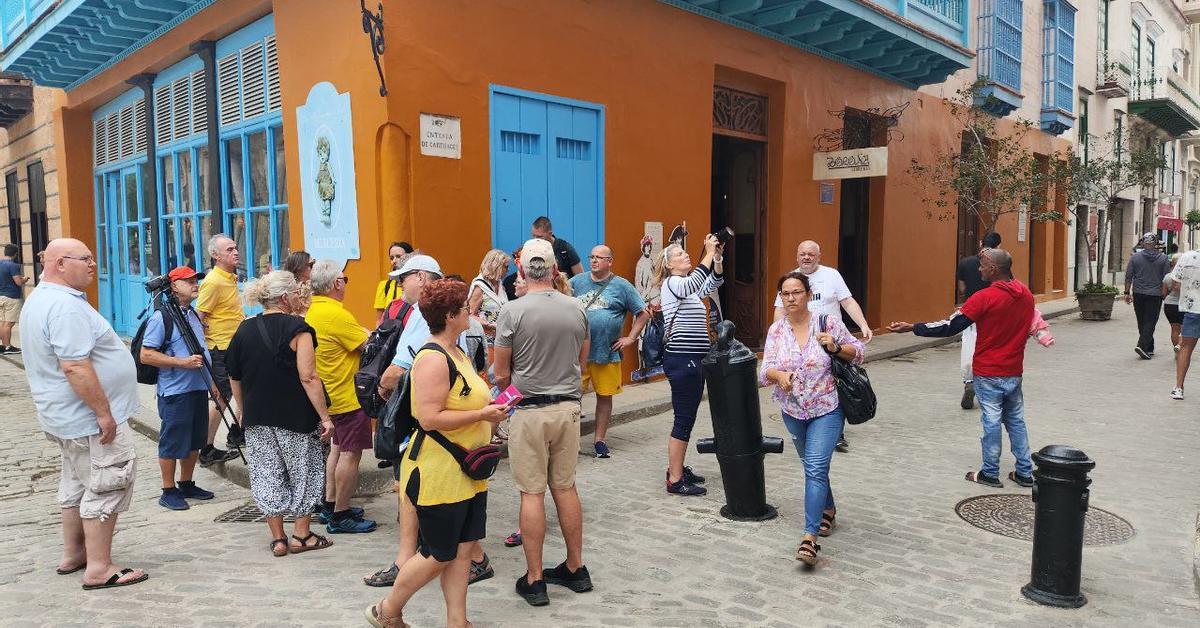
Havana/The escalation of tensions between Cuba and the United States, and Washington’s oil siege, have the country in its worst crisis in decades, which has led governments in America and Europe to issue warnings to potential travelers, threatening a key sector for the island’s economy.
Countries among the main sources of tourists to Cuba, such as Canada, the United States and Spain, have pointed out in recent weeks the critical situation that the country is going through. Others, like Argentina, directly recommended “avoiding or postponing tourist trips” due to the shortage of fuel, food and water, and the prolonged power outages.
The Government of Canada, on the other hand, warned its citizens on its official website that the current situation in Cuba is “unpredictable and could deteriorate, altering the availability of flights in a short time.”
The country, the main source of tourists to the Island for decades, warned that “a high degree of caution must be exercised in Cuba due to the worsening shortages of electricity, fuel and basic needs, including food, water and medicine, which may also affect tourist centers.”
The UK Foreign Office also warned its travelers about the blackouts.
On the other hand, the Ministry of Foreign Affairs of the United Kingdom also alerted its travelers about the blackouts, ensuring that they can exceed 24 consecutive hours and that they can impact basic services.
The United Kingdom also indicated that the lack of fuel can cancel or delay tourist plans without prior notice.
The US embassy in Havana warned on its website that the Cuban electricity grid “is increasingly unstable” and that the effects of the blackouts are transversal, so it called for caution.
Other diplomatic offices, such as those of Spain and Ukraine, have also issued alerts to their citizens due to the current energy crisis and the recent measures by the United States against the Island.
The Spanish company delved into “the weakness of its electrical energy generation and distribution system,” but also into the still present chikungunya epidemic, which began in the country in the second half of last year.
The Ukrainian embassy in the Cuban capital also warned its citizens through social networks about the worsening economic situation.
The Ukrainian embassy in the Cuban capital also warned its citizens through social networks about the worsening economic situation and the implications of this deterioration on the island. Specifically, he urged them to avoid traveling to Cuba, take additional precautions if they were already in the country and immediately contact the consular line on duty in case of any urgent situation.
These announcements come amid complaints on social networks that several hotels are have been closed and their guests relocated to other establishments.
Thus, the oil siege, in addition to gradually paralyzing the country – which only produces a third of its energy needs –, undermines the potential of one of its main economic sectors, both in terms of income and generation of foreign currency.
Tourism, however, had already been in the doldrums for several years due to the combination of US sanctions, the pandemic and the national economic crisis, which hampered the service and quality of the offer.
If in 2018 Cuba managed to attract 4.7 million tourists, its historical record, the Island closed 2025 with barely 1.8 million visitors international, far from the 1.9 million predicted in Parliament in mid-December and even worse when compared to what was planned a year ago. The forecast then was 2.6 million, 30.3% more than what was finally achieved. In addition, the hotel occupancy rate registered an annual decrease of seven percentage points (21.5%).
The Island closed 2025 with only 1.8 million international visitors, far from the 1.9 million predicted
The United States put an end to shipments of Venezuelan oil to Cuba after the military operation with which Nicolás Maduro was captured on January 3, and last week threatened with tariffs on countries that provide fuel to the Island.
In addition to increasing pressure on Havana, Washington has assured that Cuba’s “days are numbered” due to the lack of fuel and has shown that it hopes the crisis will lead to “a change of regime.”
In anticipation of an “acute fuel shortage,” the Cuban Government has launched a emergency plan inspired by the so-called “zero option”. This has led to a critical lack of basic medications, paralysis of surgeries and suspension of the transfer of outpatients.
“All surgeries and transportation of patients from other municipalities have been canceled due to lack of oil,” a health worker told this medium, asking to keep the name of the hospital where she works, where the “contingency” governs.
Another paralyzed sector is public transportation, which has practically disappeared. The almost total absence of buses pushes the population towards private transportation, today almost the only means available, but that has skyrocketed prices.
The impact of current restrictions is not limited to mobility. The transportation crisis is already beginning to be reflected in the prices of basic products. A small businessman from Regla informed 14ymedio that his suppliers increased the price of all bread by 20 pesos “due to fuel issues,” and he fears that the same will happen with the rest of the food.