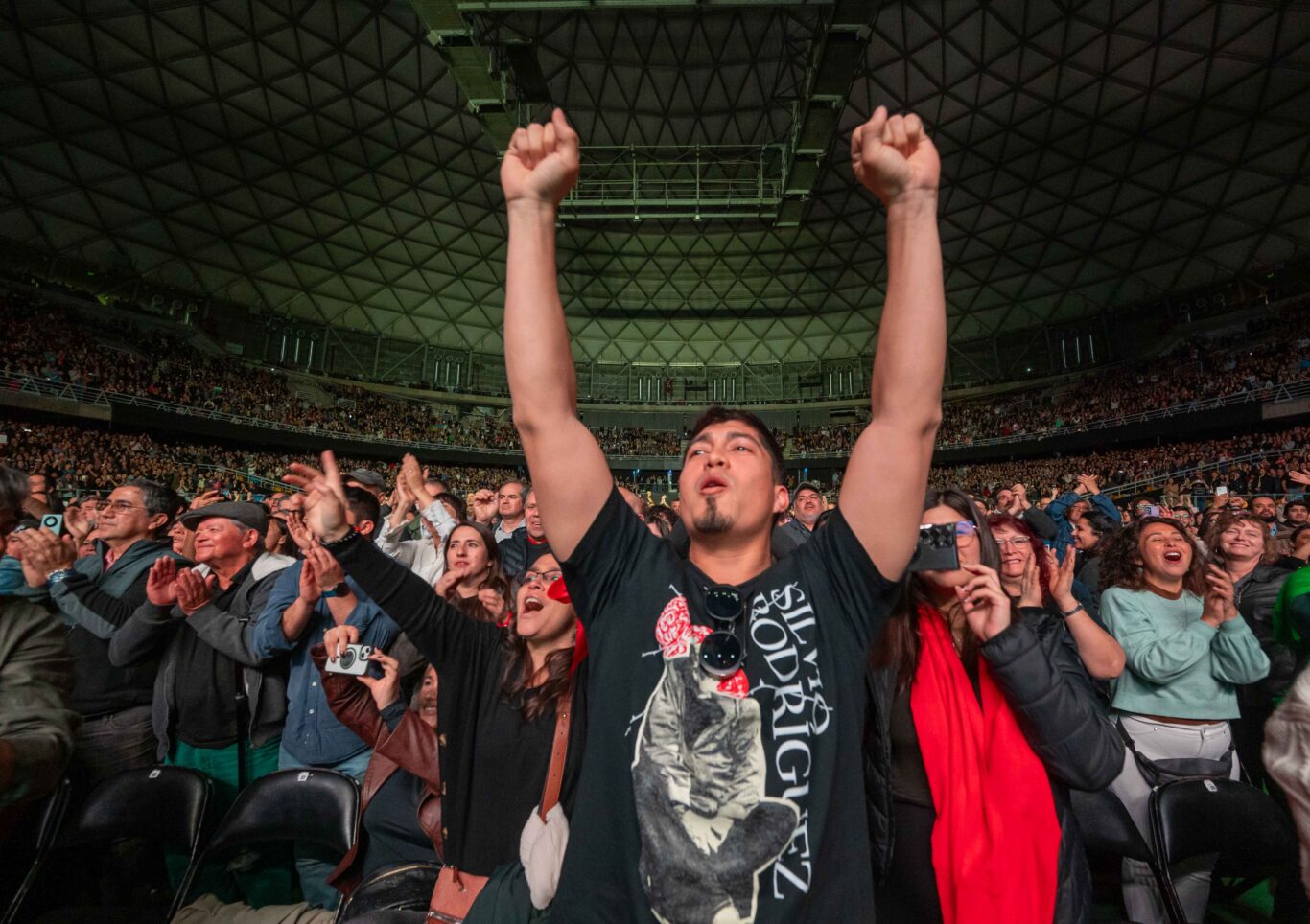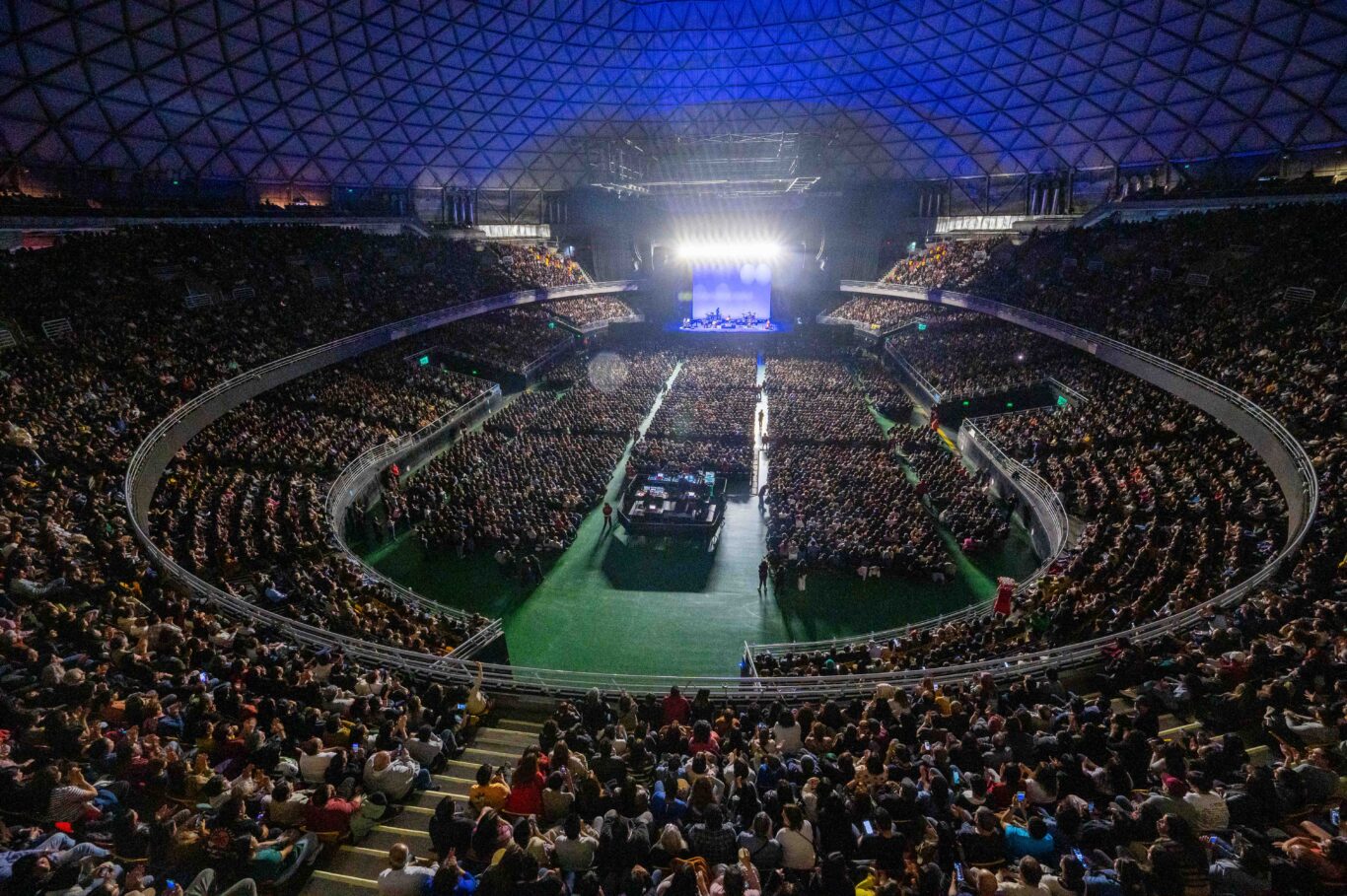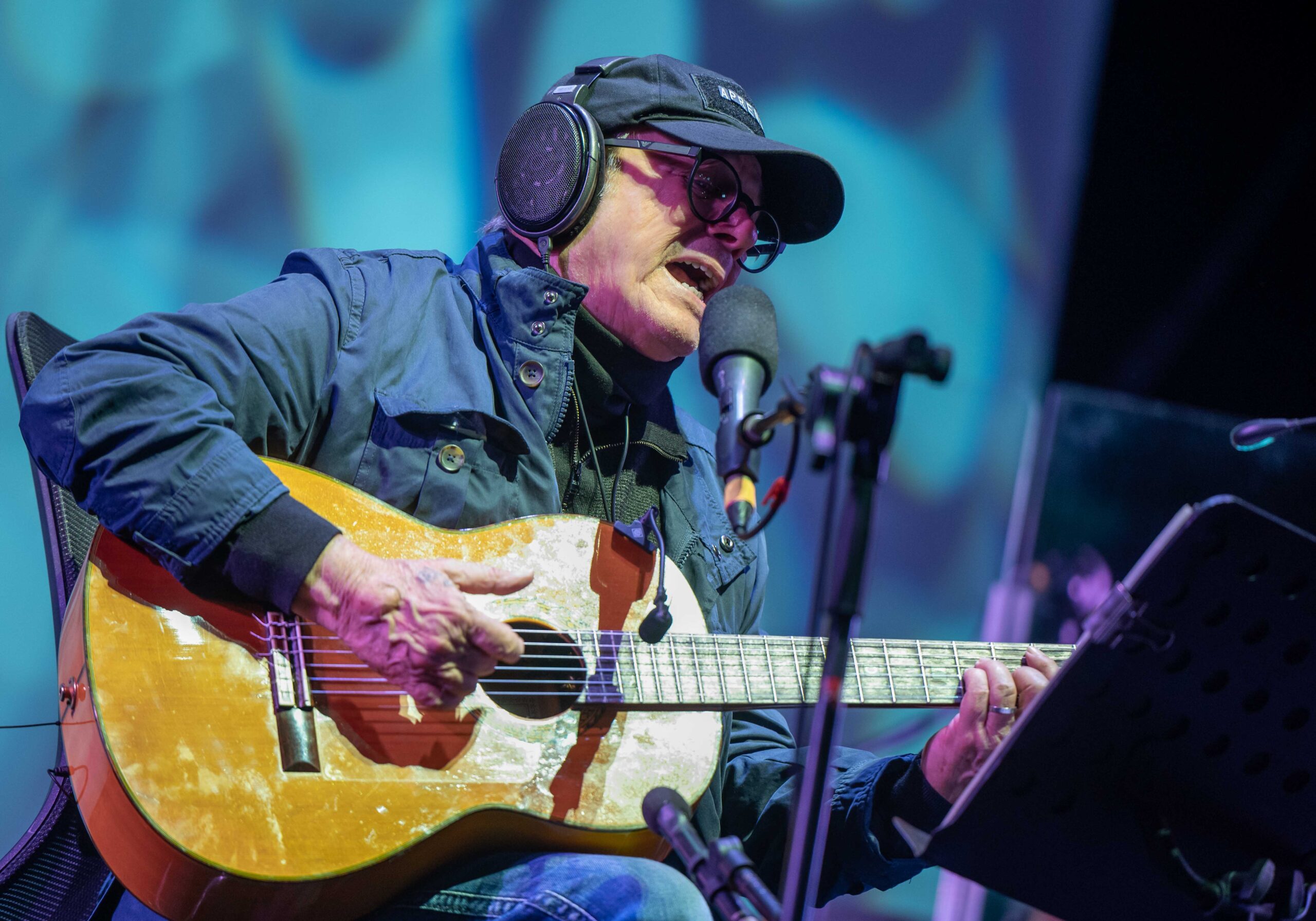
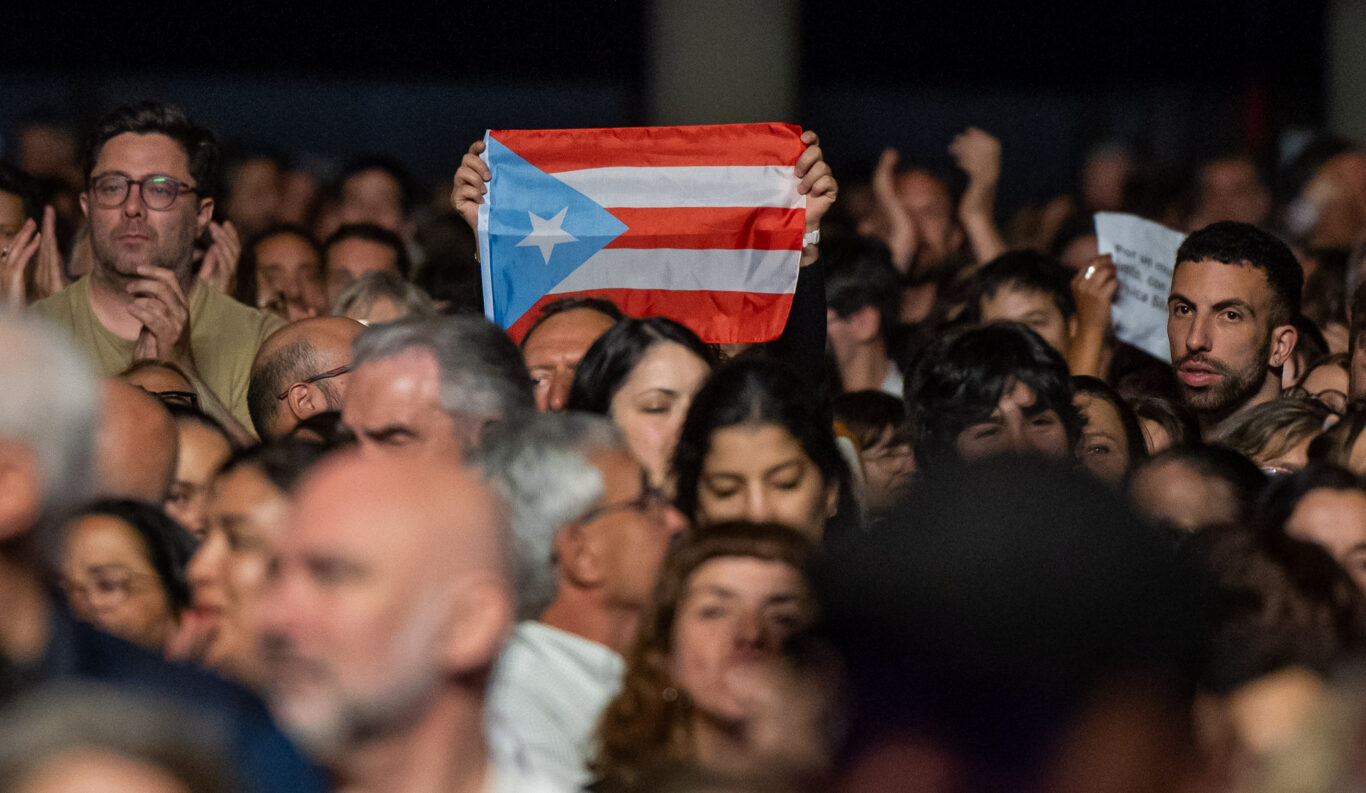
A good part of the time, in the concerts of this Latin American tour with Silvio, I spend it scrutinizing, through the viewfinder, the audience: the fixed gazes, the shiny eyes, the lips that move before him, the hands that rise as if they were marking an intimate beat. It shakes me to see how a bunch of verses and a progression of chords activate memories, grief, joys and life decisions. In this tide of thousands, personal stories multiply, crossed by songs born in the intimacy of a man who, when flying, became collective feelings.
The tour—which passed through Havana, Santiago, Buenos Aires, Montevideo and Lima, and will continue in Medellín and Cali—has drawn, more than an itinerary, a map of memory.
Reinaldo Pineda, a 57-year-old Costa Rican, has already accumulated several kilometers of this route: “I was in Havana, the first in Chile, the first two in Buenos Aires, the two in Montevideo and in Lima. And I will be in Medellín and Cali, to close.” In each city, he says, he felt variations of the same heartbeat: “I have experienced it with different calibers, because of the people with whom I shared it. In all of them, the emotion is on the surface.”
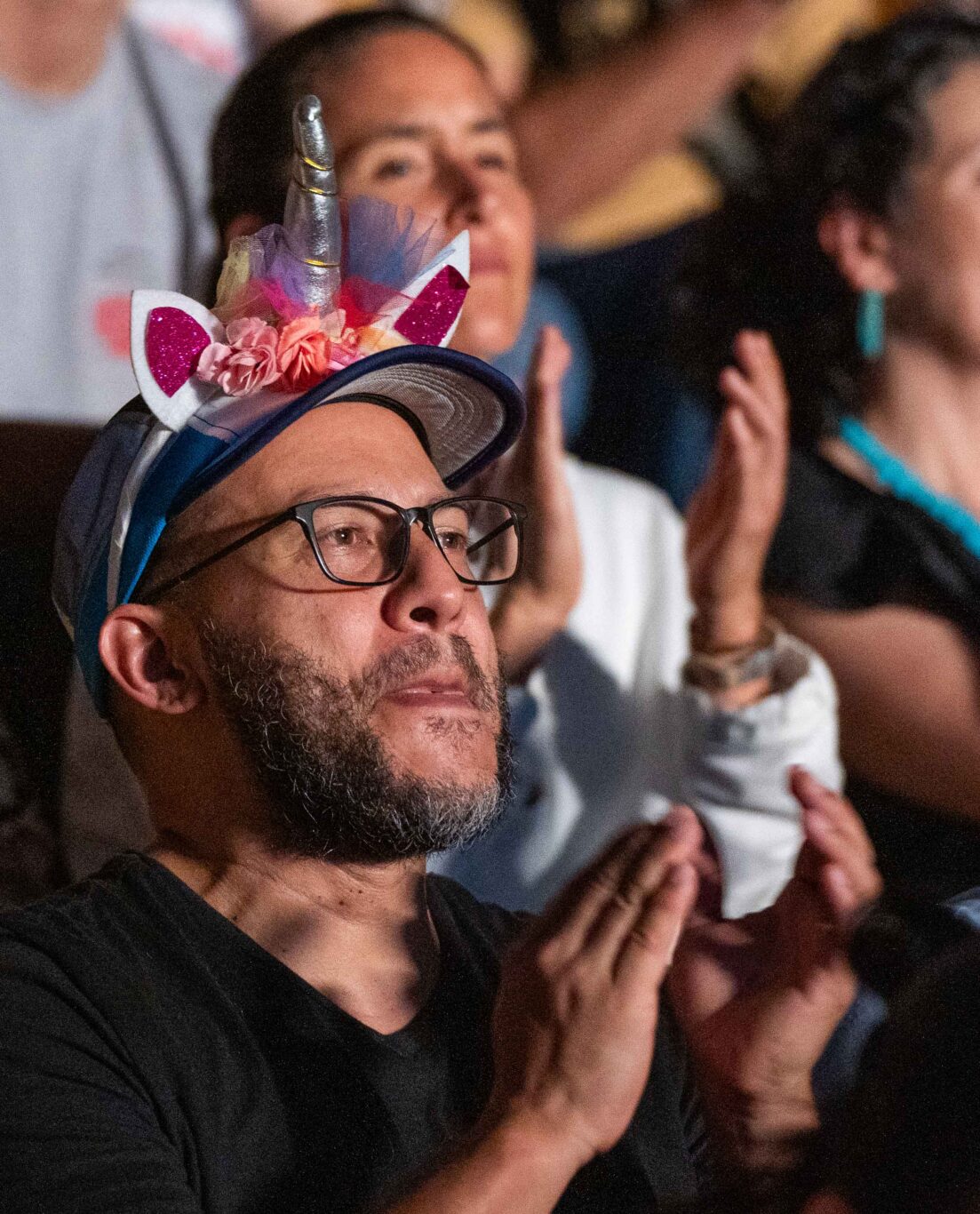
There are constants that run through it: “Perhaps the tributes to their generation companions (Vicente, Noel and Pablo), lived in each place in a different way.” And there are moments that break it: “’Hummingbird Wing’ to start, because of the emotion experienced with my companions… Everywhere the wait for the ‘Apprentice’ was long.” He is united, he says, by a shared certainty: “Feeling Cuba and Silvio very close to the heart, in complicated times on the island.”

From Peru, Jhonatan – a teacher – found on this route a circle to close: “I have been listening to Silvio since I was fifteen. His poetry turned into song has been, is and will be my refuge. My daughter’s name is Adriana Mariana: her middle name is ‘Y Mariana’. While she was born, ‘Only love’ was heard in the delivery room.”
He traveled to Havana and Lima: “I wanted to see him in his land and mine. In Havana I felt like I was witnessing history; in Lima, I was living a piece of mine.” “Come hope” was his thread: “In Havana it seemed that the public was breathing at the same time, a song that summarized dignity and faith. In Lima it was more of a prayer not to lose the light.” The highest point came with “Yolanda”, in the voices of Silvio and Malva: “It was closing a cycle between Pablo’s absence and Silvio’s permanence. Art does not die; it is transformed, it is inherited, it survives us.”
That memory—of people, cities and struggles—is also named by Aida Roa Villar, a Chilean, who turned 50 at one of these concerts. “I grew up with their songs; I knew them through my mother. They have been in my most difficult moments and in my happiest,” he says. On this tour he was in Santiago de Chile, Buenos Aires and Lima. Each place left him with a different emotion: “In Chile, seven years of waiting. Total emotion. In Buenos Aires I was worried about his health; I admire that he does so many concerts and gives everything with love. In Lima, when I turned fifty, I cried my eyes out.”
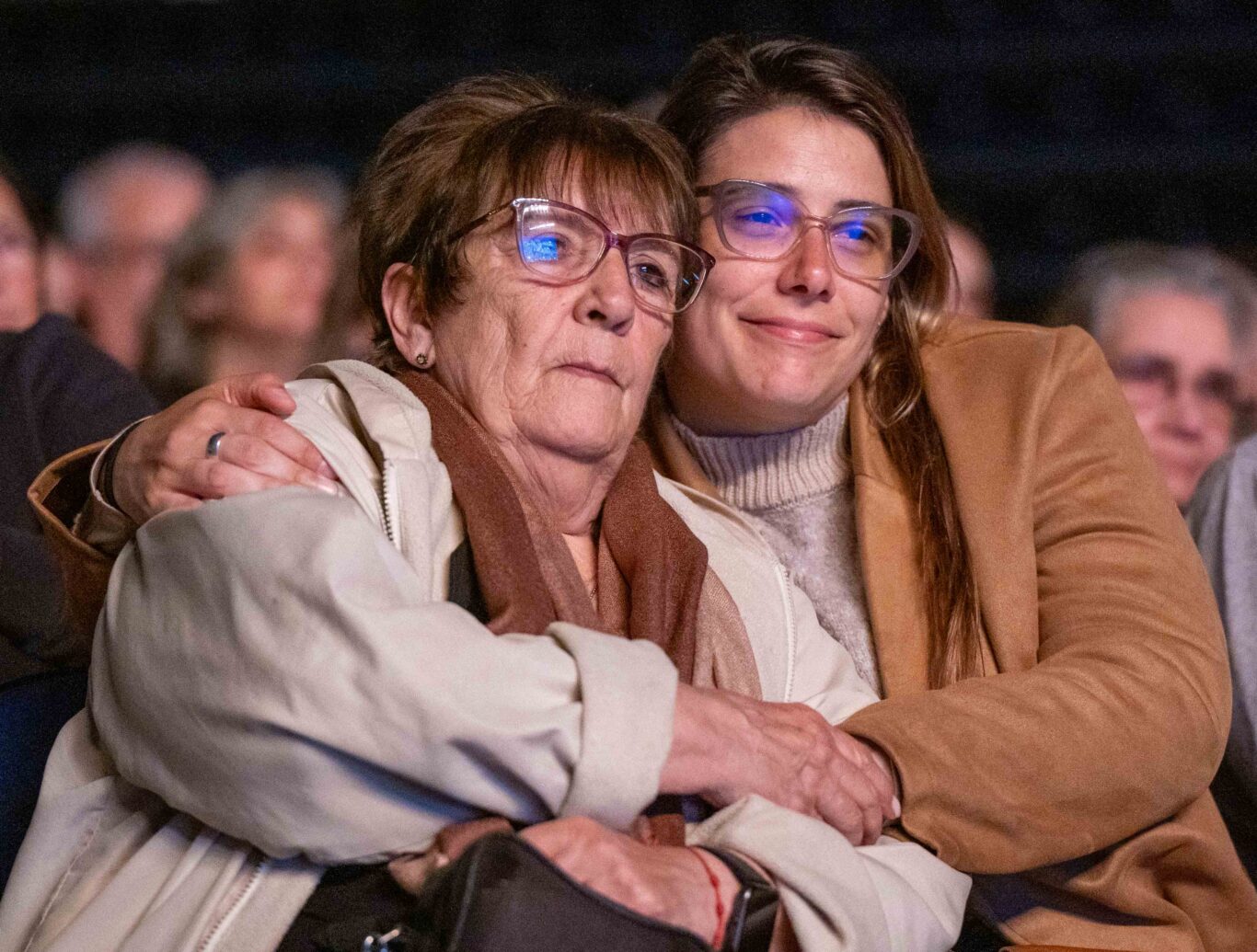

In Argentina, the generation that knew him in classrooms and marches also left a record. Clara Calicchio, 34, speaks from the house where, as a child, she transcribed lyrics and asked for words: “Silvio taught more than music. In 2005 I saw him at the No to FTAA march. My devotion grew.”
This tour found him in the first Movistar Arena in Chile and in the three in Buenos Aires. “I went to the first one in Argentina with my whole family; there were eight of us.” She is moved by the shared liturgy – “when he names Che and we applaud, when he says revolution and shouts” – and stops the camera at two moments: the “Eva” that in 2018 was sung with green handkerchiefs held high (“more heartfelt in Argentina”) and on Sunday in Buenos Aires, when “Te amaré” turned into silence: “It was listening to Silvio recite and sing; his desire to give us that song. One of the best memories I have.”
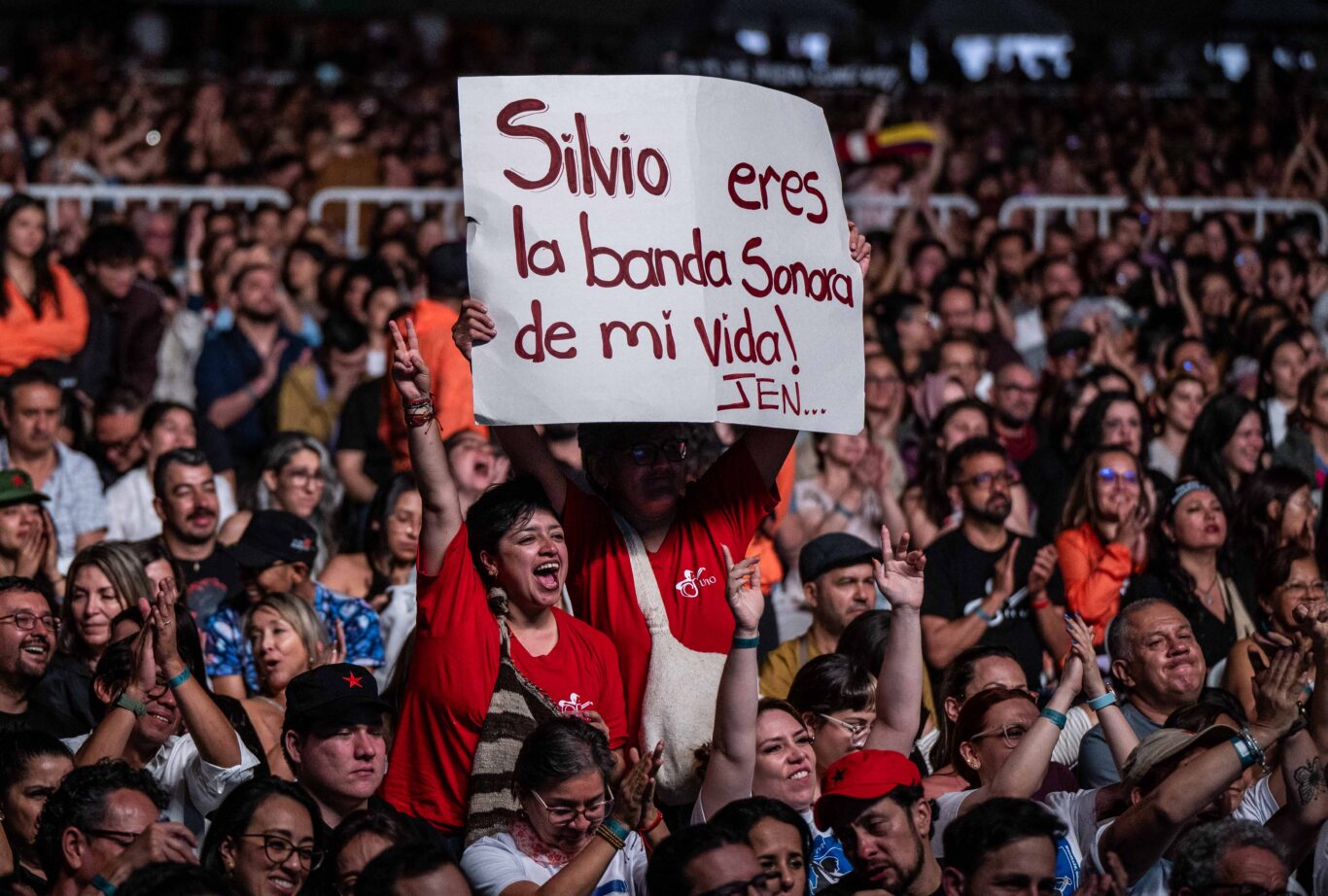
Juan Sotelo Navarro, a 60-year-old Chilean, owes his wife the discovery of the troubadour during their courtship, more than four decades ago. Since then, he says, his work has accompanied him “even in those years ‘my dog looked for me at his door when I lost him’”. His shuddering has a title: “I was moved every time I heard ‘The era is giving birth to a heart’. It was one of the first ‘strange’ songs I heard in my youth. I was trying to figure out how that devilish guitar could sound like that. I cried every time I heard it.”
Another look, born both from research and affection, came from Puerto Rico. Limarí Rivera Ríos, 42, author of Silvio Rodríguez. Poetics of revolutionary lovetraveled to Buenos Aires pushed by a constellation of dates: “On October 21, my husband and I celebrated twenty years together and the presentation of my book in Argentina was approaching.” At the concert, he confesses, “I broke into ‘Ala de Hummingbird’ as if in catharsis.” And he keeps an image of silence: “The serious and perfect reading of the poem ‘Halt!’ “He summed up everyone’s deep respect.”

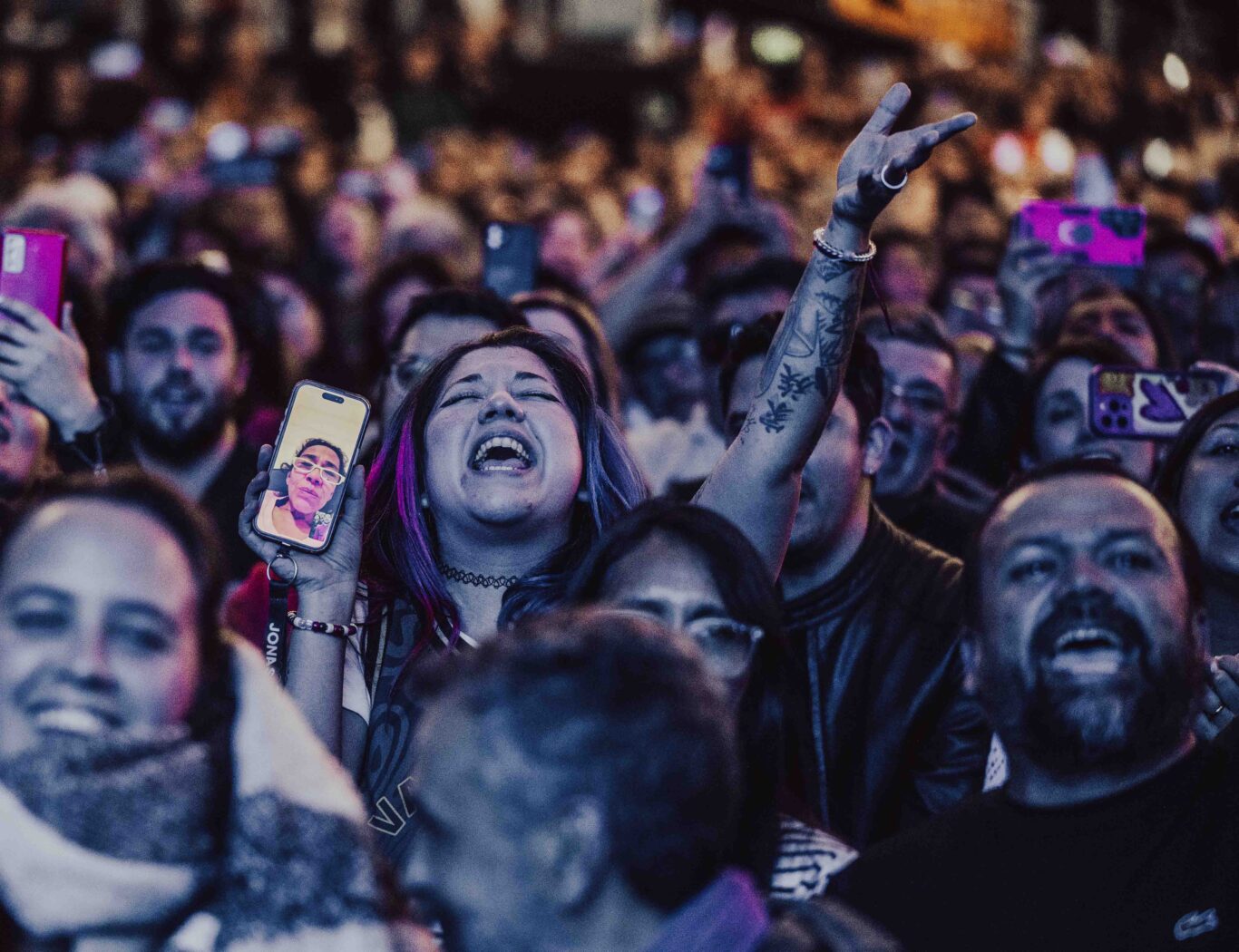
For Carlos Alberto Maldonado Espinaza, a Chilean who is almost 53, the first flash came when he was 12, with “I must break myself in two”: “It was like a blow to the head, and from then on the journey has not stopped.” The tour continued from Havana, the four concerts in Santiago, Lima, and already has tickets for Medellín and Cali. He is surprised by the nuances of the audience: “Some more singers, others more shouters. Everywhere there were people of all ages, and I love seeing so much youth.” There is a moment that always goes through him: the reading of the poem “Halt”, by Luis Rogelio Nogueras. “What I felt different was what has been happening to me with the poem.” What unites audiences, he believes, is that “they see Silvio as a balm for these atrocious times.”
Also in Buenos Aires, when his voice broke one nightthe scene was eloquent. Pilar Faccio, from Argentina, remembers it as a tacit pact: “When it seemed like he couldn’t give any more, he sang ‘Holy’. In each pause a dense silence could be heard, as if everyone was holding their breath. When the audience began to sing with him, the verses sounded like a single body.”
“Eva” goes through Pilar, again and again differently depending on who she sings next to—her mother, a friend, a stranger—: “The struggle is not the same for everyone, but there is a voice that names us all.” For her, being at a Silvio concert “is belonging to something bigger than yourself.”
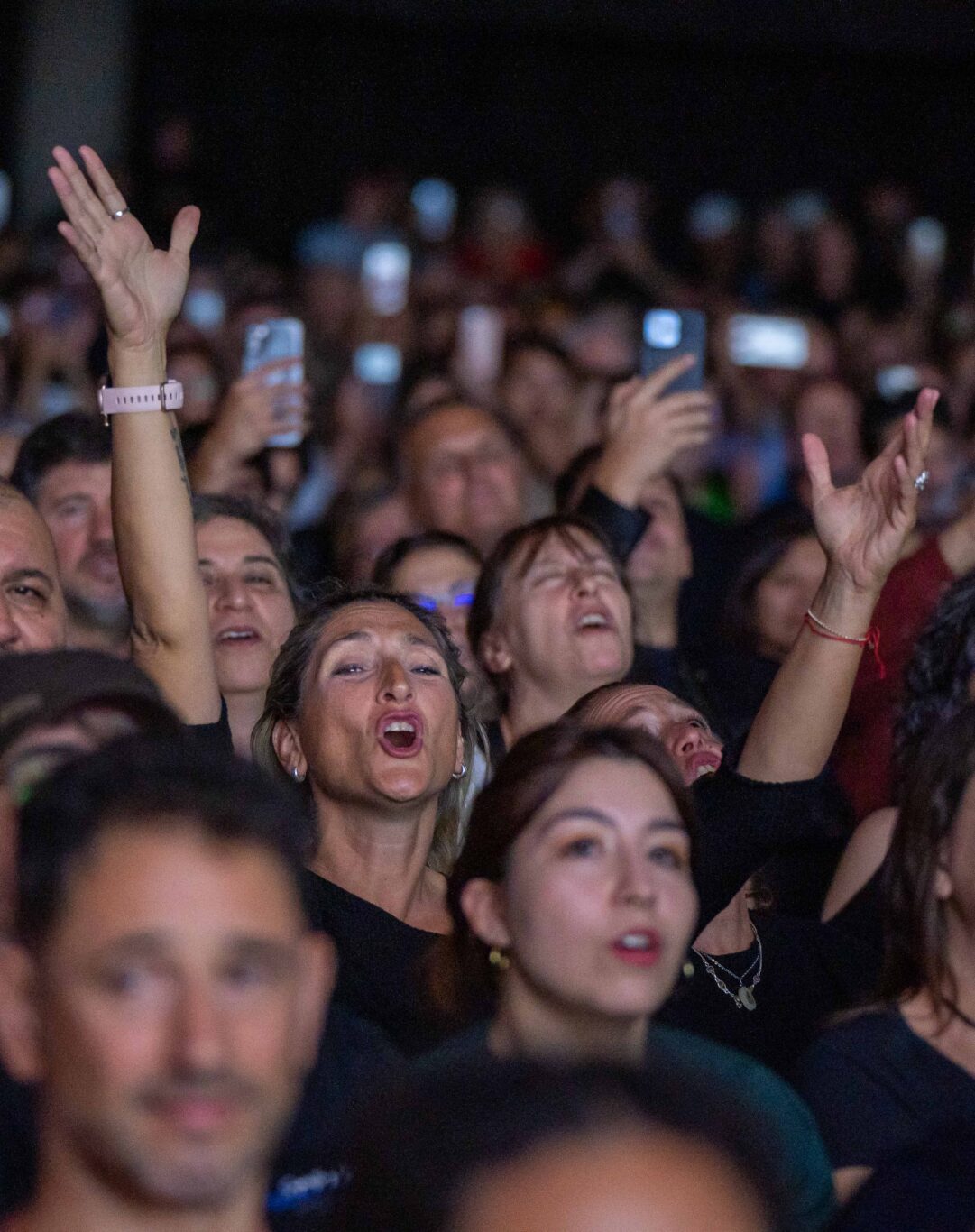
The intimate epic of this tour is also expressed in trips that go beyond the agenda. Angie Beatriz Morales Jorquera, Chilean, keeps the origin on a university cassette, in the midst of the dictatorship: “My second mother made me listen to ‘Imagínate’. Since then, not a single day has passed without her music.” Each concert, he says, makes his tide rise: “Although we already know the schedule, each presentation has its own magic. All my emotions cannot stop flowing, often to the point of crying.” In Lima he experienced an outburst: “It was an outburst of friendship, hugs and tears because so many of my most beloved troops were gathered together.”
Colombia provided perhaps the clearest adventure on the emotional map. Sergio Giovanny Flórez and María Alejandra Palacio, both 32, decided to turn the fear of running out of tickets into a continental log: Havana, Santiago, Buenos Aires, Montevideo and Lima.
“Let’s secure the ballot, even if it is in any country,” they said. They ended up putting together an affordable trip, with scarves that they sold in each city to finance stays and meals. The music, they say, was narrating the present of each place: Palestine, Pepe Mujica, Chilean memory, the problems of each country. “The same songs have a different social and emotional charge in each square,” explains Sergio.
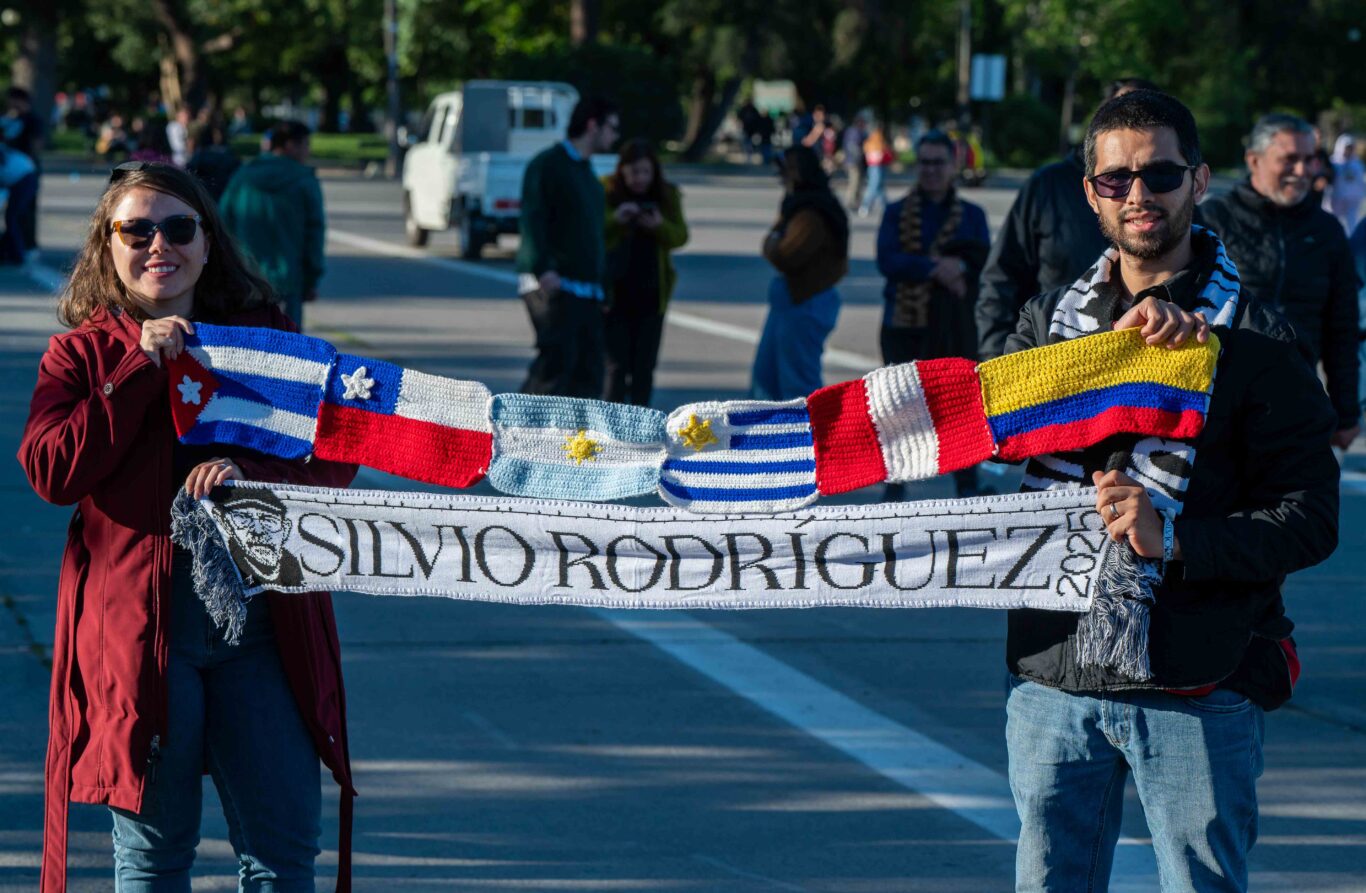
His personal hymns were “I will love you”, which was played at his wedding, and “El necio”: “Hence our scarf ‘I die as I lived’. That dignity to take on challenges without harming anyone.” Three scenes sealed the journey: a scarf given to Silvio in Havana; another autographed and returned in Uruguay; and, in Lima, the van stopped by Silvio, Malva and Niurka to thank them: “You have seen us at every concert,” they told them. “That the artist recognizes the effort demonstrates Silvio’s humanity and passion,” says María.
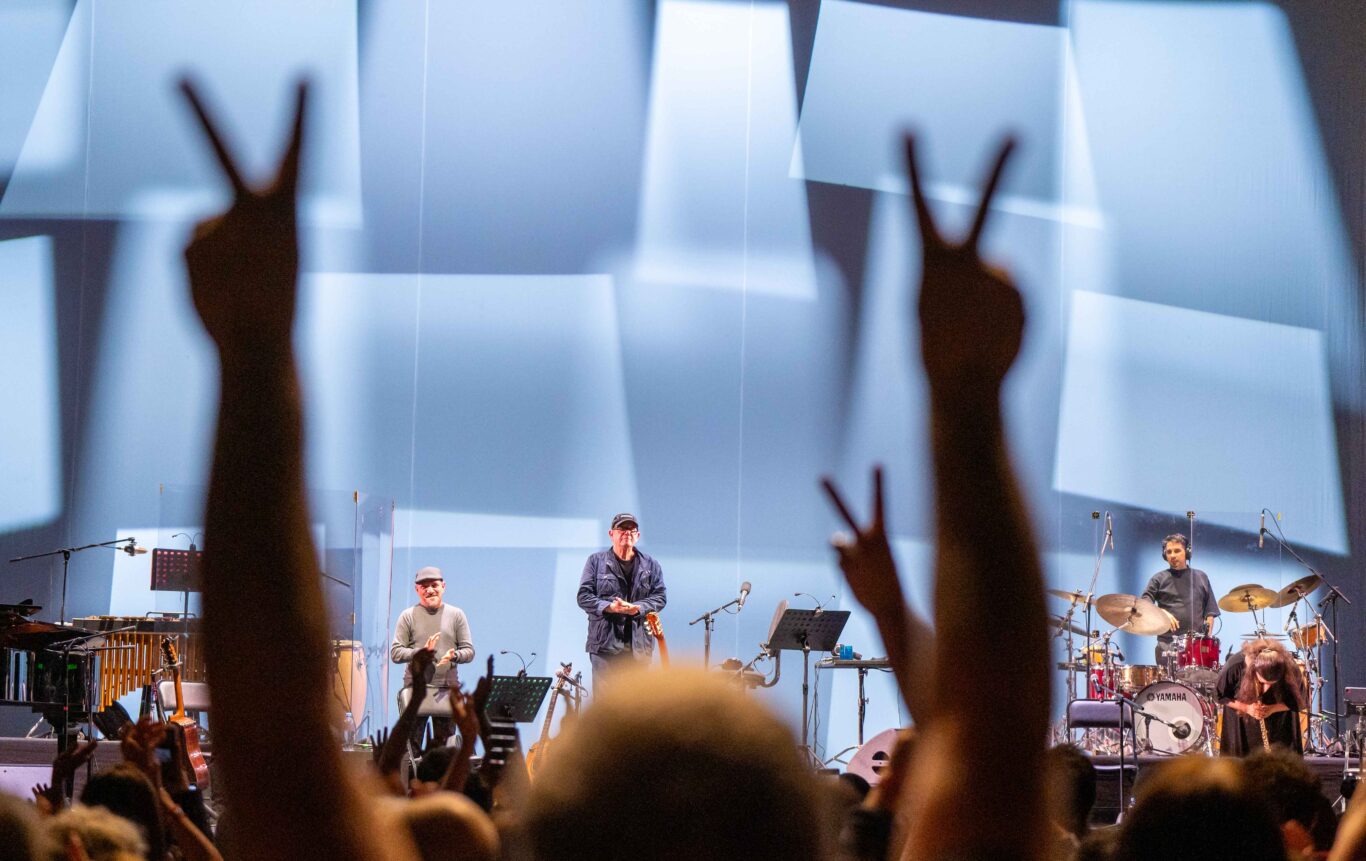
At this point, the inventory of songs—“The era is giving birth to a heart,” “Ala de hummingbird,” “El necio,” “Te amaré,” “Eva,” “I remember you Amanda,” “Santiago de Chile,” “Yolanda,” “ojala,” “Escaramujo,” “Hope comes”—says as much as the map. They are titles, yes, but above all they are keys that each person uses to open their own door. So is “Halt!”, a poem read by Silvio with a pause that the audience respects as if it were a prayer. And there are the tributes to Pablo Milanés, Vicente Feliú, Noel Nicola; names that, without being there, continue to be there.
What did I learn from watching the audience as much or more than from the stage? That the tour not only brings together a troubadour with his people: it brings people together with themselves. That each scale and country adds a layer—Chilean history, Cuban faith, Argentine memory, Uruguayan gratitude, Peruvian emotion, the Colombian heartbeat—and that, however, the common denominator appears naturally and fluidly: respect, hope, community. Also, concert by concert, networks of affection that are so necessary today are woven.
At the end of each night, when the ovation stretches and he greets with that mixture of modesty and tenderness, there is something that remains vibrating beyond the last chord and verse. Perhaps it is what each person in the audience formulates with different words: the certainty that his poetry turned into song has accompanied us to grow, love, resist; which is still necessary. In noisy times, beauty—that beauty that summons without distance—can still bring us to agreement.
The tour continues. People will continue to arrive with scarves, with inherited cassettes, with daughters called by songs, with the first listen still fresh even if decades pass. And I, behind the viewer, will look for those looks again.