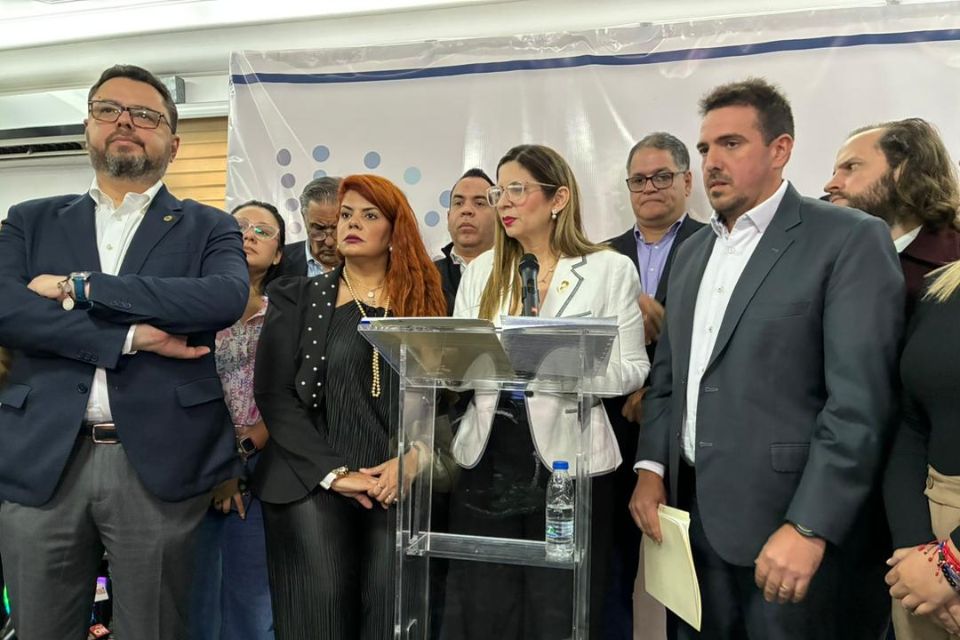
Stalin González asked to remember all the changes achieved with respect to the original amnesty project, which was discussed two weeks ago in the National Assembly by orders of Delcy Rodríguez. “The law is not made only for people who are imprisoned, but also to close the cases of many people” prosecuted during the last 27 years, he said.
The parliamentary group Freedomone of the three opposition groups in the National Assembly, recognized this Friday the 20th that the recently sanctioned Amnesty Law has several limitations, but leaves the “door open” for resolution through other judicial means of those cases that do not fall under the measure.
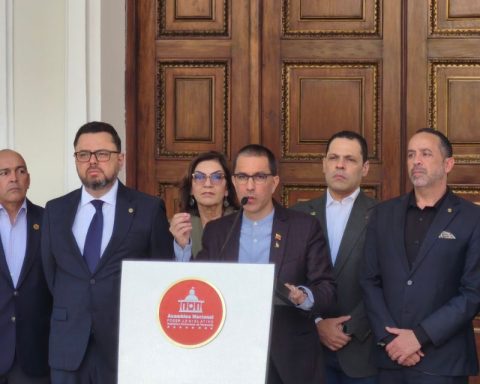
“The door cannot be closed, the door was left open to resolve cases that are not provided for in the law, and the door that was left open is article 15,” referring to the creation of a special monitoring commission, said deputy Stalin González (Un Nuevo Tiempo), in a press conference.
González asked to remember all the changes achieved with respect to the original amnesty project, which was discussed two weeks ago in the National Assembly by orders of Delcy Rodríguez. He referred to articles 7, 8 and 9 that talk about the amnesty people and the facts to be taken into account by the courts, which will have the final say in granting this measure.
“One thing was the plenary session and another was the intense debate to reach what was presented in the plenary session… The law is not made only for the people who are imprisoned, but also to close the cases of many people” prosecuted during the last 27 years, he noted.
*Read also: Penal Forum: The amnesty is a very small instrument, but it is an achievement
The deputy said that “it is true that there are Venezuelans who could commit a crime, but it is also true in most cases that the State did not fulfill its role as administrator of justice independently, that the Public Ministry and the courts did not fulfill their role. That is a discussion that is going to take place.”
“We are going to do the work that is needed to move forward as a country,” reaffirmed representative Nora Bracho, while highlighting that “there are no perfect laws.”
Regarding the exclusion of military personnel, Bracho said that it is a “specific and critical issue for everyone and obeys special laws. It is important that we proceed very delicately with this issue that concerns the events of our nation. “You have to go step by step, addressing the issues.”
He said that issues such as “the labor amnesty, the CVG, the employees of Corpoelec, PDVSA or people who have already been deprived of liberty for making a tweet have already been deprived of liberty, which correspond to the Law of Hate and it was our intention and proposal to repeal it.”
Bracho insisted that his faction will press for substantial changes in this type of regulations “that in some way must also accompany the Amnesty Law.”
«This law must be swift, this commission is installed to speed up the law… Starting today, anyone who is in prison or in a case through their lawyers can go to the Public Ministry, to the courts and submit a request to be amnestied. Immediately, the judge, the Public Ministry, must respond with a maximum of 15 continuous days,” said Bracho about the process contemplated for the amnesty request.
Also contemplated, he said, are factual situations “where due process has not been carried out,” such as forced disappearances.
Follow-up to the amnesty
Representative Nora Bracho reported that this Friday at 8:30 am the special commission to monitor the Amnesty Law was installed, made up of 23 parliamentarians. This group will review the data on political prisoners that they received in public consultations during the last two weeks, as well as the cases facilitated by the National Program for Coexistence and those reported directly to provide a peremptory response.
This special commission, Bracho explained, “is going to be subdivided by specific areas. Today we sat down to talk about its operation and the cases that are not for political reasons will be sent to the Permanent Commission on Internal Policy.
The commission, indicated the parliamentarian, will be the “observer of the judicial powers involved in this issue.” Likewise, there is a double instance. If a judge rejects an amnesty request for any reason, the person can appeal and go to a higher court. “It’s 15 days maximum and free.”
«The Amnesty Law has priority at the moment and we are betting that things are fast and flow. It is a demand of the Venezuelan people that the wounds heal and we believe, from our group, that it is time to heal those wounds that our nation suffers,” said Nora Bracho.
*Journalism in Venezuela is carried out in a hostile environment for the press with dozens of legal instruments in place to punish the word, especially the laws “against hate”, “against fascism” and “against the blockade.” This content was written taking into consideration the threats and limits that, consequently, have been imposed on the dissemination of information from within the country.
Post Views: 240