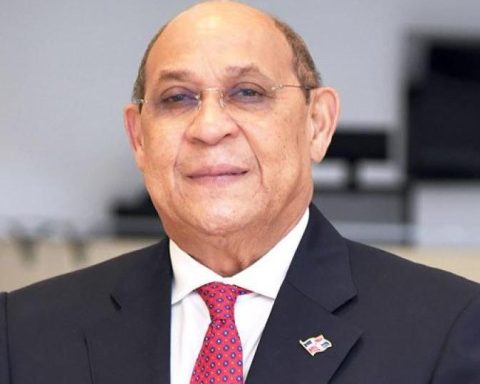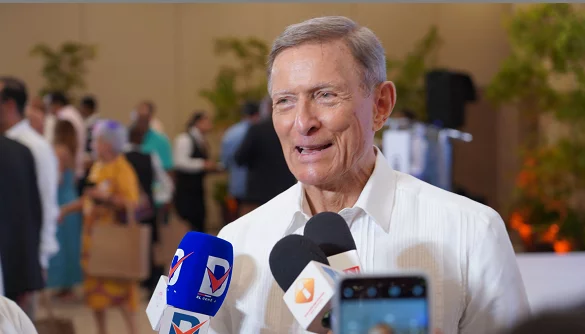
Santo Domingo. –The Minister of Foreign Affairs, Roberto Alvarezreported that a date has not yet been determined for celebrate the tenth edition of the Summit of the Americas.
The high-level event, which brings together the continent’s political leaders, was scheduled to take place on December 1 to 5, 2025in Punta Cana, but was postponed to this year due to the regional context which, at that time, faced high political tensionssuch as the United States military deployment on the coasts of Venezuela.
“There is no date yet. Actually, it was postponed just two months ago and We are starting conversations with various main actorsamong them the OAS, but we still do not have a horizon as to when this year could be,” the chancellor said this Tuesday during an interview on the Hoy Mismo program, which is broadcast on Color Visión.
The last Summit of the Americas was held in 2022 in Los Angeles, United States, and was marked by Washington’s decision not to invite Cuba, Nicaragua and Venezuela. The Dominican Republic adopted the same measure, which generated reviews of some heads of state, such as Gustavo Petrofrom Colombia, and from Claudia Sheinbaumfrom Mexico, who announced that they would not participate in the meeting due to the exclusion of said countries.
At the time, the Foreign Ministry reported that the postponement of the event will allow incorporate new governments democratically elected in the region and expand the consultation process with state, business, academic and social actors to build a more robust agenda.
Situation in Haiti
The minister Roberto Alvarez explained that the Dominican Republic has not participated in the election of de facto authorities who currently direct the destinies of Haiti, such as the Presidential Transition Council (CPT)who concluded his duties last weekend, nor in the selection of a new prime minister.
He noted that the decision was adopted considering the proximity to Haiti and respect for the sovereignty of that country, by highlighting that the election of said actors must be a issue exclusively for Haitians even counting on the advice of the international community.
“The Presidential Transition Council, which ended its mandate on February 7, was elected among several international countries with the main actors of Haitian society in Jamaica a year and a half ago. We we support that processbut we did not have any type of intervention in it,” he noted.
Likewise, he indicated that the country did not have a interventionist role for the election Alix Didier Fils-Aimé as the new prime minister, and he limited himself to making a call for social cohesion before the arrival, in April, of a new military force to combat armed groups
Álvarez added that he maintains a direct communication with the Haitian authorities, both bilaterally and through diplomatic channels, through the Dominican ambassador in Haiti, Faruk Miguelwho has participated in the most recent transition phases.
Relations with Venezuela
During the interview, Roberto Alvarez reiterated that it maintains a firm stance of not recognizing the legitimacy of the elections in which Nicolás Maduro was re-elected, due to the lack of transparency in the process.
However, he reported that they will proceed to open a consulate to serve the Dominican diaspora in the South American country that amounts to 15 thousand people, as well as Venezuelan citizens, who currently must travel to Bogotá to apply for a Dominican visa.
According to the chancellor, in the Dominican Republic More than 125 thousand Venezuelans reside there.