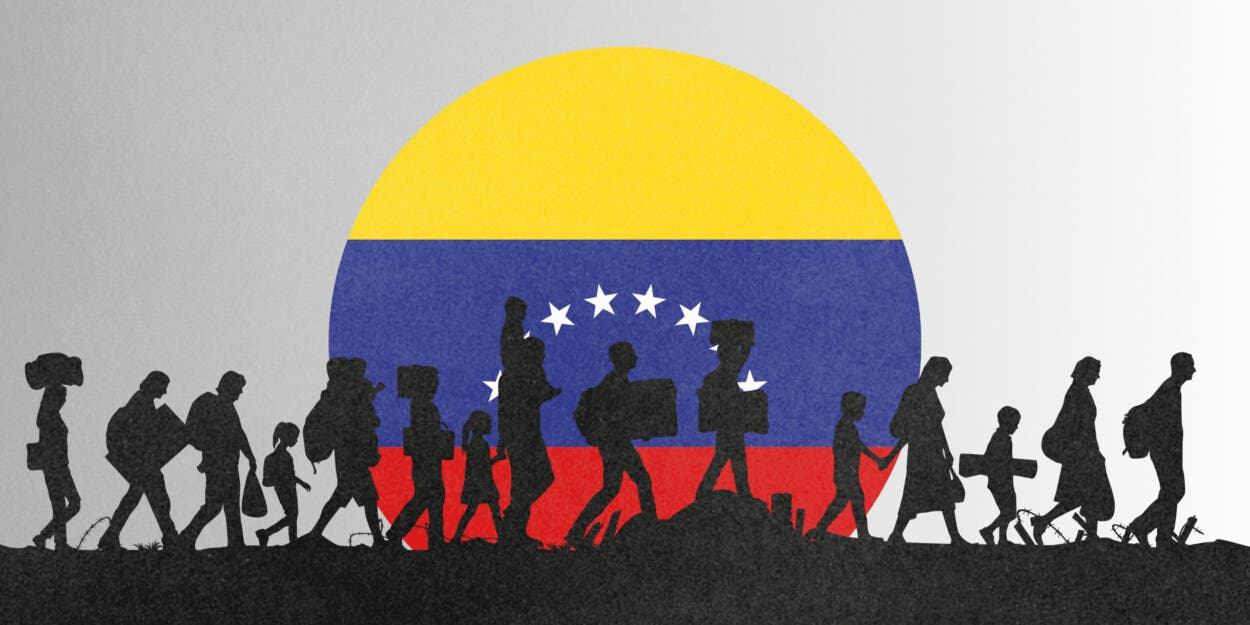
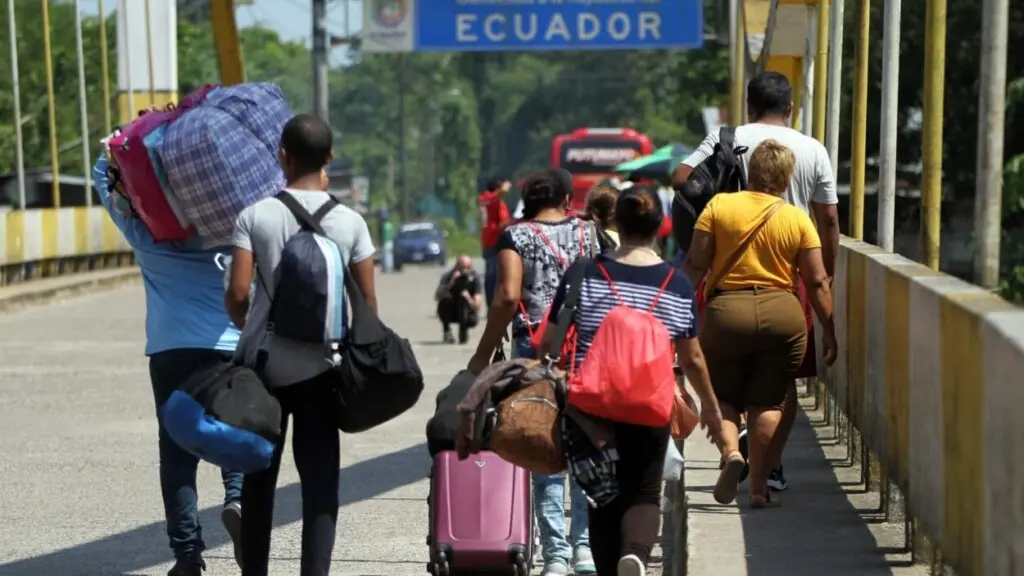
Santo Domingo.-More than 50% of the eight million Venezuelan migrants who have left their country as a consequence of the economic and political crisis that that nation is going through has managed to regularize their status in the countries of Americaaccording to a study by the International Organization for Migration (IOM).
In the case of the Dominican Republic, approximately 43,000 Venezuelans are registered in the Normalization Plan, out of more than 70,000 who currently reside in the country.
The report indicates that 82% of Venezuelan migrants have chosen to stay in Latin America, where cultural similarities, the common language and, above all, access to employment, education, health services and documentation, make a significant difference.
You may also be interested in:
Since 2018, more than 4.5 million Venezuelans have regularized their status in South America and the Caribbean thanks to the leadership of national governments, with the support of the IOM and its allies within the framework of the R4V platformthe Regional Interagency Coordination Platform for Refugees and Migrants of Venezuela.
Colombia and Brazil, examples of successful integration
In Colombia, a recent study revealed that 82% of Venezuelan migrants want to stay in the country, because they feel that they belong and, for the first time in years, have a place they can call home.
In Brazil, Operation Welcome has shown that when opportunities are offered, people respond: a 77% of migrants found employment in just a couple of weeks, and a 98% managed to access basic services such as health and education.
The economic benefits are also notable. In Panama, private investments by Venezuelan migrants exceed 1.8 billion US dollars and have generated more than 40,000 jobs.
In Colombia, their tax contributions reach 528 million dollars annually, along with another 400 million invested in health and education.
In Peru, the tax contribution exceeds 537.8 million dollars. Studies estimate that, if all migrants were completely regularized, these contributions could increase by more than 30%.
Venezuelan migrants have a high potential to contribute to local economies. On average, 70% of IOM respondents have higher education, and many have university or postgraduate degrees. However, more than 60% cannot practice their profession because the recognition of their diplomas obtained in Venezuela continues to be a complex process.
Inclusion and entrepreneurship programs promoted by the IOM
IOM also promotes practical tools that allow migrants to generate jobs, boost local economies and promote social inclusion. An example is the Business Development Fund, an economic inclusion mechanism that provides seed capital and technical support to small businesses led by migrants, returnees, and members of host communities.
This fund helps overcome barriers such as lack of access to credit, informality or irregular immigration status, and has become an effective path towards financial inclusion.
In Latin America, the initiative is active in Ecuador and Guatemalaand is currently expanding to support women-led businesses and strengthen economic opportunities in communities vulnerable to irregular migration.
Despite the negative narrative that still prevails around migration, IOM highlights that countries that have opted for inclusion and regularization have not only provided hope, but have also strengthened stronger, more resilient and sustainable communities for all.