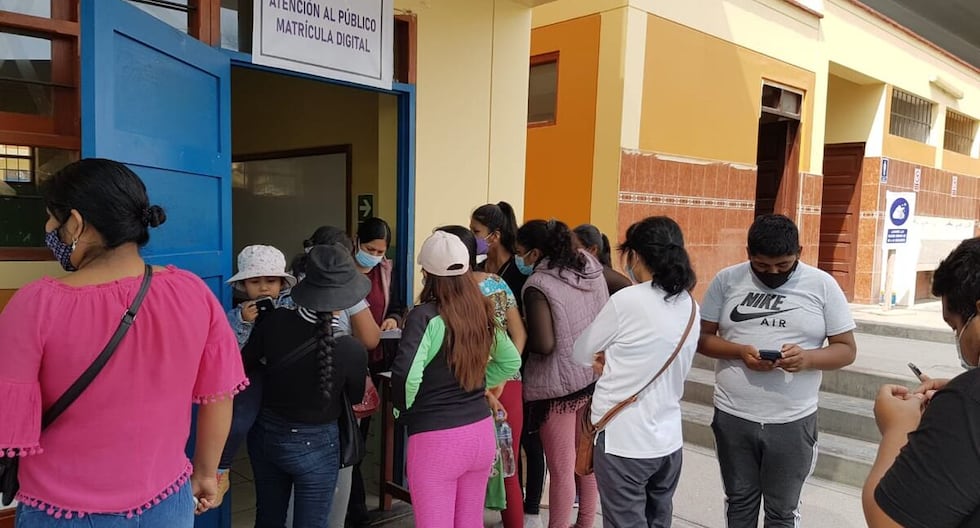
In Mexico, the line is not always a tool of order: sometimes it is a method of rationing. The window teaches an early lesson: if you wait, maybe it’s your turn; If you pay, almost certainly. The problem is not that there are lines, but that waiting becomes a form of payment: a co-payment in time, invisible in the budget but very real in life.
Elsewhere that logic is sold frankly. The “fast pass” does not buy the attraction: it buys the right not to wait. Minutes are bought and in an unequal society, minutes are a hard currency.
And then there is the most Mexican image: the train. There are health services that do not operate as a guaranteed right but as an intermittent opportunity. It is not “come here with your turn”; It is “take advantage when it happens.” As if access worked through windows: today there is a day, tomorrow who knows.
And it is worth refining the metaphor: that train does not have a single logo. Sometimes it comes with public emblems; sometimes with private carriages; sometimes as a hybrid arrangement—foundations, companies, hospitals and authorities—that come together to move the gap. Philanthropy is presented as a sum of altruism, and many times it is; But when regular attention does not sustain continuity, that addition ends up operating as a practical substitution: it does not replace by intention, but by necessity.
There is a culture of time hidden in the image: waiting for the train is not the same as taking it on schedule. When there is no schedule, life adapts to the system; When there is, the system adapts to life. That predictability is also a concrete form of law.
But a decisive figure is missing: the one who pays in advance so as not to wait. He doesn’t buy the surgery; buy certainty. Private insurance works like an “annual pass”: a periodic fee so that time does not become a punishment. Where the public sector rations with a line, private insurance rations with a contract: network, authorizations, deductible, coinsurance.
With these images – line, train, payment on the spot and prepayment – we understand why medical care, even when it exists on paper, can become a domestic dilemma. And there appears the question that divides families: do we wait or pay?
Up to this point it seems like a customary comment, but waiting has a history. Queuing is not “natural”: it is a social technology. Train bodies to obediently accept delay as normality. In Mexico the public clock is usually asymmetrical: punctual when it collects (due dates, surcharges, fines) and elastic when it must respond (procedures, appointments, surgeries). When money is not enough – or you do not want to spend it – it is rationed by waiting. This rationing is paid for in everyday life.
The waterfall is an almost perfect case to see this politics of time in action. It is predictable because it accompanies aging, and Mexico ages. It is treatable because the surgery is standardized and usually has a short stay. And yet, the experience of many people is not that of a clear route, but that of a time regime: wait for the system to schedule, pay to buy a date, or pay in advance so as not to wait. Ultimately, the dilemma is not clinical: it is political and distributive. It does not decide who has surgery; decides who can stop waiting.
It is convenient to explain what condition we are talking about. Cataract is the opacification of the crystalline lens, the natural lens of the eye. It is not “dirt” or a superficial membrane: it is loss of transparency in an internal lens. That is why it is not just “seeing blurry”, but seeing with less contrast: glare, night halos, dull colors, difficult small print, unsafe steps. The cataract does not hurt; That’s why it is normalized. But normalizing it reduces the world of those who suffer from it.
Another basic point: cataracts are not reversed with drops. When it already affects the function of vision, the effective solution is surgical: removing the opaque lens and replacing it with an intraocular lens. The procedure is brief and outpatient, but depends on a complete choreography: preparation, measurement, supplies, operating room and follow-up.
Here a crucial piece appears: ocular biometrics. Done well, it allows you to calculate the power of the intraocular lens for that eye. And this matters because many people arrive with cataract and myopia, farsightedness or astigmatism; Furthermore, in the majority, presbyopia is already present. That is why it is important to remove a false expectation: surgery can restore vision, but it does not necessarily “remove the glasses.”
Monofocal lens implants (the most used in the public system) choose a single focus point, often for distance vision, but do not respond to a person’s ocular biometry. The result can be excellent for moving safely, but the most common thing is to continue using glasses for reading and, if there is astigmatism, perhaps also to refine distance vision. The surgery can end in an inside and an outside prosthesis. And there appears the difference between “resolving cataract” and “recovering autonomy.”
With careful biometry, surgery can bring the patient closer to more autonomous vision: it reduces the refractive remnant and avoids “we see, but not completely.” But that precision does not circulate the same. In the public sector, the event is usually guaranteed – removing opacity – and fine refraction is left out: lenses, revisions, adjustments. The cataract resolves; Autonomy is delegated, almost always to the family.
You also have to talk about risks honestly. The vast majority of surgeries go well, but there are possible complications: inflammation, increased eye pressure, corneal edema, bleeding and, rarely, infection. Weeks or months later, a secondary “haze” (opacity of the posterior capsule) may appear, which is usually resolved with lasers when indicated. That is why monitoring is not a detail: it is part of the treatment.
The Global Burden of Disease 2023 (GBD) study suggests that the number of people with cataracts in Mexico increases from around 600,000 in 1990 to around 1.7 million in 2023. Read without rates, it seems like an explosion. But when looking at rates by population, the drama decreases: it is not a new epidemic, but the predictable companion of aging. Aging and cataract progress in parallel.
That distinction changes the political diagnosis. If what increased was the rate, we would discuss new causes. But if what grows are the absolute ones due to aging, we are facing a programmable demand. And what is programmable should not be governed by chance. If demand grows at the rate of aging, surgical capacity must grow at the same rate; If not, the delay is not an accident.
That is why days to “lighten lists” proliferate. They can serve: they move volume, release pressure, show technical capacity. But they are also a symptom. If the solution depends on “the train passing”, health becomes an event. And when health becomes an event, the inequality of knowledge appears: those who have more networks find out sooner, insist better, arrive first. The day relieves; If it does not become a sustained routine, the lag returns.
In this context, the private sector grows as a practical solution. Many cases do not migrate due to ideology but due to urgency: when the public system rations over time, time becomes intolerable. And then the market sells what the State does not guarantee: time. Sometimes you pay instantly. Sometimes you pay in advance—via insurance—to buy recurring certainty. Thus, without saying so, a part of aging is delegated to the families’ ability to pay.
Here it can be said without exaggeration: Mexico does not have a clinical failure. He knows how to operate cataracts. Your problem is another: converting technical capacity into a public calendar. Lens metering available. Operating room on a certain date. Continuity monitoring. And, when possible, integrated refractive correction so that the surgery returns not only light, but autonomy.
In cataract, Mexico rations with time. The waterfall grows because the elderly population grows; The predictable should not be governed by chance. If the resolution capacity is only enough to cover a fraction of the backlog each year, the result is mathematical: lists that are perpetuated, days like a valve and a silent transfer of cases to the market—sometimes paying immediately, sometimes paying in advance so as not to wait.
The real symptom is not the opacity of the lens: it is the opacity of the agenda. We don’t need more surprise trains; We need schedules: transparent lists, guaranteed supplies and maximum times that are met. Because seeing should not depend on how much your patience lasts or how much your pocket holds, but on a right that, finally, has a date.
References
- Institute for Health Metrics and Evaluation. (2023). GBD Compare data visualization. GBD Compare. https://vizhub.healthdata.org/gbd-compare
- The International Agency for the Prevention of Blindness. (2025). 2030 In Sight Country Progress Survey Vision Atlas (Cataract Surgical Rate for Mexico). Vision Atlas. https://visionatlas.iapb.org/compare/mx/
- Ministry of Health (Mexico). (2025). National Strategy for Cataract Surgery “See for Mexico”. Government of Mexico. https://www.gob.mx/salud/articulos/estrategia-nacional-de-cirugia-de-catarata-ver-por-mexico
*The author is a Full Professor of the Department of Public Health, Faculty of Medicine, UNAM and Professor Emeritus of the Department of Health Measurement Sciences, University of Washington.
The opinions expressed in this article do not represent the position of the institutions where the author works. [email protected]; [email protected]; @DrRafaelLozano