HOLY SUNDAY.-With the attitude of the liberated that hHe has paid for all his faults, the same one that the foul language usually hasRicardo Ripoll Garcíatalks about his life without holding back despite being outside the usual comfort that the cameras represent. We are Pueblo Media.
His middle name is Augusto and he was born in Santo Domingo on March 9, 1963. His family roots go back to San Pedro de Macorís, although his parents met in Santo Domingo, settling first in Ciudad Nueva and then in Gascue.
School indiscipline
Schooling was, for Ripoll, rocky territory. At the Santa Teresita Schoolwhere he attended high school, the strict discipline clashed with his chronic restlessness.
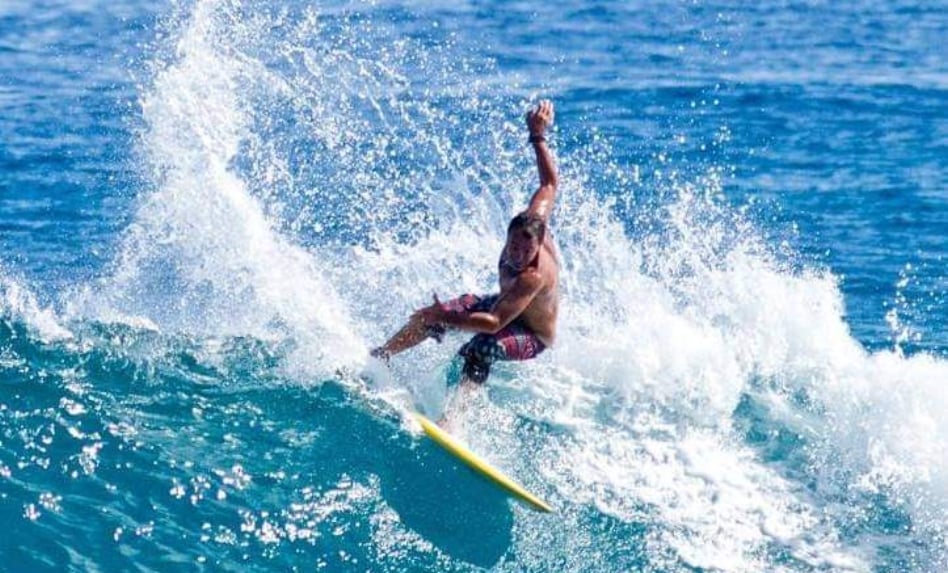
“I had behavioral problems. Today I understand that I had attention deficit, hyperactivity. For me, school was torture,” he confesses.
Also read: Juan Hubieres changed the wrestling ring for that of protest and social activism
During breaks I used to “fly over the fence” to Guibia, that ribbon of sea that would introduce him to surfing.
The disciplinary file filled up quickly and the administration expelled him.
“I was just passing by. Or they sent me to September. Not for grades, for conduct.”
He ended up graduating as a free student in 1981, after repeating a course, at the Manuel Rodríguez High School.
Street and work
The street appeared early with its temptations, the edge of night and the mist of excess.
“I had started consuming illicit substances, drank bluntit dawned on the street, womanizing, doing nonsense”he admits bluntly.
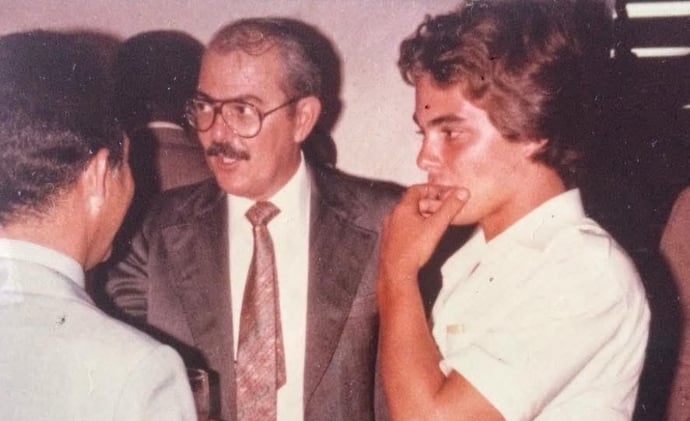
Aside from the “youthful disorder,” Ripoll built a career in hospitality, a family profession.
“My father was a hotelier and I went that route”he explains. He planted trades at the Hotel Embajador, the opening of Bávaro, Juan Dolio, the Dominican Fiesta and the old Concorde. He studied hospitality at the Pontificia Universidad Católica Madre y Maestra and rotated through cooking, banquets and—now oriented—rooms and operations.
In that circuit of hallways, check-ins and banquet halls he met Margaret, a Scot with whom he has been together for 32 years and “married for 30.” He does not spare gratitude on her: “He has taken a fight that is over. I will never have a way to pay him.”
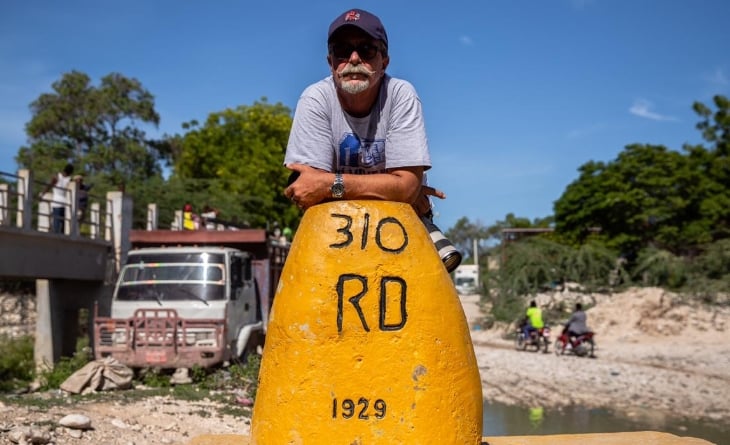
Ricardo and surfing
Surfing was not a hobby: it was a mold.
His aquatic genealogy begins in 1974, when he was 11 years old. First there were the boards with wheels, the empty pools that become concrete waves, and then Güibia, where Federico Almonte He lent him the first board.
“For me it is more than a sport. It’s a philosophy. It changed my life.”
The treatment
Recovery is a dated milestone. “I arrived tired, fed up. I asked for help on March 29, 2002”, he states.
Before, there was a detoxification hospitalization that left him with third-person memories: “They had to put me in a straitjacket because of how bad I was.” Today he talks about the process without embellishment or shame, as if each word served another who listens to him from the edge: “That is part of my life.
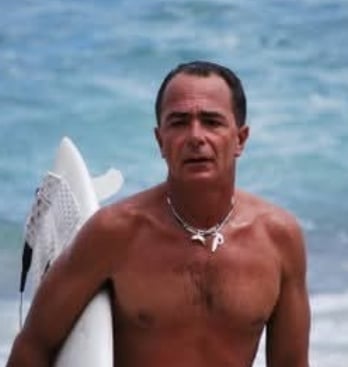
I do not hide it.” From this pedagogy of collapse he extracts an ethic: the past is not erased; it is integrated and put at the service.
The social
“I’m not interested in recognition. I’m even embarrassed when people stop me on the street,” he confesses.
Today, with two new boards waiting their turn and an agenda taken up by his public work, he says he misses the sea. Perhaps that is why he uses verbs that sound like rowing: resist, focus, contribute. In his own way, he summarizes his biography in two short words—a mantra read in the foam—: “Everything passes.”