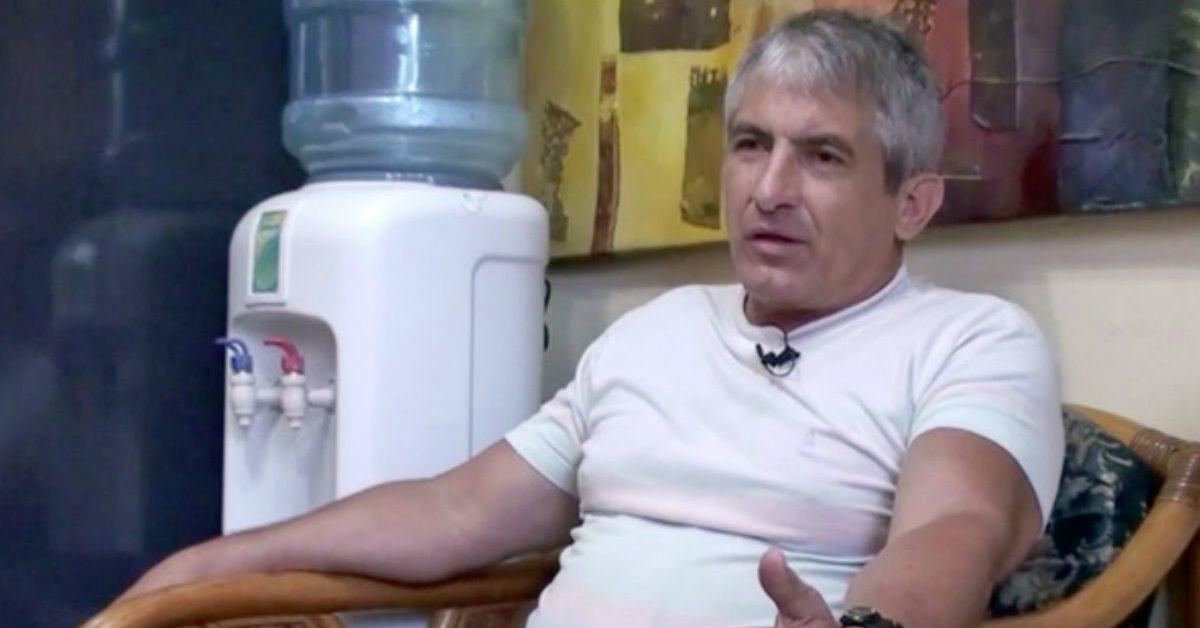
Madrid/Juan Pablo Roque González, alias Germanone of the Cuban spies involved in the downing of the small planes Brothers to the Rescue In 1996, he died in Havana at the age of 70. His ex-wife confirmed it this Friday from Miami, Ana Margarita Martínezwho stated that his death occurred on November 25.
In an interview with the Cuban journalist residing in the United States Mario Vallejo The woman explained that she had gotten “a virus, one of those that is going around Cuba now”: he had had heart surgery and “he was delicate.”
“In an ironic twist of history, his death occurred on the same date that Fidel Castro, the same dictator he served, died,” Martínez, who has always maintained that Roque hid his true occupation from him during the marriage, said in a later publication. He referred to this again in his social media post: “Although our marriage was later annulled in court, the consequences of his deception were profound and personal. He never faced earthly justice for his actions.”
Martínez affirms that, upon the death of her ex-husband, she felt “obliged to address a chapter that left a deep mark on my life and on our Cuban-American community.” Roque González –remembers his ex-wife– was a member of the call Wasp Network “and her betrayal caused immense harm,” not only to her and her family, “but also to the brave volunteers of Brothers to the Rescue and all those who have fought tirelessly for freedom, truth and human dignity.”
The woman explained that she got “a virus, one of the ones that is going around Cuba now”: he had had heart surgery and “he was delicate.”
In your post mentions the four victims of that attack – Mario de la Peña, Carlos Costa, Pablo Morales and Armando Alejandre Jr. –, volunteers from the organization Brothers to the Rescue – which helped exiled Cubans and promoted freedom on the Island – who on February 24, almost 30 years ago, were flying in three small planes to track rafters in the Strait of Florida.
Only one returned to the Opa Locka airfield, north of Miami. The other two were pulverized by missiles fired from two MiG fighters of the Cuban Air Force. Havana – then with Fidel Castro still in full power – hid behind the fact that the aircraft violated the country’s airspace, but both the United States and the exile maintain that the attack took place over international waters.
Roque González himself, lieutenant colonel of the Revolutionary Armed Forces, served as a pilot for Hermanos al Rescate, which he infiltrated after simulate his desertion from the Islandin 1992, swimming to the US naval base at Guantánamo. He returned to the Island just the day before the attack and never faced justice.
His story had a different fate than that of the five spies Cubans convicted in 2001 by the United States of conspiracy to commit murder and espionage, in addition to being unregistered agents of a foreign government. Arrested in 1998 in Florida while carrying out intelligence work for Havana, the regime deployed an intense and costly propaganda campaign for their release, elevating them to the category of heroes.
The figure of Roque González gained prominence five years ago, when Netflix broadcast the controversial film ‘La Red Avispa’, where he was played by actor Wagner Moura.
One of them, René González, was released in 2011 and, three years later, Fernando González concluded his sentence, after which both returned to the Island. In December 2014, as part of the thaw initiated by President Barack Obama, with Raúl Castro succeeding his brother Fidel in the Plaza de la Revolución, the three who were still serving sentences in the United States – Ramón Labañino, Antonio Guerrero and Gerardo Hernández Nordelo – were released and deported to Cuba. In exchange, Revolution Square handed over contractor Alan Gross, imprisoned on the Island for trying to deliver satellite connection devices to the Jewish community.
The figure of Roque González gained prominence five years ago, when Netflix broadcast the controversial film The Wasp Networkwhere he was played by the actor Wagner Moura. The role played by Ana de Armas as Ana Margarita Martínez caused her to file a sue Netflixconsidering that it distorted reality. It was not the only lawsuit that the film provoked: José Basulto, founder of Hermanos al Rescate, also sued for presenting him as a terrorist, although he finally reached a settlement. according to the audiovisual platform.
The attack on the small planes took place just at a time when the US Administration was in favor of lifting the embargo on the Island. In response to the shootdown, the opposite happened: then-President Bill Clinton signed the Helms-Burton Act and intensified economic sanctions against Cuba.