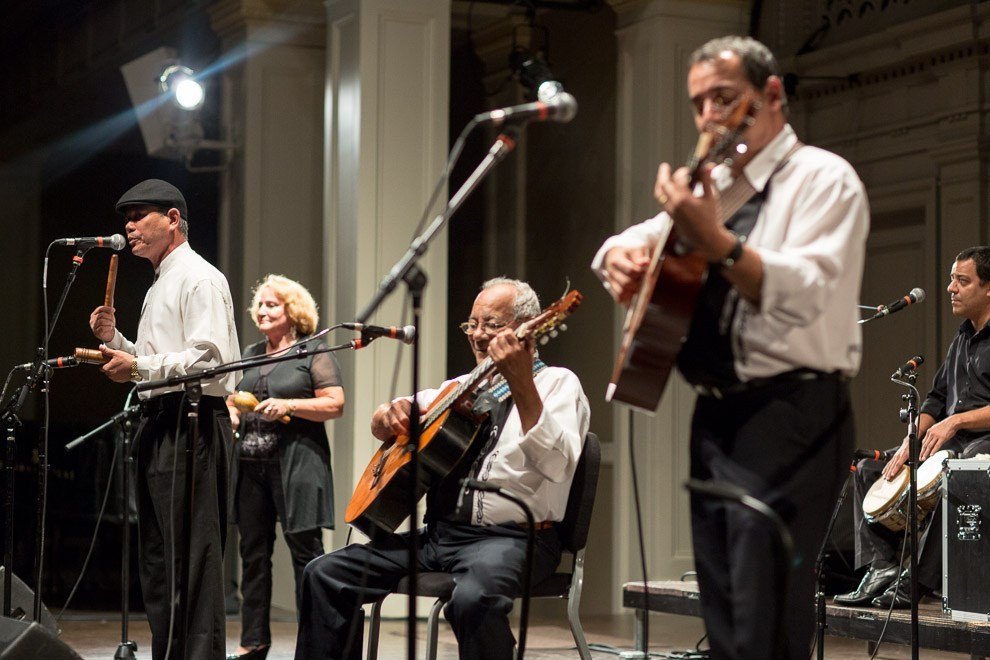
He they are cubanproposed to UNESCO by Havana as a new Intangible Cultural Heritage of Humanity, is a “historical pillar” of the country’s traditional dance music, says the candidacy, which highlights a history with more than a century of artistic fusion.
The final decision will come shortly, within the framework of the ordinary meeting of the Intergovernmental Committee for the Safeguarding of UNESCO’s Intangible Cultural Heritage, which will be held from December 8 to 13 in New Delhi, India.
The essence of the genre, which has its origins in the 19th century and combines Spanish lyrics with African percussion, is well summarized by the world-famous “Chan Chan” by the historic sonero Compay Segundo: “From Alto Cedro, I go to Marcané. I arrive at Cueto, I go to Mayarí.”
The famous chorus, one of the pieces immortalized by the Buenavista Social Club, is no coincidence. It is a geographical journey through four towns in eastern Cuba, specifically in the provinces of Holguín and Santiago de Cuba.
It is precisely in that region, with its green landscapes and hills, that the Cuban son was developed in black communities. At the beginning of the 20th century he arrived in Havana and settled permanently in the neighboring province of Mayabeque.
The candidacy
The Caribbean country’s candidacy highlights it as a practice whose “variety and richness, with traditional rhythms of African and European ancestry, are the result of the memory and transculturation of the nation.”
Its rhythms, in addition to having African percussion instruments, are melodized with the Cuban tres, a guitar with three pairs of strings.
Currently, the son has known and universally enjoyed hymns that bring Cuba closer to all corners of the world with titles such as “Lágrimas Negras”, “El Cuarto de Tula”, “Son de la Loma” and “Échale Salsita”.
Unesco’s Intergovernmental Committee for the Safeguarding of the Intangible Cultural Heritage plans to examine 54 nominations, including 11 from Latin America and the Caribbean.
The proposals from the region, in addition to the Cuban son, include: the joropo (Venezuela); the Córdoba quartet (Argentina); the Passion of Christ from Iztapalapa (Mexico); the family circus tradition (Chile); the compass (Haiti); the construction of the quinchas (Panama); Ñai’upo art (Paraguay); the Aymara music and dance of Sarawja (Peru); the festival of the Virgin of Guadalupe (Bolivia) and the Christmas bram and sambai of Wales Point Manatee (Belize).