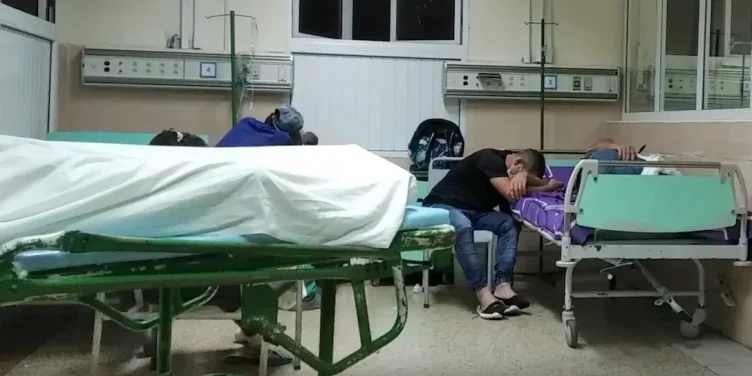
MADRID, Spain.- The Cuban Government announced a series of measures to reorganize the health system that include the reduction of personnel in hospitals and polyclinics, the suspension of elective surgeries and the creation of mobile medical brigades, in an alleged attempt to sustain basic services in the midst of the deep energy crisis and fuel that crosses the country.
The decisions were informed by the Ministry of Public Health (MINSAP) in official media and they implicitly recognize the growing difficulties of the health system in functioning normally due to the lack of resources.
Among the main actions announced is the reduction in the number of in-person workers in health institutions, with the argument of reducing staff mobility and electricity consumption. According to the authorities, priority will be given to those who live near work centers to remain active, while other professionals will be left out of direct care.
The MINSAP It also confirmed the reduction of planned surgical activity, maintaining only urgent and emergent surgeries. The Government says that highly complex surgical procedures and hospital services demand energy consumption that currently cannot be sustained on a regular basis.
As an alternative, the regime is betting on the creation of mobile medical brigades that will temporarily travel to municipalities and communities to bring health care closer to the population and limit transfers to hospitals and polyclinics. Likewise, the strengthening of the Family Doctor and Nurse Program as the axis of primary care was announced.
The authorities assured that programs considered sensitive will be prioritized, such as Maternal and Child Care, care for patients with cancer, chronic and terminal illnesses, and those that require vital treatments such as hemodialysis or radiotherapy. For these cases, fuel for ambulances would be guaranteed or, failing that, hospital admission for patients.
The plan includes the optimization of diagnostic means, favoring the clinical method over tests that require high electrical consumption, as well as the reduction of hospital stays when possible. An increase in the production of sodium hypochlorite for water disinfection was also reported, due to possible supply failures.
At the labor level, the MINSAP foresees the reorganization of shifts, the calling of retired personnel who live near the institutions and adjustments in the training of medical sciences students, with decentralized and distance activities.
Although the official discourse insists that these measures seek to “preserve essential services” and protect the population, the announcement confirms a new setback in the operational capacity of the Cuban health system, already hit by years of medication shortages, deterioration of infrastructure, exodus of professionals and constant complaints from patients.
The Government attributes the situation to the worsening of US sanctions, but avoids referring to the structural crisis of the state health model, which today forces us to ration medical care, postpone treatments and reduce personnel in one of the sectors that for decades was presented as an emblem of the regime.