Between blackouts and extreme poverty, the Minister of Foreign Trade once again sold investments, blamed the embargo and denied any diversion of international aid.
MADRID, Spain.- The deputy prime minister and head of Foreign Trade and Foreign Investment of Cuba, Oscar Pérez-Oliva Fraga, once again blamed the US embargo for the country’s deep economic crisis, while defending the carrying out of the Havana International Fair (FIHAV) in a context marked by the damage of Hurricane Melissaprolonged blackouts and citizen complaints about the lack of attention to the victims.
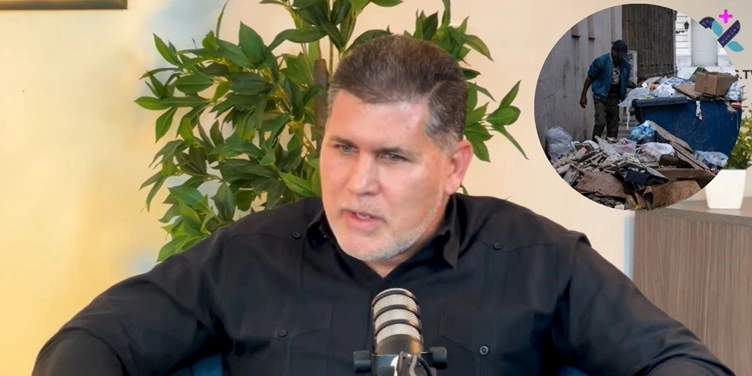
During an interview with the official program Alma’s living roombroadcast by Alma Plus TV, Pérez-Oliva assured that there were no doubts within the Government about the convenience of maintaining the fair, despite the fact that the event took place shortly after more than 110,000 homes were affected in the eastern provinces by the meteorological phenomenon. According to the official, FIHAV was “necessary” to show the world the investment opportunities in Cuba and reaffirm that the country “is not alone.”
Donations, state control and opacity
The minister dedicated a good part of his speech to rejecting criticism about the alleged diversion or commercialization of international donations. As an example, he cited a donation sent by the Government of Colombia after the hurricane, which – as he stated – was given directly to affected families, respecting the “will of the donor.” He also maintained that agencies of the United Nations system visited the damaged areas and confirmed the damage in situ.
However, These statements contrast with numerous testimonies from citizens in the affected provinceswho continue to denounce the lack of electricity, food, medicine and construction materials months after the hurricane. In several locations, blackouts exceed 20 hours a day and thousands of families continue to live in precarious conditions, without housing solutions or stable assistance.
Pérez-Oliva Fraga also defended a package of measures announced during the fair to “make foreign investment more flexible,” including the reduction of business approval deadlines, the possibility of directly hiring Cuban workers and greater freedom to operate in foreign currency. The official presented these decisions as part of the government program to “correct distortions and re-boost the economy.”
However, the accumulated experience of foreign investors on the Island reflects a very different panorama: lack of legal security, non-payments, excessive State controls, deterioration of basic infrastructure and an energy crisis that makes any productive project more expensive. The minister himself recognized that blackouts and energy deficits constitute a deterrent to investment, by forcing companies to assume additional costs to guarantee their operation.
Despite this, the Government insists on promoting sectors such as tourism, the sugar agroindustry and mining, while the population faces one of the worst social crises in recent decades. The official rhetoric, focused once again on the US embargo, once again occupied a central place in the minister’s intervention, who described the current scenario as the “crudetest” moment of that policy and went so far as to describe it as a “crude and rude hunt” against countries and companies that maintain ties with Havana. However, this discourse continues to avoid assuming responsibility for a failed economic model that has led the country to a situation of widespread impoverishment, political repression and chronic dependence on foreign aid.
The interview, far from clearing up doubts, once again highlights the gap between government discourse and the daily reality of millions of Cubans.