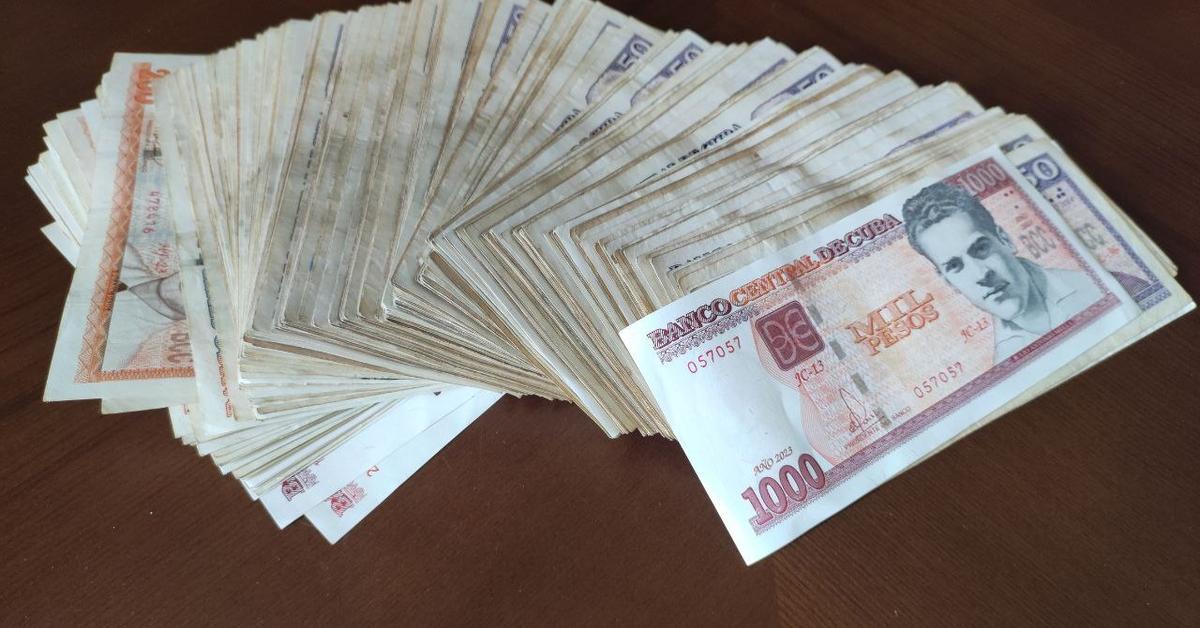
Havana/In an extensive report published this Sunday, the official newspaper Granma returns to the issue of the “kidnapping” of dollars sent by exiles to their relatives in Cuba, who receive remittances in pesos at a rate that the regime describes as “illegal” and “artificial.”
Until then, nothing surprising. The Cuban economy is flooded with intermediation networks because the State itself destroyed, years ago, formal remittance channels and turned access to foreign currency into a labyrinth full of multiple rates, restrictions and parallel markets. But the revealing detail is not in what the Communist Party newspaper tells, but in what it carefully avoids mentioning. Because the mechanism described – raising dollars abroad and delivering pesos in Cuba – is exactly the same one that the Cuban State has applied for years, with the aggravating factor that the State applies an exchange rate of 120 pesos, while private parties pay almost four times more.
He reportage explains that Humberto Julio Mora Caballero, a Cuban resident in Miami, delivered the equivalent in pesos to the “illegal” rate supposedly set by the site The Touch. That accusation might impress an Australian or Eskimo reader, but those who live on the Island know that the official rate set by the Government is arbitrary, fictitious and totally disconnected from the market. Starting in 2022, the fixed rate is one dollar per 24 pesos for legal entities, and 120 pesos for individuals. On the street and on social networks, however, one dollar is priced at 435 pesos this Monday, something that The Touch He has simply dedicated himself to reflecting daily, with its fluctuations.
Granma accuses the Cuban-American investigated of enriching himself with commissions of 8 to 12%. But it tiptoes over the effective commissions applied by state entities on the Island. If it were to measure “who kidnaps remittances the most,” the state scale vastly surpasses any private initiative.
With the Special Period comes the legalization of the dollar and, with it, the network of Currency Collection Stores
In the 70s and 80s, diplotiendas were the first parallel market experiment in foreign currencies. They were stores for diplomats and foreigners where ordinary Cubans could only look at the windows. Later came the gold and silver shops. The population sold their jewelry and received in exchange a special paper that was only used to buy in those same stores. That system paid less than 25% of the international value of gold; and the difference was kept by the State.
With the Special Period comes the legalization of the dollar and, with it, the network of Currency Collection Stores (TRD). The explicit objective was to sell imported goods with heavy markups to absorb tourism dollars and exiled families.
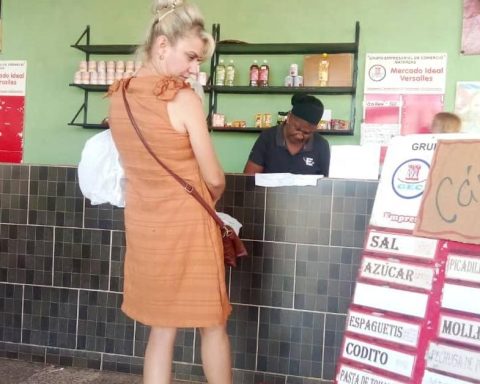
Today, remittances to Cuba arrive almost exclusively as electronic balance on freely convertible currency (MLC) cards, not as physical dollars. The currency goes to the state banking system, while relatives on the Island are given a balance that can only be used in stores in MLC, where prices are heavily inflated. The recipient cannot withdraw foreign currency, nor convert it freely into pesos, and is obliged to consume the money within the state circuit, which makes the Government the main intermediary and beneficiary of remittances. In the absence of real options, many families are also subjected to absurd practices in these stores, such as receive candy instead of returned, something reported repeatedly in several stores.
What word would be left for the systematic operation of the State, which for decades has forced millions of citizens to hand over foreign currency at the price decided by the Government?
Given this very restrictive financial architecture, it is natural that the informal market explodes, with private intermediaries offering to pay remittances at rates closer to the real market, something that the State does not allow. These networks, although illegal, respond to a need generated by the official system itself, where the value of the dollar is diluted between controls, restrictions and abusive margins.
Granma He is horrified at the idea that “dollars do not enter the Cuban banking system.” But he fails to explain why Cubans distrust that system. Because every time they deposited foreign currency, the State converted it, froze it or blocked it. And the worst thing is that the arbitrariness is not limited to Cuban citizens. This November the regime informed the foreign companies that they could not extract or transfer abroad the foreign currency that they currently have deposited in the country’s banks.
If the authorities describe payment in national currency at an unofficial exchange rate as a “criminal scheme,” what word would be left for the systematic operation of the State, which for decades has forced millions of citizens to deliver foreign currency at the price decided by the Government and, immediately afterwards, sell them the same imported products at a multiplier that makes subsistence impossible?