Madrid/Aware that eyes are on the tons of humanitarian aid that have begun to be received in Cuba, the authorities released images this Tuesday of the delivery of some of shipments. The main role was taken by the Mexican cargo, consisting mainly of food and hygiene products and which left Havana for distribution in the capital, Artemisa, Isla de la Juventud and Mayabeque.
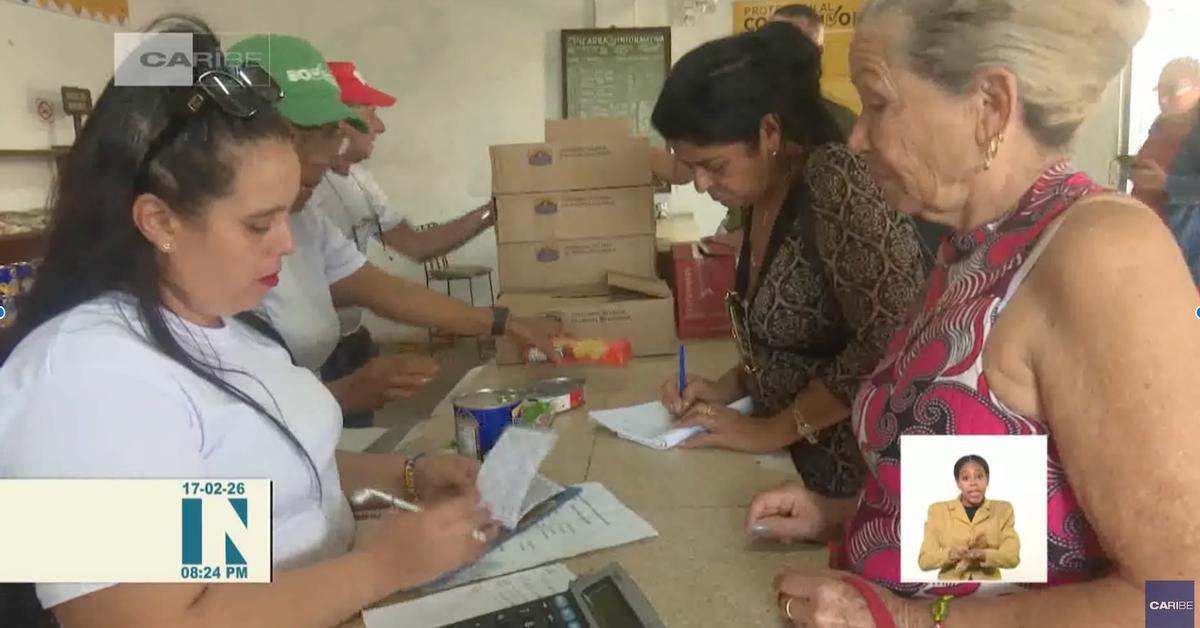
43 tons ended up in the latter, whose distribution had its own space in the Stellar News. José Antonio Castellano, director of the Empa company in Mayabeque, explained that the products are preferably distributed to groups of people over 65 years of age, pregnant women and children up to 13 years of age and are made up of rice, sardines, cookies and cans of peaches. In the images, the beneficiaries could be seen collecting the meager ration, for which, in any case, they were grateful, including the message to the Mexican Government sent by a woman with her child in her arms.
At the Havana distribution center they explained how distribution is done to the selected warehouses, taking into account fuel limitations. The director of Commerce of Plaza de la Revolución stated that they coordinate through Telegram groups to notify recipients to come pick it up or it is sent to them if their personal circumstances are problematic.
The report said that there is also distribution in the east of the country of products arrived through the world food program, which suggests that in that area they will have to wait to receive Mexican aid, which does not stop. This Tuesday, the president, Claudia Sheinbaum, stated that the second shipment from her country to the Island is being prepared, not only with food.
/ Caribbean Channel
“Yes, we are going to continue sending humanitarian food aid and some other requests that the Cuban Government has made to us that its people need,” he said in his daily press conference from Mexico City. The president, however, had to specify that there is no fuel at the moment, although “it must be very clear” that her Administration “does not agree with the US imposition of tariffs” on the countries that deliver oil to Cuba.
“We protect the people of Mexico and our country, we express that we do not agree and we continue to help the Cuban people in different ways,” he said. The cargo that is now being distributed is part of the shipment of some 814 tons that arrived in two Navy ships last Thursday in Havana, but the country continues to prepare at least 1,500 tons of powdered milk and beans pending in warehouses, in addition to what Morena, the Government party, is collecting.
That of Chile is another of the Governments that has been active in this sense, despite the disagreements of the current president, Gabriel Boric, with the Cuban leadership and the deep chasm that exists with the elected president, José Antonio Kast, who rejects the aid valued at one million dollars that the country’s humanitarian fund plans to deliver to Cuba through Unicef.
Boric took a step further this Tuesday by sending a letter to Pope Leo XIV in which he asks the Vatican to intervene to mediate the humanitarian crisis. The General Secretariat of the Presidency explained in a statement that the letter “expressed Chile’s concern about the living conditions of the population and pointed out that the situation currently facing Cuba has acquired a worrying humanitarian dimension, directly impacting the food supply, the operation of hospitals, public transportation and the electricity supply.”
In the letter, delivered last Friday to the apostolic nuncio in Chile, Boric said that “without ignoring ideological differences, humanitarian well-being must be placed above conflicts between States” and added that “any sustainable solution will require progress in terms of democracy and human rights.”
“The relevance of advancing respect for fundamental freedoms was conveyed, including the situation of people detained for political reasons,” said the secretariat, a demand that José Antonio Kast had made.
“The relevance of advancing respect for fundamental freedoms was conveyed, including the situation of people detained for political reasons,” said the secretariat, a demand that had been made José Antonio Kast on Monday as a condition for the delivery of humanitarian aid.
Another support came yesterday from the United Nations Educational, Scientific and Cultural Organization (UNESCO), which called for international funds to ensure the continuity of the educational system.
“We urge international partners to mobilize flexible, rapid and sustained financing to ensure that every child and adolescent in Cuba can continue learning safely today and in the months to come,” said the director of UNESCO’s regional office in Havana, Anne Lemaistre.
The diplomat assured that UNESCO works together with the Ministry of Education to define all the needs in the educational sphere and face the “complex situation derived from external restrictions that prevent the import of fuel.”