Madrid/The Villa Clara Provincial Prosecutor’s Office requests six years in prison for a 33-year-old Cuban who published messages against the Government on Facebook, the EFE agency, which had access to the request, has reported.
The man, whose identity has not been provided, is accused of the crimes of propaganda against the constitutional order and contempt, according to the document, dated November 2025.
The events occurred at different times in 2024, when the accused – a resident of Ranchuelo – created a “false profile” on the social network “to incite his neighbors to take public roads through acts of violence to put an end to the country’s political system.”
The Prosecutor’s Office also accuses him of having demanded through his publications that the municipal government avoid “prolonged cuts to the electrical service.”
The Prosecutor’s Office also accuses him of having demanded through his publications that the municipal government avoid “prolonged cuts to the electrical service.”
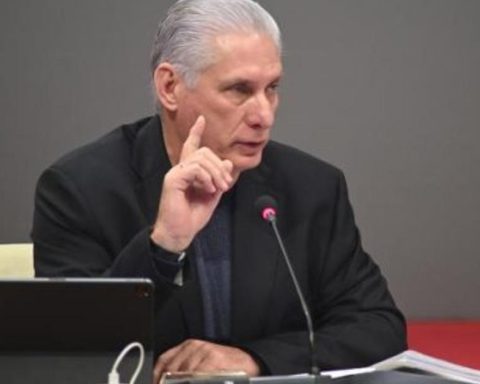
In addition, two publications are specifically criticized. One of them is an edited image of the president, Miguel Díaz-Canel, hanging and with a text: “The solution.” In the other, he urges the population to gather in front of the headquarters of the Communist Party of Ranchuelo to ask for their rights “as a people.”
The accused has been in provisional prison since September 2025, according to the document.
At the end of December, Alexander Verdecia Rodrígueza member of the Patriotic Union of Cuba (Unpacu), was sentenced to seven years in prison for “propaganda against the constitutional order” and “instigation to commit a crime,” in a case very similar to this one. The Prosecutor’s Office had requested 10 years for the activist, stating that “in the month of January 2024, he conceived the idea of disturbing citizen tranquility in the municipality of Río Cauto, province of Granma, and stimulating in citizens residing in this territory the desire to create confusion and disrespect against the social order and the Cuban socialist State, by making publications on his profile on the social network Facebook.”
Also in March 2025 a Cuban court He imposed seven years in prison on Alexander Mario Fábregasformer prisoner of 11J, for uploading videos to social networks in which, according to the ruling, “he questioned the Cuban State system and attacked the president” of the country. The activist, also tried in Villa Clara, had made several live broadcasts on Facebook in which he advocated taking to the streets to protest, assured that civil disobedience “is a right, not a crime” and asked to support the “political prisoners.”
Since 2019, Cuba has had an instrument – Decree Law 370 – that penalizes the dissemination “through public data transmission networks, information contrary to social interest, morality, good customs and the integrity of people.” The norm has been disqualified by international human rights organizations, as well as the UN and the Inter-American system.
The norm has been disqualified by international human rights organizations, as well as the UN and the Inter-American system.
But also, from 2022, the new Penal Code incorporated the concept of dissemination through social networks – which did not exist in the previous one, from 1987 – as an aggravating circumstance for several crimes, including those related to public order and the right to honor.
According to the First Comprehensive Report on Digital Surveillance in Cuba Prepared by Madrid-based Prisoners Defenders and released this week, Cuba has consolidated a digital surveillance system designed to “neutralize dissent” based on “punitive” laws.
In the text, based on 200 testimonies from victims inside and outside the country, 98.5% of those surveyed stated that they had suffered “sanctions or threats” from the Police due to the content of their conversations or publications on the Internet.