Havana/Controlling the “Cuban immigration process” was the euphemism that a high position of the Ministry of Interior used to describe the stampede of recent years on the island during the debate in Parliament for approval, this Friday, of new laws on three matters: migration, citizenship and foreigners. The new regulations intend to “design procedures” for Cubans who leave the island and also to control the “increase in the quantity and diversity of migratory irregularities with the involvement of foreigners.”
The Migration Law He contemplates that Cubans residing abroad can maintain their properties on the island, although more than two years have passed. It will no longer be called “emigrated” – as those who spent more than 24 consecutive months without returning to Cuba were known – and will be called “effective residence” to those who spend “most of their time in the national territory.”
Cubans who reside outside the island may also request the condition of “investors and business.” The law will allow foreigners to access permanent residence if they have “an important assets abroad” that “allows them to undertake business or make investments.”
“Alist in any type of armed organization with the aim of attempting against the territorial integrity of the State” will bring with it the loss of nationality
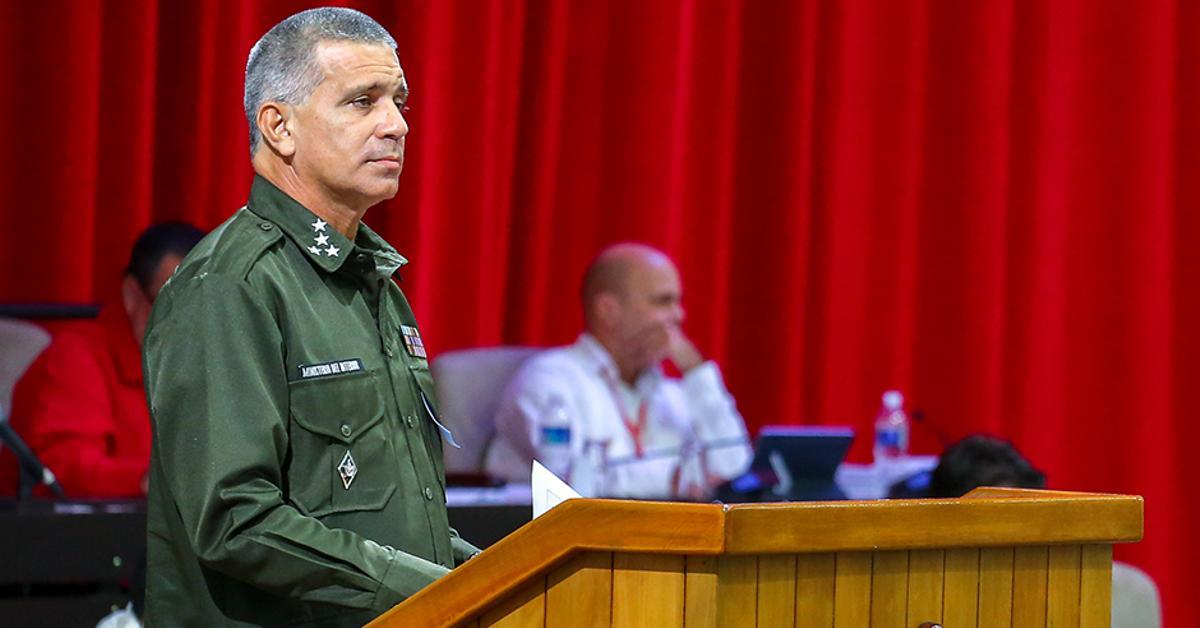
For its part, the Citizenship Lawpresented by the first Colonel Mario Méndez, says that “enlisting in any type of armed organization with the aim of attempting against the territorial integrity of the Cuban State” will bring with it the loss of nationality. In addition, the document provides for the possibility that a Cuban has multiple citizenship – which already recognized the 2019 Constitution – provided that, in Cuban soil, they do not use its foreign citizenship. Méndez recalled that Cuban citizenship can be acquired by birth or by naturalization.
As for the resignation of citizenship, only those over 18 who, living abroad, prove other citizenship can do so. They cannot do those who have debts with the Cuban State or are being “pursued by the commission of a crime.” Several NGOs and human rights defenders have warned about the potential political use of denationalization in Cuba, pointing to Nicaragua as a recent example.
During the debate of the law, the deputies were more open when recognizing the alarming immigration situation of the country. Ethnologist Miguel Barnet, trying to soften the panorama, celebrated the law and proposed to call “cyberbuels, cyberpadres and cyber -” to those who left.
As for the Foreigner lawapplicable to all foreigners who are – in a temporary or permanent form – on the island, including diplomats, was also presented by Méndez, who hastened to clarify that the document had barely generated controversy during their writing. “It is not the most commented law, it is not the law on which more criteria have been disclosed. It is the law we have received less opinions,” he said.
The law is proposed to “regulate the attention, protection and documentation of foreigners who settle in national territory”
According to José Luis Toledo, president of the Commission for Legal and Constitutional Affairs, the Law proposes to “regulate the attention, protection and documentation of foreigners who settle in national territory”. Toledo stressed that the law “will establish the cases and the way in which foreigners will be expelled from the national territory” and what institutions will be responsible for executing that process.
Foreigners can reside in Cuba as “provisional residents”, a new category that represents a prelude to the permanent residence or that of “humanitarian resident”, for the “refrafts, stateless and political asyons” that the Government considers as such.
“The exercise of the rights of foreigners in Cuba is only limited by the rights of others, for reasons for national defense and security, public order, exceptional situations and disaster, and by force majeure, prior approval of the competent authorities,” warns the document, on the “conduct of respect” to the regime that foreigners must maintain.
Despite the attempts of the authorities to hide the severity of the situation in Parliament, the Cuban exodus has not stopped in recent years
Despite the attempts of the authorities to hide the severity of the situation in Parliament, the Cuban exodus has not stopped in recent years. This Friday, while the triad of laws was approved, some 27 racks were returned to the island for the US Coast Guard Service. With them there are 850 people sent from different countries of the region so far from 2024.
They had left Mariel’s coasts on a rustic vessel, the Ministry of Interior reported. According to US authorities, they add 180,925 Cubans who have entered the country in the last nine months by the legal roads (through the southern border or with the parole humanitarian) and it is estimated that, if that rhythm is maintained, at the end of the fiscal year – September 30, 2024 – around 245,000 Cubans will have entered.