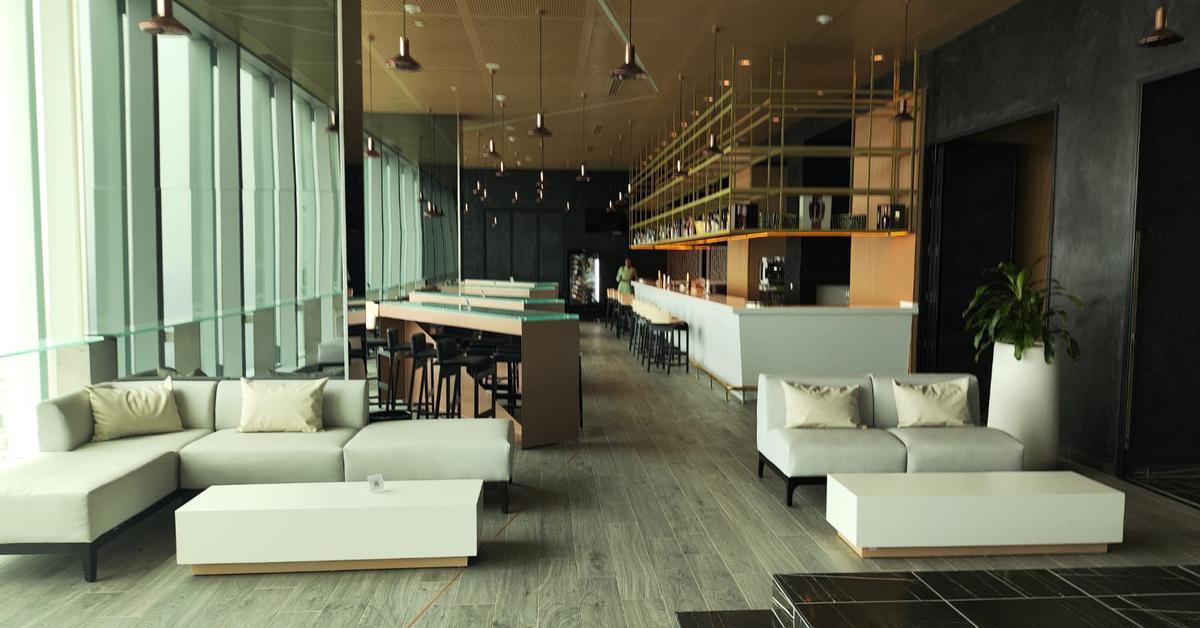
Malaga (Spain)/I remember the conversation with a Spanish businessman who, like me, frequented the gym and pool of the Meliá Cohiba hotel. After years of investing in Cuba, it accumulated unpaid invoices for more than one million euros. I confessed that he no longer resisted, that he thought about his affective ties with the island and with his Cuban wife. Then I added, with bitter irony: “They sold my captive market and the captive was me.” That phrase summarizes well what it means do business on the island.
From time to time, Havana announces the arrival of foreign companies. This time the announcement came loaded with promises: they can represent products as scarce as meat, medicines, coffee, fuels or cars. The news, published by Cuban directory from the Extraordinary Official Gazette No. 50intends to sound like a relief in the midst of shortage. But behind music, the chorus is the same as always: the State retains control and foreign companies become stone guests.
Recycled promises with new names
Among the new authorized companies appear the Mercantile Consortium of Huesca and Ska Average Investment, both Spaniards, oriented to agri -food, drinks, medical equipment and the automotive sector. From Panama they arrive Intradica and MCD Air Inc., with catalogs that cover from powdered milk and coffee to automotive, appliances and furniture pieces. To them is added Sidco International, also of Spanish origin, specialized in oil, mineral and lubricant products.
Together with these, the registration includes three representative offices that may not operate commercially: Grupo Disa SA and Adm Consulting Inc., both Panamanians, and the American Amelicargo Express & Services Inc., whose presence constitutes a rarity in the middle of the tense bilateral relations.
What changes … and what is not?
The essential thing is identical to previous promises: none of these firms can import, export, distribute or sell directly in the Cuban market. Its role is limited to intermediate before the State, manage after -sales or channel contracts. The result is already intuited: high prices, restricted access and the population again relegated.
A political game with economic dyes
For some Spanish companies, landing in Cuba is not so much a commercial commitment as a visibility movement. Being present opens doors to subsidies, soft credits or the wink of a government in Madrid – still left, with the PSOE in power – that still maintains its link with Havana. The profitability, if it arrives, will be indirect: institutional support in Spain, strategic positioning and the eternal promise that “when Cuba changes”, the pioneers will collect the fruits.
The long -term mirage
The past offers a clear mirror. Meliá and Iberostar manage to stay, but they make it managing hotels that never belonged to them, accepting delayed payments and minimum margins. Other companies did not have the same fate: Pescanova, FCC, Action or Grifols ended up leaving after accumulating taxes and millionaire losses. And so, decade after decade, different groups of foreign companies fell again into the same trap of the alleged “captive market” of eleven million inhabitants – many less, after the massive emigration of recent years -, a mirage that always ends in disenchantment.
I also remember some young entrepreneurs from Santander who met in Havana in 1996. They had arrived with the illusion of setting up a bakery network in the capital, with the idea of expanding later to other cities in Cuba. Soon they ran into reality: the Joint Venture On the island it does not work because the state does not share risks and wants to control everything. They were not allowed to import even the flour, the investment in machinery had to run on their own, the staff would be Cuban but paid by the businessmen in dollars, while the government liquidated the salaries in pesos. Anyway, a nonsense. I did not see them over time again, but I imagine that, like so many other stories, it was the chronicle of a failure announced.
To that economic mirage was added, especially In the 1990sa much more murky background. Many businessmen – and also politicians – mixed businesses with the topic of the Caribbean pleasures. Some formed parallel families with lovers on the island; Others took advantage of their stays to enjoy privileges forgotten to the common Cuban.
I witnessed, during the visit of Manuel Fraga Iribarne with a delegation of Galician businessmen and deputies, how the doors of the Comodoro Hotel were opened in Playa so that counselors and businessmen freely access the Bungalows in the company of young dancers of the Tropicana or Maison models. While the rest of the mortal tourists were forbidden to enter accompanied by people of Cuban nationality, they were enough to show a role to enjoy a reserved and “sensual” access.
And it was not an exclusive phenomenon of that decade: what appeared in the 90s as a business promise and “Caribbean adventure” lasted in 2000 and until well into the decade of 2010, when the investment mixture, family ties and search for “tropical experiences” continued marking many of the relationships between Spanish businessmen and the island.
Those scenes, a business mix and privilege, were the visible face of a system that, under the opening facade, always maintained absolute control in the hands of the State and relegated businessmen – already the population – to a secondary role.
The contrast between yesterday and today
The contrast between yesterday and today does not lie in the economic model, which remains intact, but in the motivation of those who venture. In the nineties, many companies landed on the island seduced by the idea of an emerging market.
Today they do it rather in search of political visibility and institutional support that they can obtain in their countries of origin. The result, however, is usually repeated: businesses that generate more than profitability, expectations that are rarely met and a state partner who never ceases to impose their rules.
I once heard workers from a hotel in Meliá to explain to customers that the lack of supplies was not the fault of the chain, but that the merchandise never arrived. That apology, repeated in a low voice, is perhaps the most accurate metaphor of what foreign companies face in Cuba: they manage the facade, but do not control the essential.
The island reopens the door, and the hinge continues to squeak. The bell is not even sounds. And the echo remembers that, in Cuba, mirages last more than promises.