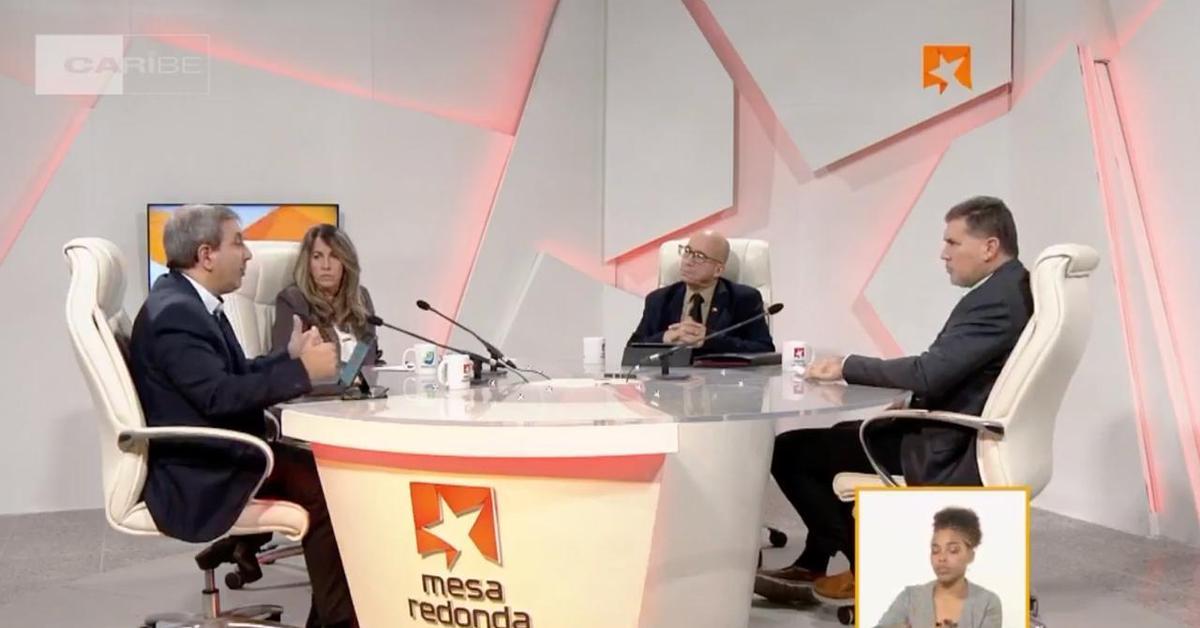
Havana/Madrid/The Cuban Government presented this Friday in the Round Table program a set of measures aimed at addressing the serious fuel shortage that the country is experiencing. Although the official tone avoided the word “collapse” at all times, the scope of the announced provisions confirms a scenario of partial paralysis of the economy and accelerated deterioration of the daily lives of millions of Cubans.
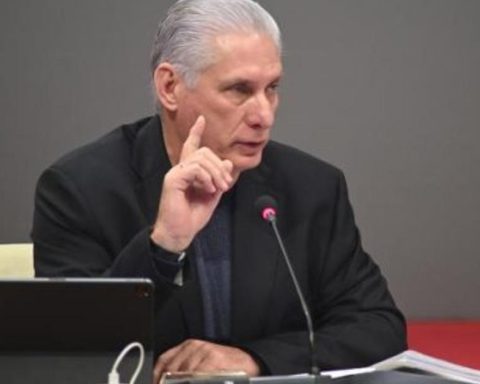
From the beginning of the program, the discourse moved between the usual triumphalism and a defensive rhetoric that insisted on presenting the crisis as an “opportunity.” “This has had the opposite effect to what our adversaries expected,” said Deputy Prime Minister Óscar Pérez-Oliva Fraga, who assured that the country not only resists, but “develops.”
However, behind this optimistic narrative, measures were listed that reduce productive activities, restrict mobility, alter the school calendar and directly affect the income and working conditions of large sectors of the population.
“We do not come to explain decisions to justify anything, we come to inform,” said Pérez-Oliva. When asked by presenter Randy Alonso about the urgency of the announcement, the deputy prime minister maintained that it is not a last-minute reaction: “It is a job that we have been doing. We have been evaluating the situation. And we think it is an opportune moment.”
“We do not come to explain decisions to justify anything, we come to inform”
Among the prioritized objectives, the Government explicitly included ensuring defense activities and internal order, a mention that refers to the recent experience of Venezuela and that underlines the official fear of scenarios of external actions or social instability.
The package of measures gives a central role to renewable energy. The authorities announced the continuity of the investment program in solar parks and the installation of photovoltaic panels in 10,000 homes. In addition, with 5,000 isolated systems it is intended to electrify areas where electricity has never reached. It was also promised to advance the production of national crude oil and expand incentives for sectors that use renewable sources, eliminating the restriction that forced surpluses to be sold only to the Electrical Union. From now on, surplus energy can be sold “with third parties.”
In parallel, savings measures were announced that confirm the severity of the crisis. Administrative activities will be limited from Monday to Thursday to reduce energy consumption during the weekend. Tourist facilities will be compacted, cultural programming will be readjusted and fuel imports will be decentralized, opening the door for private companies with financial capacity to manage their own supplies.
The Minister of Labor and Social Security, Jesús Otamendiz Campos, explained that, with the declared objective of “protecting workers”, work interruptions will be applied in centers where teleworking or relocation is not possible. The full salary will only be guaranteed during the first month, a limitation that leaves thousands of state employees in a situation of uncertainty after that period.
The full salary will only be guaranteed for the first month, a limitation that leaves thousands of state employees in a situation of uncertainty
For his part, the Minister of Transportation, Eduardo Rodríguez Dávila, confirmed that national and international flights will continue and that the airports will continue to operate. However, interprovincial transportation will be considerably reduced. National passenger trains will go from leaving every four days to doing so every eight; the ferry between Batabanó and Nueva Gerona – on the Isle of Youth – will only have two weekly frequencies; and waiting lists will be suspended “until further notice.” Local transportation will be subject to territorial readjustments depending on fuel availability.
In education, Minister Naima Ariatne Trujillo Barreto appealed to the experience of the covid-19 pandemic to justify a redesign of the school calendar. Secondary, pre-university and technical-vocational education will not operate full time and “variants will be modeled” according to the conditions of each center. In-person attendance will be prioritized in primary school and the protection of early childhood, while at higher levels the study-work link will be sought in environments close to the students’ homes and a gradual deconcentration of faculty and students.
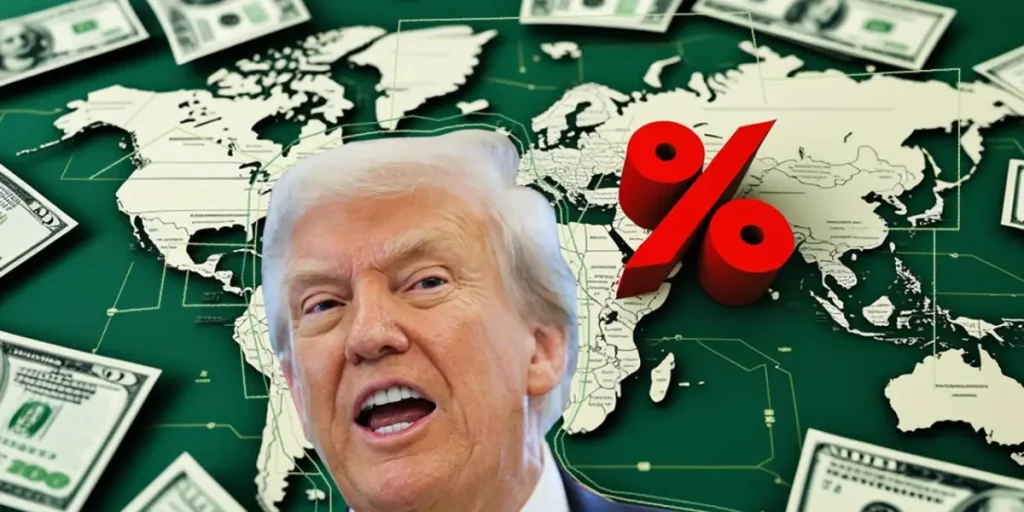
According to Pérez-Oliva, the Government will ration the sale due to the shortage caused by the closure of the flow of Venezuelan oil on January 3 and by the order signed on January 29 by US President Donald Trump, which threatens tariffs on those who supply crude oil to the Island. Cuba depends on imports to cover two-thirds of its energy needs.
Without new shipments, the country could face an even more serious crisis in March, according to experts such as Jorge Piñón. Meanwhile, the Government insists on avoiding the term “zero option”, although many of the announced measures evoke that survival plan of the 90s. Beyond the language and euphemisms, the reality that prevails is that of a country forced to manage extreme shortages while the official discourse strives to deny the collapse.