What is preserved is the unconstitutionality action presented by the National Human Rights Commission (CNDH) against the General Law of the System for the Career of Teachers, where the teaching evaluation process is eliminated and establishes a new admission and promotion framework.
In the challenge presented by the Commission, it maintains that this reform incurs a partial legislative omission, because the third constitutional article orders that the admission, promotion and recognition processes be defined in the law, in a clear and complete manner.
Furthermore, it points out that two articles of this Law entirely delegate to the administrative authority the regulation of horizontal promotion in basic and upper secondary education, which allows programs and guidelines issued by the Secretariat of Public Education (SEP) to replace the intervention of the legislator in a matter that the Constitution expressly reserves to the law.
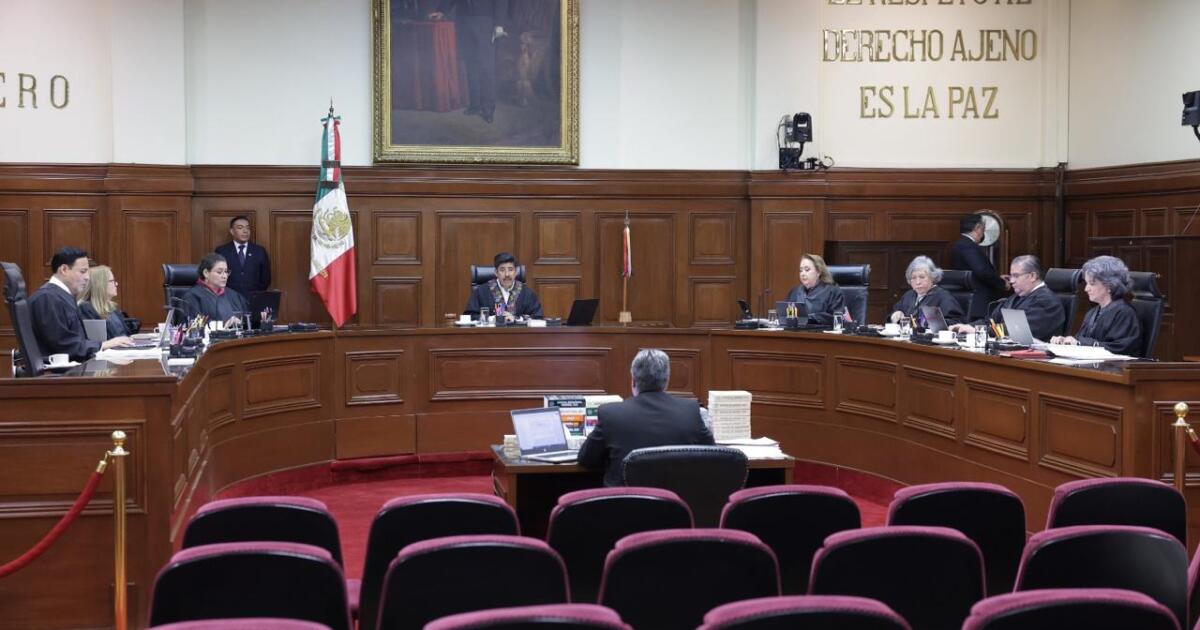
However, the SCJN foresees – in project 122/2019 that is in the hands of Minister Irving Espinosa – declare unfounded the unconstitutionality action presented by the CNDH.
“This Plenary Court considers that the concept of disability is unfounded (…) the provisions of the challenged articles are adapted to a legislative measure that seeks equality insofar as it is intended to strengthen public teacher training institutions, especially normal schools, given the historical and structural marginalization of this social group, in accordance with the provisions of the Federal Constitution.”
Meanwhile, on January 13, an unconstitutionality action presented by 49 opposition legislators (PAN, PRI, PRD and MC) and the CNDH against the reforms to the Credit Institutions Law is expected to be discussed, which establishes that the Financial Intelligence Unit of the Ministry of Finance and Public Credit (SHCP) will have the power to block bank accounts without a court order and without prior notification.
The opposition senators maintain in their challenge that the power granted to the SHCP to block bank accounts violates the constitutional principles of presumption of innocence, strictness and legal certainty. This is because it alleges that said Secretariat is empowered to execute the blockade without the need to establish and justify, in advance, the reasons that justify it.