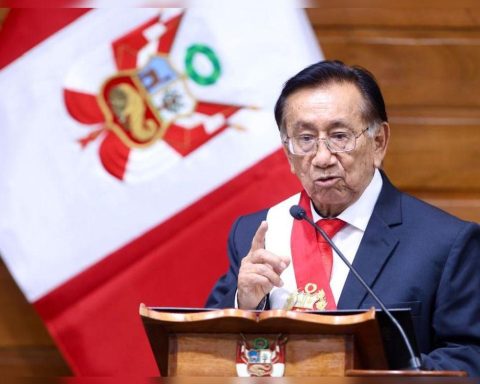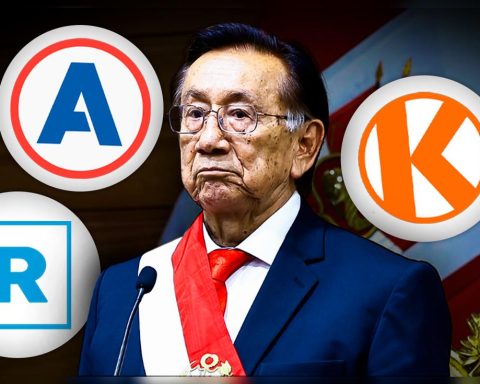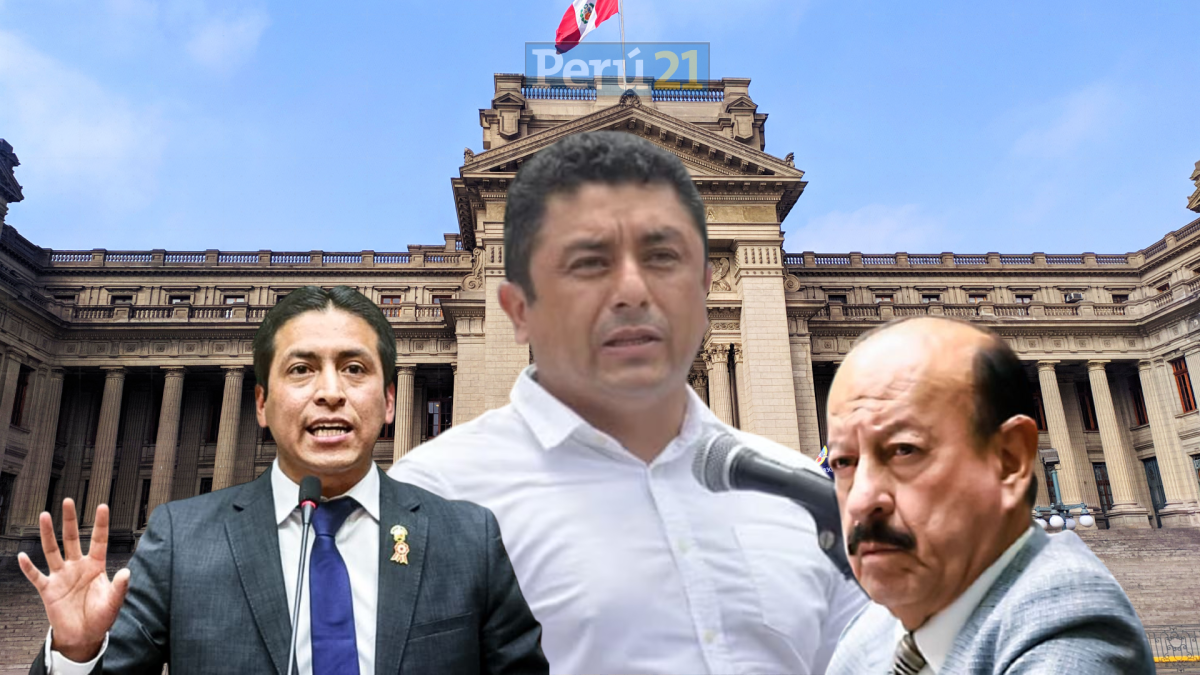
They are the jewels that shine at the top of the Legislative Palace, not because of their public service, but because of their notorious criminal troubles that have led to trials, trials and, finally, convictions. They went from occupying a seat to filling the prisons. They are the congressmen from the 2021-2026 period who have been convicted and who, with their record, have significantly helped the first power of the State to have a paltry 5% of citizen approval, according to the September Ipsos survey.
The last of the legislators who have been convicted by the Judiciary is Guillermo Bermejo. On October 24, 2025, he received 15 years in effective prison for the crime of affiliation to a terrorist organization, in his case linked to the Shining Path. The court determined that Bermejo participated in the organization’s camps in Vraem in the years 2008-2009, met with terrorist leaders and would have fulfilled indoctrination and political-military liaison functions within the subversive structure.
Bermejo is being held in the Ancón I maximum security prison and, as a consequence of the sentence, he was unable to participate in the April 2026 presidential elections in which he was a pre-candidate for the Venceremos alliance, which makes up his group Voces del Pueblo together with Nuevo Perú, led by Veronika Mendoza.
As it is remembered, Bermejo entered Parliament thanks to Perú Libre, a group that led to Pedro Castillo and, later, to Dina Boluarte to the Pizarro Palace. However, in December 2021 he presented his irrevocable resignation from the bench after only 15 of the 37 members of his parliamentary group supported the motion of censure that he presented against the president of Congress at the time, Maricarmen Alva. At the time of his conviction, he was part of the Together for Peru – Voices of the People group.
A SHAME
But the case of Guillermo Bermejo is not the only one. On December 27, 2022, Congressman Wilmar Elera, then part of the Somos Perú bench, was sentenced to six years in prison for the crime of aggravated collusion.
The court confirmed that Elera, in his capacity as supervisor of a work to improve and expand drinking water and sewage in Pacaipampa, Piura, colluded with officials and contractors to irregularly favor the execution of the project, causing economic damage to the State. Elera was expelled from Congress on September 6, 2023, when he was even the third vice president of Parliament and, to date, remains a fugitive from justice.
Another outrageous case is that of former congressman Freddy Díaz Monagowho entered Congress thanks to Alianza Para el Progreso (APP), César Acuña’s party. On August 8, 2024, he was sentenced to 13 years and 4 months in prison for the crime of aggravated rape against a worker in his congressional office. Then, on July 3, 2025, the Supreme Court increased the sentence to 18 years of effective prison. Díaz was removed from Congress in January 2023 and has been serving his sentence in the Lurigancho prison since February of that year.
In the same way, Congressman Luis Picón, from the Podemos Perú party owned by José Luna Gálvez, was also convicted. On June 4, 2024, the Judiciary issued four years of suspended prison against him for the crime of incompatible negotiation, establishing that, when he was regional president of Huánuco, he unduly favored the hiring of a consortium to supervise a project.
Due to another judicial process, on October 17, 2023, he was detained outside the Legislative Palace itself when police officers intercepted him with an arrest warrant for a crime against public administration. However, the next day he was released from prison by a ruling by the Fourth Unipersonal Supraprovincial Court of Huánuco. Currently, he remains a congressman despite his conviction.
Two more congressmen have been sentenced. These are Darwin Espinoza and Raúl Doroteo, both from Acción Popular. Espinoza was convicted on August 6, 2022 for the crime of aggravated defamation against former congressman Otto Guibovich for publishing an image with the body of a rat and his face. His sentence implies rules of conduct and the payment of civil compensation of S/20,000.
Meanwhile, Doroteo was found guilty on November 14, 2022 for the crimes of false declaration in administrative procedure and generic falsehood, for having stated that he graduated from the Universidad San Ignacio de Loyola (USIL) when, in reality, he had only completed two cycles. He received a four-year suspended prison sentence.
SHARED RESPONSIBILITY
How can we avoid having congressmen of this level in the next Parliament? The president of Transparencia, Álvaro Henzler, told Peru21 that there is a “shared responsibility.” On the one hand, he maintained, the parties “do not have sufficient systems to filter out those people who do not meet a minimum ethical profile.” On the other hand, he added, there is also the responsibility of “the different Congresses that have made changes to the legislation of the internal democracies of the parties, which do not allow a broader and more decent offer,” and, finally, of the citizens who, in a large percentage, decide their vote at the last minute without verifying the background and resumes.
Henzler indicated that 80% of the political parties’ candidates for public office in April 2026 have already been defined yesterday, October 31, but there are 20% of invited candidates who have not yet been appointed, so he urged the parties to be responsible and scrutinize the profiles of their applicants.
“Just as we evaluate which cell phone to buy or which university to take our children to, all Peruvians should spend time researching the candidates,” he emphasized.
He mentioned that there are three fundamental tools to know the candidates. The first is from the National Elections Jury (JNE), which is working to improve information by making an agreement with the Judiciary. The second is from Transparencia, in a consortium with IPAE, IPYS, Empresarios por la Integridad and Proética, called “Revisa tu candidate”, which uses “20 public databases in the country”, whose first stage is designed to facilitate filtration to political parties.
Henzler said that 11 parties have signed an agreement with Transparencia for this purpose. In the second stage of the initiative, the platform will be put at the service of citizens. “On the one hand, we see that there are parties that are interested in using this tool. We see the desire to do things better and there are many pre-candidates who say they do not want people with criminal records. We invite them to move from words to action because, later, we see the actions of the Congressional Ethics Commission and it is regrettable to see how they clearly go against ethics and the common good, fixing the behavior of different congressmen. That is very harmful to democracy.”
Finally, he maintained that the third tool is investigative journalism. “We have to be attentive to illegal financing; there is no public data on it,” he warned.
It is up to us to sanction with our vote the parties that nominated characters who were later convicted and, above all, it is our responsibility to choose better in the next elections.
Receive your Perú21 by email or WhatsApp. Subscribe to our enriched digital newspaper. Take advantage of the discounts here.
RECOMMENDED VIDEO: