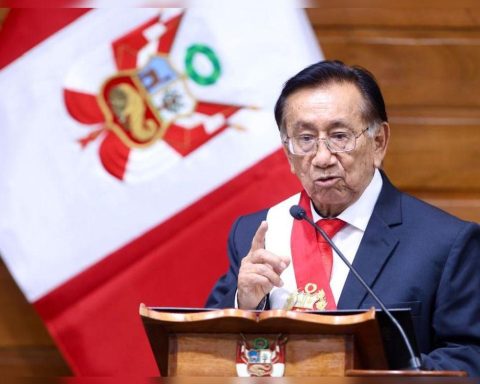
Former Minister of Economy David Tuesta questioned the statements of the Comptroller General of the Republic on the potential unrecovered portfolio of the credit program Reactivate Peru.
The Comptroller’s Office reproached Cofide, administrator of the program’s guarantees, by warning that 58.2% of the S/6,031 million honored by Reactiva would constitute a loss for the State.
However, since its conception, the program projected a loss of S/15,000 million, under the premise that the benefit of avoiding an economic collapse far exceeded that cost.
For Tuesta, these warnings reflect the deep ignorance of the supervisory body about the economic context in which the measure was carried out.
The former minister recalled that Reactiva was implemented in the midst of the health crisis, when the economy was abruptly paralyzed and a real risk of massive company bankruptcies, unemployment and rupture of the payment chain was generated.
“At that time there was no one who wanted to lend. The risk was immense and, without a powerful guarantee from the State, the credit was simply not going to flow,” Tuesta said.
He added that this phenomenon was not exclusive to Peru, but was observed in multiple economies around the world, which had to resort to similar liquidity injection programs to avoid a productive collapse.
Cost – benefit
The former minister stressed that criticism focused on the amounts honored by the State omits counterfactual analysis. In his opinion, the evaluation should answer what would have happened if a program like Reactiva was not implemented.
“The cost to the economy would have been abysmally greater: more bankruptcies, more unemployment, lower revenue collection and a much slower recovery,” he stated.
Tuesta stressed that the central objective of the program was not to maximize the recovery of fiscal resources, but rather to minimize productive destruction and allow the economy to emerge from stagnation more quickly.
Auctions of reporting operations with state-guaranteed portfolio (Reactiva Program) |
||||||
| Guarantee percentage | Summoned (in millions of soles) | Amount assigned (in millions of soles)* | Interest rate for customers | Amount allocated (in percentage)* | ||
| Minimum | Maximum | Average | ||||
| 80 | 14,400 | 9,597 | 0.79 | 2.15 | 1.16 | 17.4 |
| 90 | 37,050 | 24,275 | 0.90 | 2.50 | 1.21 | 43.9 |
| 95 | 34,800 | 14,302 | 0.54 | 3.25 | 1.30 | 25.9 |
| 98 | 39,079 | 7,108 | 0.50 | 5.25 | 2.59 | 12.9 |
| Total | 125,329 | 55,082 | 0.50 | 5.25 | 1.4 | 100 |
Source: BCR/ |
||||||
As of October 20, 2020.
Along these lines, he highlighted that the design of the scheme, supported by the Central Reserve Bank, made it possible to neutralize credit risk through staggered guarantees and channel financing at low rates, especially towards micro and small businesses.
According to the former minister, around 98% of the guarantees were aimed at this segment, which allowed credit and employment to be reactivated without compromising macroeconomic stability or generating inflationary pressures.
Regarding possible losses, Tuesta maintained that every credit program involves risks of non-compliance and problems of asymmetric information, even more so in an emergency context.
Receive your Perú21 by email or WhatsApp. Subscribe to our enriched digital newspaper.Take advantage of the discounts here
.
RECOMMENDED VIDEO
Source link