The markets avoid the US dollar, debt and shares, in a general wave of distrust that usually occurs with emerging countries but not with the first world power.
Jamie Dimon, the influential director of JP Morgan, acknowledged on Friday that the economy faces “considerable turbulence.”
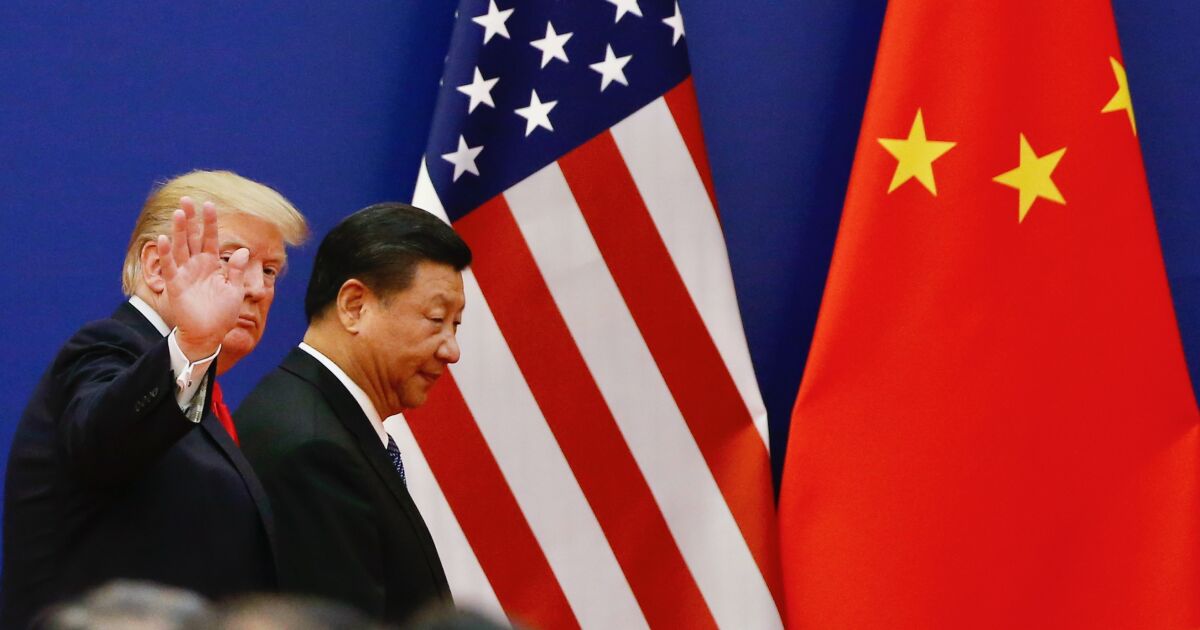
Trump, on his side, affirmed in his social Truth network that his tariff policy works “really well”, but avoided ruling on Beijing’s announcement that his customs rates on the products from the United States rise to 125%.
“Optimistic”
“The president has made it very clear that he is open to an agreement with China,” White House spokeswoman, Karoline Leavitt told reporters. “It’s optimistic,” he added.
The Republican billionaire believes that China wants to negotiate, but the statements of the Chinese Ministry of Financies rather indicate an enquistamiento.
“As with this level of tariffs, American products exported to China are no longer viable in the market,” if Washington continues to increase the taxes “China will ignore it,” he warned.
Uncertainty presses the dollar down, and on Friday reached its lowest level against the euro in more than three years.
The European stock markets returned to red numbers.
In Wall Street Volatility It is the order of the day.
In addition, the yields of US government bonds rise, which means that the United States must pay more to borrow. And consumer confidence in the United States fell dramatically in April, according to a barometer published by the University of Michigan.
It is a “generalized and unanimous (trusted) fall regardless of age, income, education level, the place of residence or political affiliation,” said the director of this survey, Joanne Hsu.
The US Federal Reserve (FED) claims to be “absolutely prepared” to act and stabilize markets if necessary.
Is this instability enough to force Donald Trump to give up?
Between two fires
On Wednesday the Republican took a protectionist offensive to the pause 90 days partially tariff surcharges to dozens of commercial partners except China. He left other tariff increases and a universal minimum of 10%.
Customs rates to China rose to 145% 125% in addition to the pre -existing tariffs of 20%.
Europeans, meanwhile, are still trapped between two fires: under pressure to negotiate with the United States and forced to reach agreements with China.
During a meeting on Friday in Beijing with the president of the Spanish Government, Pedro Sánchez, the Chinese president, Xi Jinping, asked the European Union to remain united “against Trump’s commercial war.