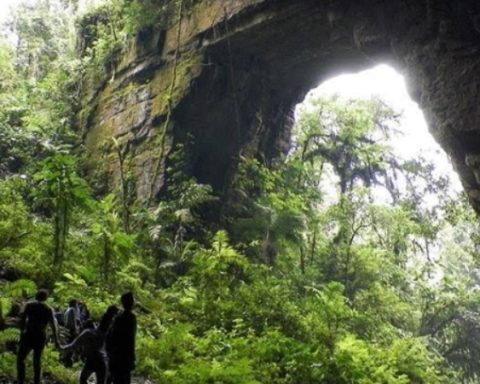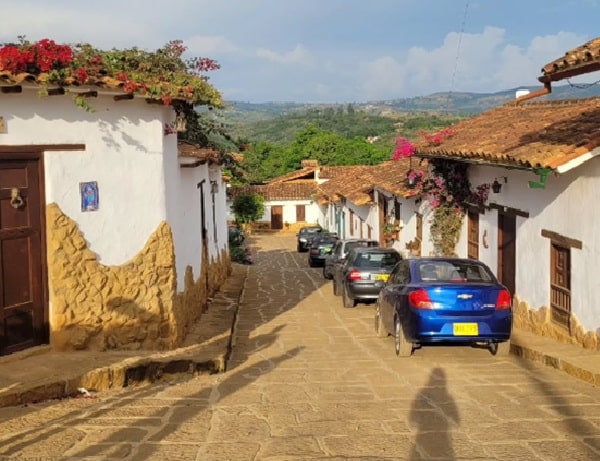
A curved weapon lost in the middle of the jungle ended up marking the identity of an entire community.
News Colombia.
In the midst of the corners steeped in history that make up the Colombian territory, the municipality of Cimitarra stands out not only for its natural wealth, but also for the uniqueness of its name, whose origin dates back to the time of the Spanish conquest. This municipality, located in the department of Santander, keeps an anecdote that mixes exploration, misplacements and the chance of the 16th century voyages.
See: The tourist triangle that delights foreigners in Colombia
According to historical records published by the Municipal Mayor’s Office, the name Cimitarra arose during an expedition led by Gonzalo Jiménez de Quesada and Martín Galeano, who advanced through unknown territories with the aim of finding a route that would connect the Magdalena River valley with the high areas of the Eastern mountain range. The expedition, marked by the difficulties of geography and climate, also left linguistic traces that survive in the region today.
During this journey, one of the explorers lost a scimitar, a curved weapon of Asian origin that was used by some Spanish soldiers of the time. The loss of the object led the members of the expedition to begin referring to the place as “the place where the scimitar was lost,” an expression that over time ended up being simplified until it became the official name of the territory.
This episode, more anecdotal than epic, is considered by local historians as an example of how small events could influence the construction of the toponymy of the territories that today make up Colombia. In this case, an object lost in the middle of the jungle ended up giving identity to an entire population.
Over the years, Cimitarra consolidated itself as a thriving municipality, marked by agricultural, livestock and commercial activities. However, its name continues to arouse curiosity among visitors and inhabitants of other regions, who often wonder about the relationship between the population and the ancient weapon whose loss inspired its name.
Today, Cimitarra proudly preserves this history, which is part of its cultural and heritage identity. The municipality not only invites you to explore its landscapes and enjoy its people, but also to immerse yourself in its past, where a simple incident from the colonial era became a seal that has lasted for centuries.
You may be interested in: