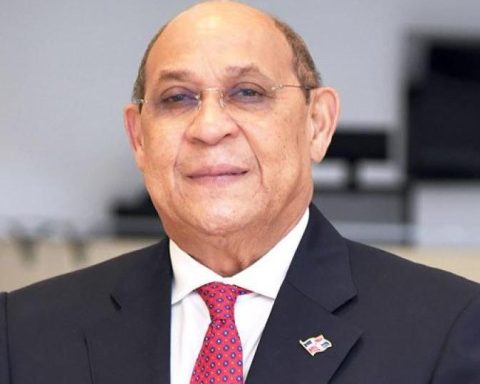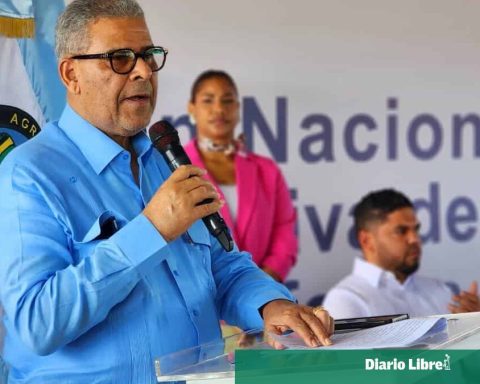
The president of the National Council of Trade Union Unity (CNUS), Rafael (Pepe) Abreu, expressed his concern about the Senate’s decision to leave the bill on the table. reform to the Labor Codeafter years of debate between the productive sectors and the union movement.
In a public letter addressed to the president of the Senate, Ricardo de los Santos, Abreu warned that the delay in the approval of the text creates uncertainty among workersespecially because, as he stated, some business sectors maintain their interest in modifying or eliminating the layoffone of the most sensitive rights of the current Labor Code.
“The decision you made to leave the much-debated labor reform. After the mistake regarding the issue of deliveries, which the chamber rightly decided to leave aside, what was expected was that the aforementioned text would be quickly approved as it has been discussed in the various meetings we have held,” the letter states.
- The union leader reiterated that the CNUS does not accept any modification to layoff“neither under the guise of paying it in installments, as the employers have proposed, nor by creating a six-month trial contract,” which he considered an attempt to make working conditions precarious.
“You continue to spin the wheel without understanding that this issue should be removed from the debate, just as you expressed it, approving it without touching layoff in any of its modalities,” said Pepe Abreu.
Abreu recalled that the senate He had already approved the project in two readings during the last legislature, so – as he pointed out – it is not justified to postpone its discussion again.
“If you in the Senate regret having approved the aforementioned reform in two consecutive readings, simply take a step back, withdraw it, because we are willing to continue handling it with the Code of the year 1992. After all, this Code is what has maintained the macroeconomic stability of which we pride ourselves so much, political stability and socio-labor peace,” he said.
Labor reform balanced
The letter concludes by appealing to the responsibility of the National Congress to approve a labor reform balanced, without affecting acquired rights or going backwards in terms of worker protection.
“Businessmen will maintain the theme of layoff in the public arena in all the scenarios where they have the possibility of expressing themselves, which are quite a few,” he indicated.
Also, he said that: “You have to understand them: they are not businessmen the Vienna Boys’ Choir, far from being emulators of Mother Teresa of Calcutta. “They are decisive people for the system in which we live, but whose fundamental objective is to maximize their profits as a result of the investments they make.”