Despite the publication of this decree on December 29, the CNTE will evaluate whether it will continue its fight. A national assembly is scheduled in Mérida, Yucatán for January 31. There you will decide whether to carry out a new 72-hour strike and the date.
The teachers accuse that the government has not met all their demands. He demands the repeal of the ISSSTE Law of 2007 and the return to the pension system without Afores, demands that Sheinbaum does not meet, he assures, due to the lack of sufficient public budget to carry them out.
Instead, the president agreed to grant others: she canceled the reform to the ISSSTE Law that she proposed in February of last year; He froze housing loans that became unpayable due to the improper charging of interest and agreed to hold forums in schools to modify the teaching career.
He also approved a 10% salary increase for teachers. But the CNTE maintains its position that this does not resolve its most important demands. It defends that teachers have the right to a decent retirement and employment.
So the possibility remains that it will organize new protests in 2026.
Three strikes in the first three months of 2025
In 2025, the CNTE was the shadow that followed the president. He led one of the longest national strikes, lasting 23 days, and blocked airports, booths, main avenues and embassies.
It all started on February 7, with the initiative of a new reform to the ISSSTE Law. Three weeks after that date, the CNTE organized a march in at least eight states to demand the withdrawal of the amendment. On February 27, a 48-hour sit-in began in the Chamber of Deputies, where Sheinbaum had directed the initiative.
(Photo: Mario Jasso/Cuartoscuro)
The president assured that the reform did not affect teachers. But they said yes, because it proposed a different way of calculating bureaucrats’ contributions to social security.
The CNTE held another 48-hour national strike on March 6 and 7 in nine states. In Mexico City he marched from the Angel of Independence to the Zócalo. Given the demonstration, Sheinbaum agreed to meet personally with the teachers and offered dialogue tables at the Ministry of the Interior (Segob).
The appointment took place on March 18 at the National Palace. After four hours of session, the president withdrew her reform to the ISSSTE Law. There, for the first time, it agreed to freeze the retirement age and address the other aforementioned demands.
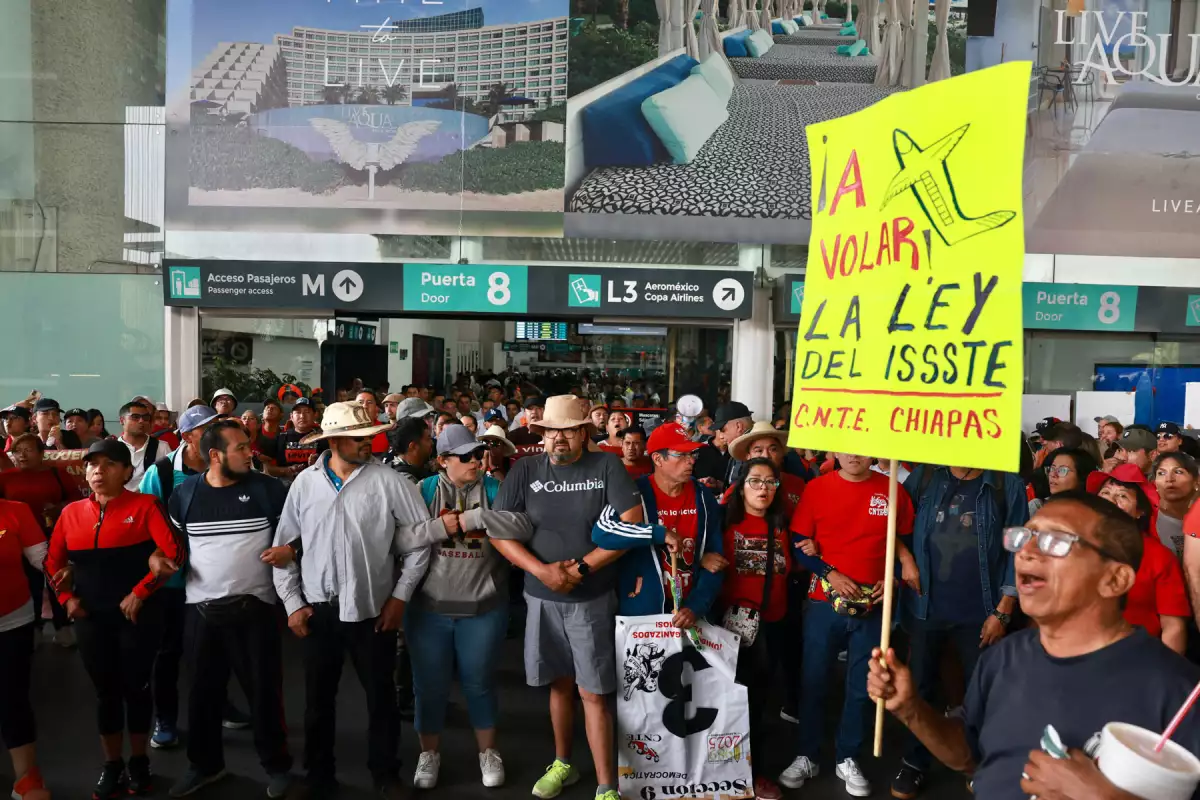
For the CNTE, however, this was not enough. Without the repeal of the 2007 legislation, he opted for a third work stoppage, now lasting 72 hours. On March 19, 20 and 21, the teachers held a sit-in in the Chamber of Deputies, held marches in Mexico City and blockaded a dozen points in the capital, including the airport.
(Photo: Henry Romero/REUTERS)
The longest strike of the CNTE
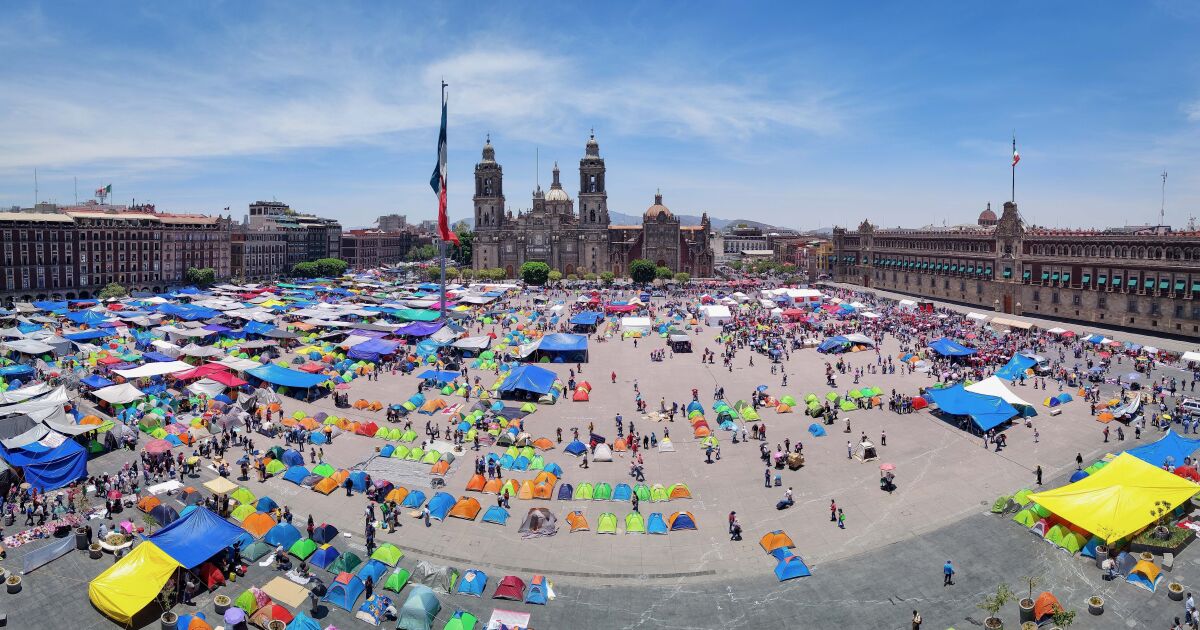
But the union’s most widespread national strike began on May 15. On that occasion he set up a huge camp in the capital’s Zócalo, which remained for three weeks.
He carried out burnings of objects outside Segob; six-hour blockades in Reforma, Circuito Interior and other avenues; demonstrations in Afore offices and at a vehicular crossing between Tijuana and the United States.