Havana/The Cuban economy woke up this December 18 with a long-announced novelty carefully wrapped in the language of “graduality”: the Central Bank of Cuba (BCC) launched a third official exchange rate, of a floating nature, which begins its adventures at 410 pesos per one dollar and is added to the already existing ones of 24 and 120 CUP. The Government presents the measure as the beginning of a transformation of the exchange market aimed at “organizing” the economy and moving towards a future monetary unification. In practice, the country is entering an even more complex stage of exchange segmentation, in the midst of the worst economic crisis in recent decades.
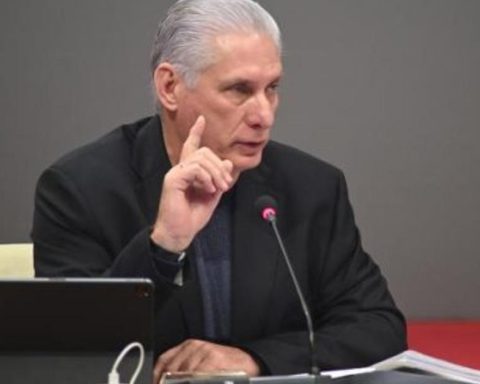
The president of the BCC, Juana Lilia Delgado Portal, defended the decision in a special appearance broadcast on state television and reproduced by Cubadebate. As he explained, the coexistence of several exchange rates has generated “distortions”, has encouraged informality and has made banking and fiscal traceability difficult. Recognizing a third segment – he admitted – responds to an “objective existence” that is impossible to continue ignoring: the enormous gap between official rates and the real value of the dollar in an informal market that today is around 440 pesos.
The new scheme divides the exchange market into three segments. The first, at 1×24, will continue to be reserved for centralized State allocations for goods and services considered essential, such as fuel, medicines, electricity, public transportation and the basic basket. The second, at 1×120, is maintained for certain entities with the capacity to generate foreign currency, particularly tourism. The third, which is the novelty, introduces a floating rate that will be published daily by the BCC and will apply to natural persons and non-state forms of management.
The Government insists that this is not improvisation, but rather a “responsible” strategy. An immediate unification – he argues – would cause a sharp devaluation of the peso, with even more severe inflationary effects than the current ones and a greater loss of the purchasing power of salaries. International experience, the authorities repeat, supports transitory schemes with multiple segments in economies with accumulated imbalances.
Pedro Carbonell assured that the new floating rate will be based on “real operations” and not on speculative expectations as, according to him, occurs in the informal market.
However, the recent Cuban experience invites skepticism. Since the failed Ordering Task, launched in January 2021 with similar promises of rationality and stability, the Cuban peso has done nothing but lose value, while inflation skyrocketed and real wages plummeted. Four years later, the country not only failed to achieve an “organizing” currency for the economy, but ended up deepening partial dollarization and normalizing an informal market that today marks the real price reference.
The director of Macroeconomic Policies of the BCC, Ian Pedro Carbonell, assured that the new floating rate will be based on “real operations” and not on speculative expectations as, according to him, occurs in the informal market. The stated objective is to channel currency flows through the financial system, offer a legal and transparent space for the purchase and sale of foreign currency and reduce the risks that households and businesses face today.
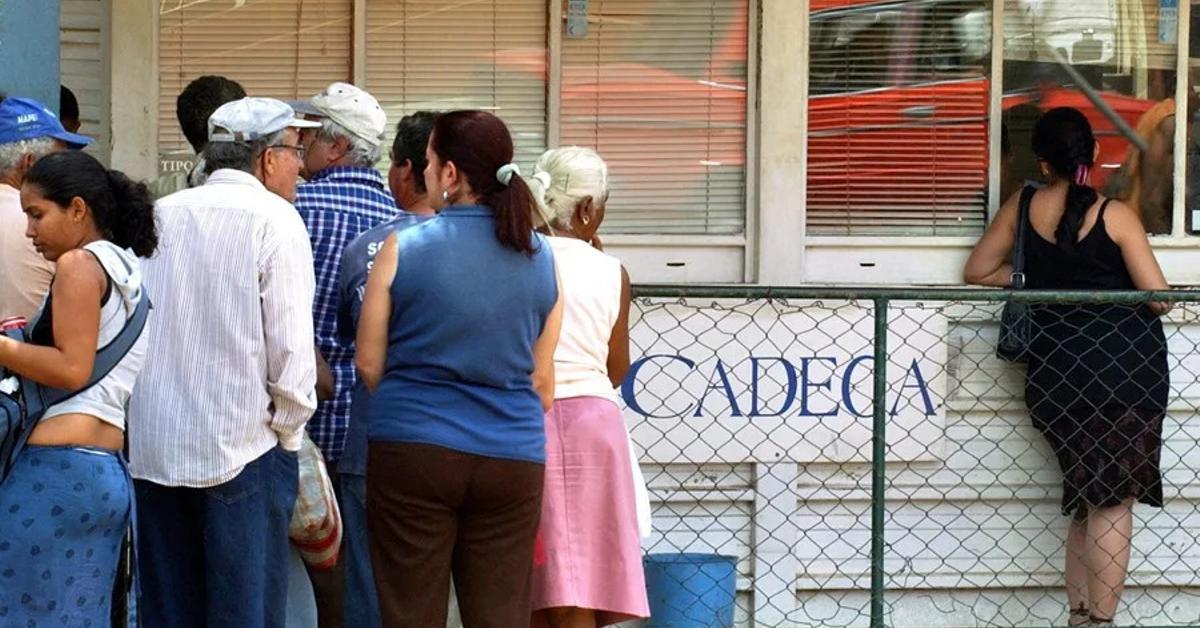
On paper, the benefits seem clear. Exporters and foreign currency generating entities will be able to sell part of their income at a more favorable rate than the one that currently governs their accounting, obtaining more pesos to pay salaries, invest and cover internal expenses. Non-state forms of management will legally access the purchase of foreign currency through their bank accounts for the first time, with a limit equivalent to 50% of the average of their gross income for the last quarter. And the population will be able to sell their dollars and euros in banks and Cadeca (exchange houses) at an “attractive” rate, without going to the informal market.
But the very design of the scheme reveals its limits. The floating market will sell only the currencies it can buy. It will not have the support of state reserves or a financial cushion that guarantees stability. In a country with a chronically insufficient supply of foreign currency, exports at historic lows and tourism in free fall, the central question is not how the rate will be set, but how many dollars will actually be available.
On the same day of the official announcement, the independent media El Toque reported the blocking of its website on the Island after a cyber attack
The Government admits that the informal market will not disappear immediately. In fact, the gap between the new rate and the street price will mark the true thermometer of the measure. If the floating rate remains far below the real value of the dollar, the incentive to operate outside the system will persist. If it gets too close, the inflationary impact will be inevitable.
Added to this scenario is a revealing political context. On the same day of the official announcement, the independent media The Touch reported the blocking of its website on the Island after a cyber attack. For weeks, official media and officials have accused this project of “economic terrorism” for publishing the informal exchange rate. The Government seems to combat the symptom – the uncomfortable reference – while being forced to recognize the disease: a national currency without credibility.
The BCC’s commitment also includes the promise to stabilize and strengthen accounts in freely convertible currency (MLC), a virtual currency based on the dollar that the State itself introduced and then emptied of content. Recovering its functionality in businesses is now presented as part of the new exchange order, although for many Cubans the MLC continues to be a reminder of inequality and exclusion.
The authorities talk about transparency and continuous information in the coming days. But recent history weighs. Without deep structural reforms, without a real increase in production and exports, and without confidence in the rules of the game, no rate – fixed or floating – can be sustained. The new exchange architecture attempts to bring order to a fractured system, but it does not solve the underlying problem: a Cuban peso that remains anchorless in an exhausted economy.