The Castro-communist leadership has revealed the terror that overcomes it after the publication of the recent letter from the former Chavista intelligence chief.
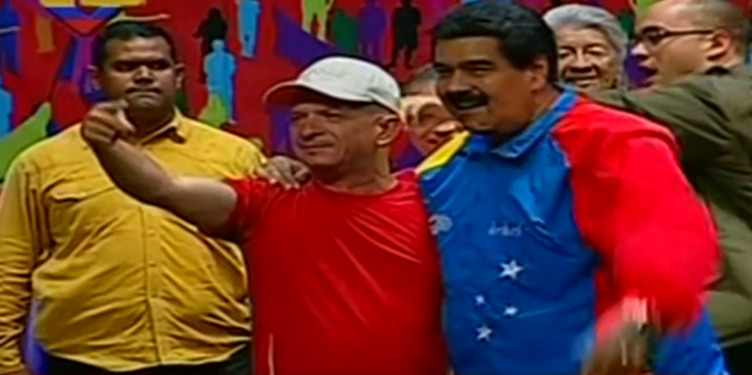
HAVANA.- This Thursday the 4th, the disclosure of the letter that, from the US prison where he is serving a sentence for multiple proven crimes, was written by a very high-ranking former collaborator of the Chavista regime, was notable news: Hugo Carvajal Barrios —“El Pollo”—, major general and former head of Venezuela’s Military Intelligence.
Being completely in the hands of the North American authorities, it is logical that Carvajal seeks to make himself useful to his captors, moved by the natural desire to obtain benevolence. To do this, he has abundant privileged information, acquired thanks to the very high position he held within Chavismo. Only one condition is essential for your strategy to work: the strict veracity of your statements. The falsehoods of criminals willing to lie to cover themselves are well known, and at this point they would harm you more than they could benefit you.
From the perspective of Caracas, the effects have been devastating. The diary The National He noted: “There is no political transition possible—not even in the most corrosive regimes—without the appearance of a person willing to blow up the pact of silence.”
And he adds: “In Nicolás Maduro’s Venezuela, that character is Hugo ‘El Pollo’ Carvajal. His letter addressed to the 47th president of the United States is not a judicial plea or a moral gesture. It is a strategic movement that shifts the entire board of the Washington-Caracas relationship.”
He concludes: “It provides what foreign policy considers pure gold: internal, verifiable evidence of high narrative value, capable of justifying diplomatic, criminal and potentially military escalations.”
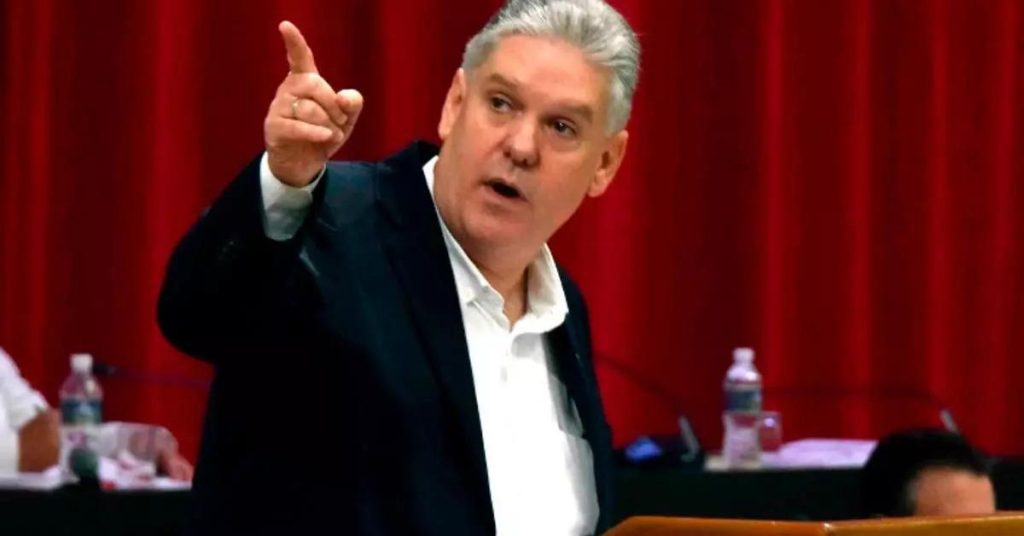
In the case of Cuba, the implications are less direct, but no less important. So much so that, a few hours after the letter was released (“less than 12 hours later,” according to Cuban Diary), the regime hastily organized an unusual press conference, headed by none other than a minister—albeit second or third line—: the head of Justice, Oscar Silvera, who also chairs the National Drug Commission. He appeared accompanied by senior officials from the Ministry of the Interior.
According to the weekly Granma“Cuba reinforces its mechanisms to prevent and confront illicit drug use and trafficking, maintaining a policy of zero tolerance and the commitment to prevent the country from being used as a warehouse, transit or destination for narcotics.”
There was, of course, the blow against the United States. Silvera noted that “the blockade imposed by the United States restricts access to technologies and financial resources necessary to strengthen detection.” And one of the MININT colonels mentioned the so-called “chemical precursors,” pointing out that they would come “mostly from the United States.”
However, the overall tone was surprisingly conciliatory. As reported by this same digital newspaper, the head of the Border Guard Troops stated that the Island maintains “exchanges of operational information with other countries, including the United States,” and insisted that Cuba shares data on routes, vessels and suspicious operations.
This is not the first time that Cuba has been involved in this murky scenario. In 1989, the famous “Cause No. 1” ended with the execution of two senior MININT officers. involved in cocaine and marijuana trafficking. Everything indicates that they acted following instructions, not behind the backs of the country’s leadership, as was claimed in the trial. Thanks to a warning from Manuel Antonio Noriega’s entourage, Fidel Castro was able to avoid even worse consequences.
General Arnaldo Ochoa was also shot. Although the trial documents do not prove that he trafficked drugs, he did establish contacts with Pablo Escobar, apparently to obtain incriminating evidence against Fidel Castro. But this is an area beyond the scope of this article.
Returning to what derives directly from Carvajal’s letter, any impartial observer in Havana will notice a striking omission: the silence on the very close ties between the regimes of Venezuela and Cuba.
These links are so strong that they have even been mentioned in rumors about Maduro’s possible escape, suggesting that Cuban agents could be ordered to eliminate him if he tries to escape from Havana without permission.
The special bonds are undeniable. The Cuban leaders have largely benefited from them—suffice it to remember the Venezuelan oil under privileged conditions. But, as the saying goes, “whoever wants to be for the green ones, has to also be for the mature ones.”
That the Castros are now trying to distance themselves from their Venezuelan partners, speaking in the third person and acting as if they had nothing to do with it, is almost ridiculous.
In the midst of the policies promoted by the Trump administration against the “Cartel of the Suns”, led by Maduro, the primary interest of the Cuban regime is to disassociate itself as much as possible from Caracas and from Pollo’s statements. Whether they achieve that goal – and above all, whether the US authorities accept this sudden unchecking – is, of course, a very different thing.