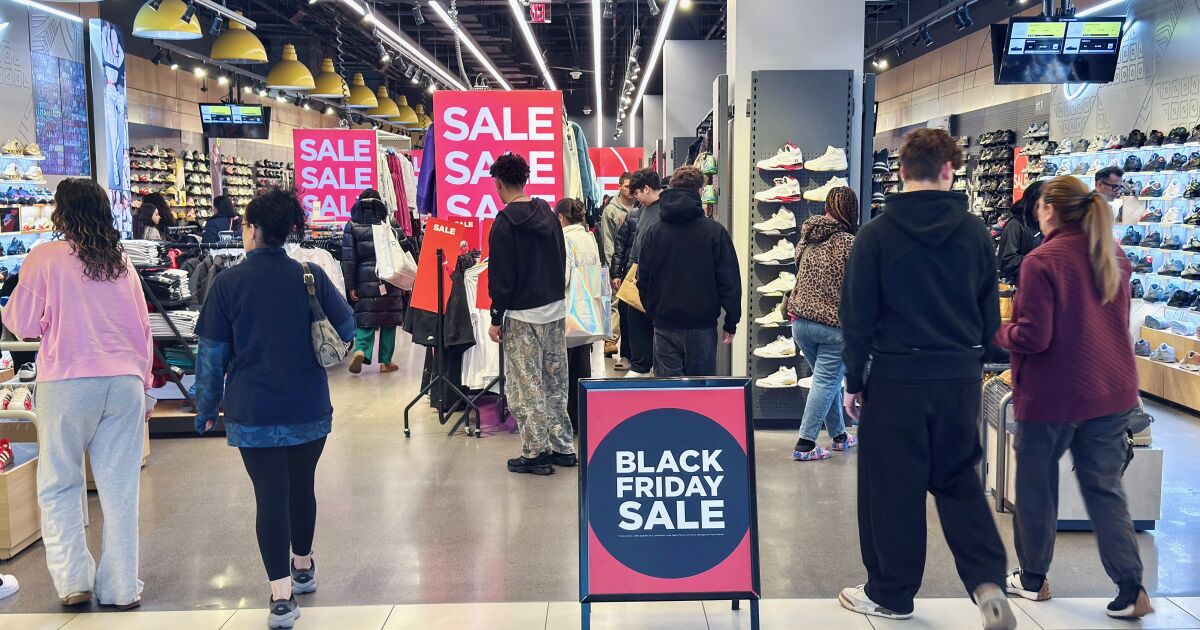
This day, traditionally marked by pre-dawn lines at stores and sales on electronics and appliances, became a cultural phenomenon in the late 1980s, when shoppers began rushing to stores with their Christmas lists without even having digested the Thanksgiving turkey.
According to estimates by the National Retail Federation (NRF), November 28 this year will attract more visitors than ever. However, underlying economic indicators suggest those crowds will be much less willing to convert browsing into shopping.
This disconnect poses a challenge for retailers, who rely on the holiday sales season for a third of their annual profitability. Nearly two-thirds of consumers surveyed by the NRF plan to wait for deals this weekend, up from 59% in 2024, while average spending is expected to fall to $890 per person, down from $902 last year.
The expected slowdown underlines the effect of rising inflation pressures and weak employment growth.
“What we are seeing is that certainly consumers are more cautious,” Massimo Basei, commercial director of Danish jewelry giant Pandora, told Reuters, predicting fierce competition.
Retail sales in the United States rose less than expected in September partly due to high prices. President Donald Trump’s tariffs have contributed to this trend, adding about 4.9 percentage points to retail prices, according to the nonprofit Tax Foundation.
In Europe, the decisive day for purchases was marked by strikes at Amazon warehouses in Germany, and other protests were also planned in front of Zara stores in Spain.
(Reuters)
More selective buyers
With unemployment near its highest level in four years, buyers have also become more selective. U.S. consumer confidence fell to its lowest level in seven months in November, according to economic analysis group The Conference Board, and fewer households plan to buy cars, homes and other big-ticket items in the next six months, or make vacation plans.
According to Nikki Baird, vice president of strategy at software company Aptos, which counts clothing and accessories companies among its clients, retailers are targeting cautious shoppers with smaller, more affordable luxury items: handbags instead of suitcases, customizable bags and low-cost accessories like Crocs’ Jibbitz charms.
Spending is concentrated on wealthy households. According to Moody’s Analytics, the richest 10% of Americans — those earning at least $250,000 a year — accounted for about 48% of all consumer spending in the second quarter of 2025, a steady increase from about 35% of spending in the mid-1990s.
“Increasingly, mainstream spending is driven by a smaller subset of consumers,” said Michael Pearce of Oxford Economics.