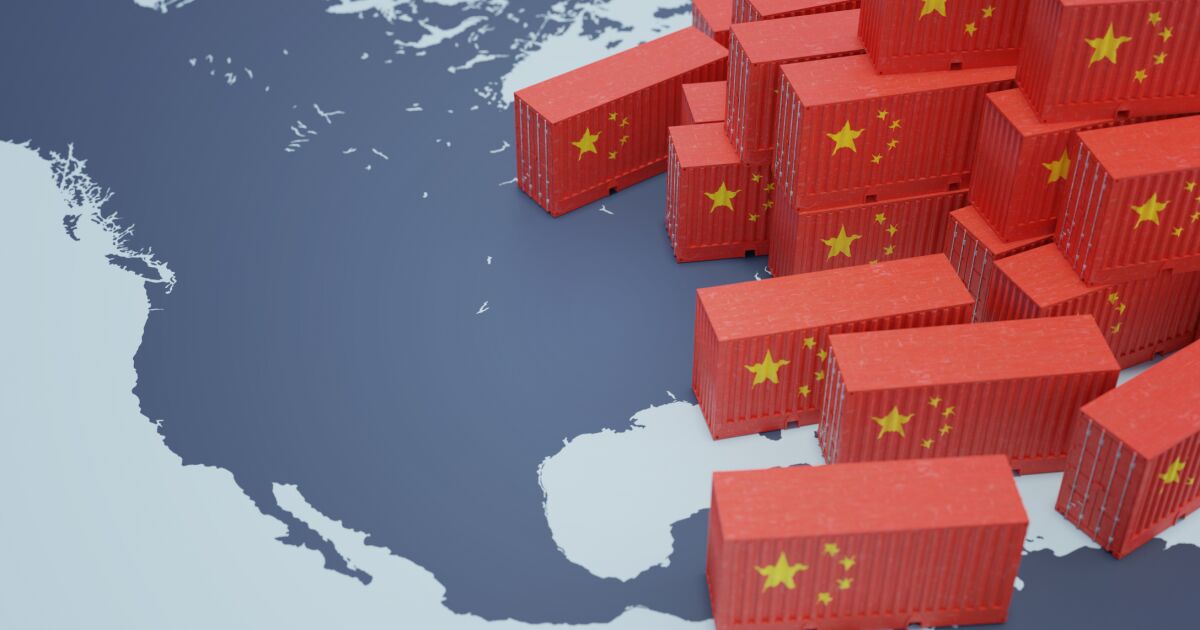
Between January and October of this year, the deficit totals 101,383 million dollars and aims to close at an even higher level. This uneven floor shows Mexico’s growing exposure to Chinese imports, which widen the deficit and put pressure on local productive sectors with competition described as unfair. In this context, the country is inserted into the dynamics of the global trade war and is moving towards a stage of greater protectionism.
Mexico’s decision to implement tariffs of between 5 and 50% responds to a direct demand from the industry. Around 250,000 jobs were lost in the textile and footwear sectors in the last seven quarters, while the steel industry faces pressure from Asian overproduction. Between 2021 and 2024, imports grew 22.3% in footwear and 20.8% in clothing, an advance that weakened local production.
The automotive sector also shows warning signs. Imports of light cars from Asian countries without a treaty increased strongly and China leads Mexico’s external purchases with a share of 28.6%. The Ministry of Economy warns that these vehicles do not generate production or employment in the country and highlights the need to preserve Mexico’s position as the fifth largest producer in the world.
For Gilberto Gil, managing partner of Roland Berger Mexico, the new tariffs anticipate a closing of ranks with North America and a partial reconfiguration of supply chains. Opportunities are opening up for relegated industries such as footwear and textiles, although other chains will continue to depend on abroad in the short term.