A report of The Associated Press reconstructs the lives of several men from Güiria and other towns in eastern Venezuela who died in bombings by the US Armed Forces against vessels accused of trafficking drugs. Although those who died in the so-called “narco-lanchas” participated in smuggling, their families assure that they were not “narco-terrorists” or members of cartels.
More than 60 people have died since early September, when US military forces began attacks on boats that Donald Trump’s administration said were operated by drug trafficking organizations in the Caribbean. Among the dead are several Venezuelans from the state of Sucre, whose stories were documented by The Associated Press (AP) in a report which offers the first detailed portrait of who they were and how they came to be aboard those vessels.
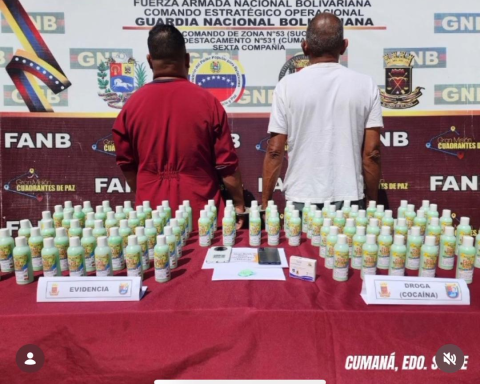
The AP identified four of the dead and obtained information on at least five others. They were all young or middle-aged men, from coastal communities on the Paria Peninsula. Some had been fishermen, drivers or ex-military; others had criminal records. All of them, according to their relatives and neighbors, agreed to participate in smuggling trips to earn in a few days what they could not gather on land in months. “Yes, they were trafficking,” admitted a relative quoted by the agency. «But they were not terrorists or bosses. “They were people looking to survive.”
One of them was Robert Sánchez, a 42-year-old fisherman from Güiria. He spent most of his life fishing in the Gulf of Paria and dreamed of having his own 75 horsepower engine. With a monthly income of about $100 and four children to feed, he accepted the offer to use his maritime knowledge to guide a boat loaded with cocaine toward Trinidad. They promised him $500. He never returned. His family learned of his death after watching videos spread on social networks about an American attack. His youngest son, just nine years old, asked if his father could have survived the explosion. “No, the sea took him away,” the adults responded.
Luis “Che” Martínez, 60, described as an old smuggler and local crime boss, died in that same region. In the past he had been arrested for human trafficking after a shipwreck in 2020 that left more than twenty dead, including two of his children. He was released, as reported SuchWhich soand returned to direct illegal operations between Venezuela and Trinidad. AP points out that Martínez died on September 2, in the first attack recognized by Trump, who claimed that the group belonged to the Tren de Aragua. His relatives deny that link and claim that they learned of his death from a photograph of the body that circulated on messengers: they recognized him by a gold watch that he always wore.
Another of the deceased was Dushak Milovcic, 24, a former National Guard candidate. He left the military academy attracted by the easy money from smuggling. He started as a watchman on land and was later promoted to boats, a more risky but better-paying job. He also died in one of the September bombings.
Juan Carlos “El Guaramero” Fuentes, for his part, was a bus driver. He had lost his source of income when his unit became unusable and the local administration never provided him with spare parts. Without money or a job, he agreed to join a crew to transport drugs to the Caribbean. The first trip was uneventful, but on the second an American boat launched a missile that destroyed them. “He knew it was dangerous, but he needed to support his family”his friends told the AP.
The communities where they lived – villages of fishermen and unemployed workers in the eastern end of the country – are marked by economic crisis and abandonment. Their houses, made of unpainted blocks, go weeks without water and suffer frequent blackouts. Fishing is no longer enough to live on, and smuggling gasoline, migrants or cocaine has become a desperate source of income.
Washington maintains that military operations are directed against “illegal combatants” linked to narcoterrorism, and the Pentagon told AP that it has “confirmed intelligence” about the criminal nature of the destroyed boats. Trump even said that each sunken ship “has saved 25,000 American lives,” alluding to overdose deaths. However, the AP itself highlights that the shipments were cocaine, not synthetic opioids, responsible for the majority of deaths in the United States.
For the relatives of the Venezuelans, the attacks were executions without trial. “The US government should have detained them, not killed them,” a relative told the AP on condition of anonymity. fearful of reprisals from both traffickers and Venezuelan authorities.
Nicolás Maduro’s government has condemned the bombings and called them “extrajudicial executions.” However, it has not officially acknowledged that Venezuelan citizens are among the dead, and the families say they have not received official information about what happened.
With information from The Associated Press (AP).
*Journalism in Venezuela is carried out in a hostile environment for the press with dozens of legal instruments in place to punish the word, especially the laws “against hate”, “against fascism” and “against the blockade.” This content was written taking into consideration the threats and limits that, consequently, have been imposed on the dissemination of information from within the country.
Post Views: 907