Havana/Concern about the desecration of graves and the inadequate handling of human remains in Cuban cemeteries is once again occupying public attention after recent complaints and testimonies collected in different cities in the country. Relatives and workers in the funeral sector describe a growing deterioration in the material conditions, security and organization of the exhumation processes.
The artist Camila Lobón and her cousin, the presenter Alejandro Otaola, reported this week on social networks that a relative discovered that the family vault in the Camagüey cemetery had been violated when he went to bury his father. According to him, when he opened the pantheon it was empty, with no skeletal remains or records of the previous occupants. The testimony revived suspicions that the desecrations are not isolated events, but part of a structural crisis in funeral administration.
The testimony revived suspicions that the desecrations are not isolated events
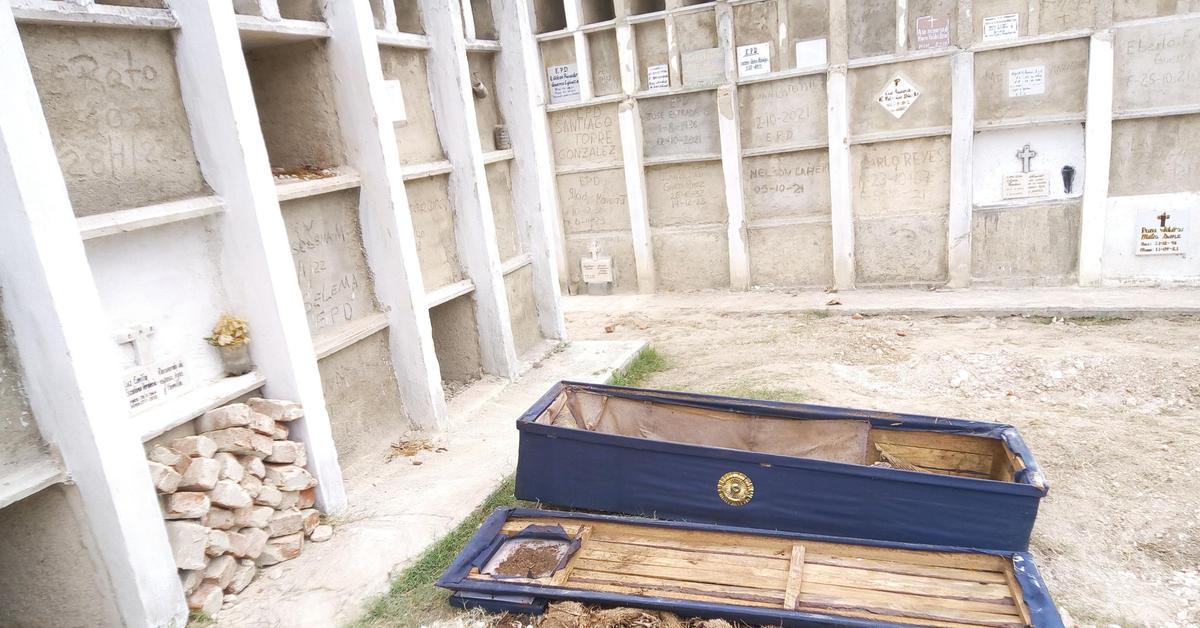
Added to this case is the complaint spread by CyberCuba in December 2024. Camagüey-born José Morell Rodríguez assured that the niche where several relatives rested had been looted. According to his statement, he found the padlock forced, the ossuaries open and the absence of human remains, including several skulls. He claimed to have official documentation proving ten boxes inside the vault, all emptied. “What I saw was horror; the remains were exposed to the elements,” he told the independent media. Morell stated that he went to the cemetery administration without receiving a response and maintained that these lootings are part of a pattern that remains without effective supervision. Following his complaint, images and videos circulated showing fractured vaults, open tombs and scattered remains. The local media Cuba Time He addressed the issue with a photographic report that showed a systematic deterioration of the cemetery.
In the Colón cemetery, in Havana, gravediggers consulted by 14ymedio They agree that the lack of basic materials, especially cement to seal niches, facilitates the violation of tombs. They point out that many graves are closed only with the tombstone, which allows it to be removed without specialized tools. Some workers affirm, under anonymity, that poor pay encourages irregular practices related to the extraction and sale of skeletal remains for religious reasons related to Palo Mayombe.
Gravediggers also warn about the conditions of state graves, where several stacked coffins are usually deposited, marked only by a number. Two years after the burial, the remains are exhumed. If a family member shows up, they receive the bones for transport; When there are no claims, these are placed in bags or plastic boxes without identification and sent to the common ossuary, where they are mixed without individual registration.
/ Courtesy
A case documented by this means in 2022 provides another dimension of the problem. Fidela López, known as Fifita in Guanabacoa, died at the age of 85 and was buried in a common grave in the Colón cemetery. His relatives were only able to say goodbye for a few minutes before another body was deposited in the same space. With several relatives emigrating and the absence of precise information, today they do not know if Fifita’s remains were transferred to the common ossuary, mixed with others or lost.
The testimonies collected point to systematic failures in funeral management: deteriorated infrastructure, shortage of materials, lack of institutional control and insufficient surveillance. Families who go to cemeteries express fear and distrust regarding the final fate of their deceased. So far, the authorities have not offered a public response about the situation or the complaints accumulated in several provinces.