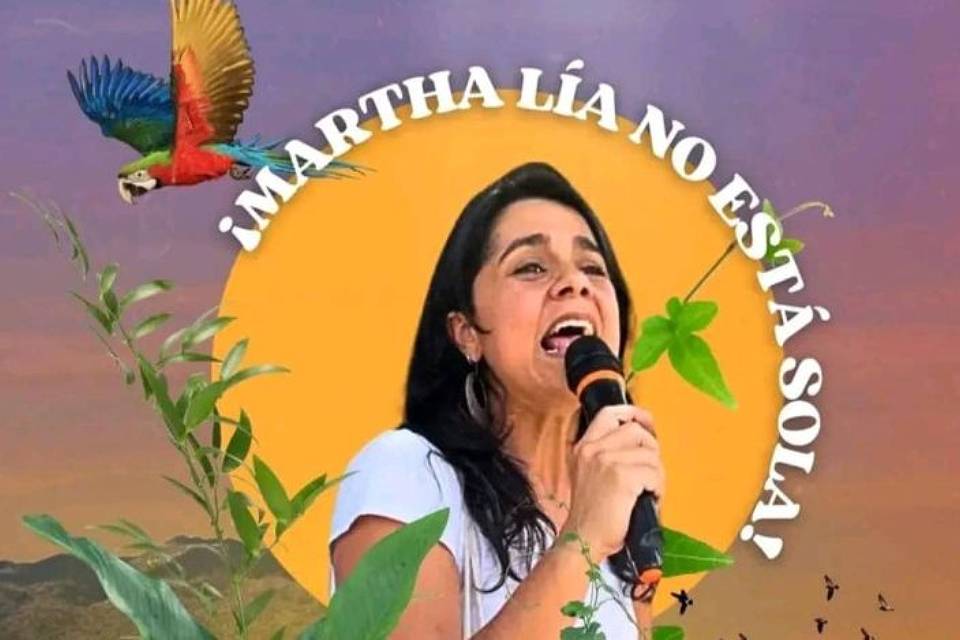
The detention of the activist Martha Lía Grajales unleashed an internal crisis in the Chavismo and the bases of the left, revealing a fracture between the government and its bases, according to the analysis of the political scientist Sergio Sánchez in an interview for the Night D of SuchWhich
In an extensive interview in the program Night d of SuchWhichpolitical scientist Sergio Sánchez analyzed the complex political situation in Venezuela, triggered by the detention of activist Martha Lía Grajales. Sánchez, exconcejal of the PSUV, offered a privileged perspective, given his experience within Chavismo and his subsequent critical distancing. The conversation addressed the reactions of the Chavista bases, the persecution of the critical left, the consequences in the popular sectors and the controversial link of the Rosa Luxembourg Foundation with the situation.
Grajales’ arrest, qualified as “irregular and arbitrary,” according to the complaint, presented a deep division within Chavism. Sánchez explained that «Chavismo was constituted with a narrative focused on an enemy. In the midst of that fight, everything was divided, there was a part of water between those who are patriotic and the stateless ones ». However, the arrest of a figure as identified with the Chavista Bases as Grajales, generated an unexpected reaction. «Who they stop is a person linked to these bases of Chavismo with an absolute, full legitimacy, who was not in a fight against the government. Martha is not against the government, Martha is for human rights. This situation, according to Sánchez, forced the bases to take a position, generating a “shot in the foot” for the government.
The government’s response, characterized by accusations of external infiltration and financing, exacerbated the situation. “They get these nonsense, attack the Rosa Luxembourg Foundation … there are a second shot in the foot because they not only force … but also begin to attack internationally,” said Sánchez.
The Rosa Luxembourg Foundation, a German leftist organization, has been indicated by the Venezuelan government as a financier of critical organizations, an accusation that Sánchez flatly rejected. «The issue is that you want to be the only one who controls. You want to be the only one to finance, the only one who decides. And there is a problem. Sánchez argued that international financing to left -wing organizations is a common practice, and that the Venezuelan government has also done so in the past. “I ask, did the Chávez government not finance left -wing organizations in Latin America?”
The government’s reaction, according to Sánchez, was not limited to accusations, but included a discredit campaign and a repressive escalation. “The bet rises … demands loyalty, which is not really doing loyalty, is demanding silence and complicity with all the disaster in Venezuela.” This strategy, according to the analyst, is generating an opposite effect to the desired one, strengthening internal opposition and criticism of the government. «Every time these things happen, sectors come off. With the aggravating in this case that they are organized sectors on the left ».
The consequences of government policies in popular sectors are devastating, according to Sánchez. «Forced detention and disappearance is a state policy, which incommuniciates prisoners is a state policy and even being terrorists, assuming that all detainees who are not terrorist were not human rights. Why do you incommunic? Why don’t you allow you to have a lawyer? Why don’t you allow him to defend himself? Is violating human rights ». This systematic violation of human rights, according to Sánchez, is unacceptable for anyone considered left. “No one who says left can endorse the systematic violation of human rights.”
https://www.youtube.com/watch?v=pk8gmxcd4uw
In the interview for Night d of SuchWhichconducted by Víctor Amaya, Sánchez called on unity and the construction of a political alternative that transcends polarization. “You have to get out of bipolarity, we have to build our own agenda, which is an agenda for the reconquest of social rights, with the unions, with the students, with the people.”
This alternative, according to Sánchez, must focus on the recovery of social rights and the reconstruction of the social fabric, a process that is hindered by government repression. However, the reaction to the detention of Grajales demonstrates, according to Sánchez, which “If people are organized, if there is an articulated response, the government has to regulate”. The interview concluded with an analysis of the growing alignment of the Venezuelan government with authoritarian regimes, such as Russia, to the detriment of its former ideological allies.
*Also read: repression against trade unionists is exacerbated in the midst of salary claims
*Journalism in Venezuela is exercised in a hostile environment for the press with dozens of legal instruments arranged for the punishment of the word, especially the laws “against hatred”, “against fascism” and “against blockade.” This content was written taking into consideration the threats and limits that, consequently, have been imposed on the dissemination of information from within the country.
Post views: 135