Havana/I leave the house and I run into a woman who places food for a stray cat on a sheet of newspaper Granmaa scene that will soon disappear in a country where the official organ of the Communist Party has gone to print only once a week. With its few pages and its triumphalist headlines, the main propaganda medium of the Cuban regime is the most recent victim of the energy crisis that hits the Island. But its cutback, more than a loss of information, is a sign of the end of an indoctrination model.
I leave Rancho Boyeros Avenue behind and approach the Combined Polygraphic Office of Havana, one of the main printing presses for periodicals in Cuba. Several windows are missing on the upper floor and the abandonment seems to extend across a place that, at the time, was the heart of this country’s information policy. The façade is dirty here and there, from the interior there is no sound from the machines where paper and ink came together to shape official notes, mile-long speeches and calls to resistance.
For a system that has based its control fundamentally on repression and propaganda, the current situation of its official media means a rampant loss of social influence. My curiosity leads me to go around the property and throughout the entire journey I don’t see anyone leaving or entering. In the nearby institutional parking lot there are only broken cars. Some vehicles have been sitting outdoors for years without anyone driving them through the streets of Havana. The nearby newspaper headquarters Rebel Youthwhich looks like a fish stall, does not show any outside transfers either.
In a few months, the enthusiasm ran out, the presses stopped and the fuel ran out to bring the dogma of the Cuban Workers’ Central to every proletarian.
The lackluster magazine poster Bohemia it comes my way. The entrance is dark and a nearby garbage can has begun to reach the access ramp to the building. A nearby fence has been losing its colors and others simply no longer exist, leaving only the metal scaffolding from where, until a few years ago, they bombarded us with slogans. I am a few meters from the Plaza de la Revolución, where ideological advertising should be more intense, but what I find are a few neglected and outdated posters.
At a nearby bus stop, in front of the Ministry of Communications, a homeless man has improvised a place to sleep. It has some blankets and sheets of newspaper Workers. I can read some titles printed on its pages. They are phrases that sound like they came from a distant country, where plans were made and victories were sung. But, in a few months, the enthusiasm ran out, the presses stopped and the fuel ran out to bring the dogma of the Cuban Workers’ Central to every proletarian on the Island.
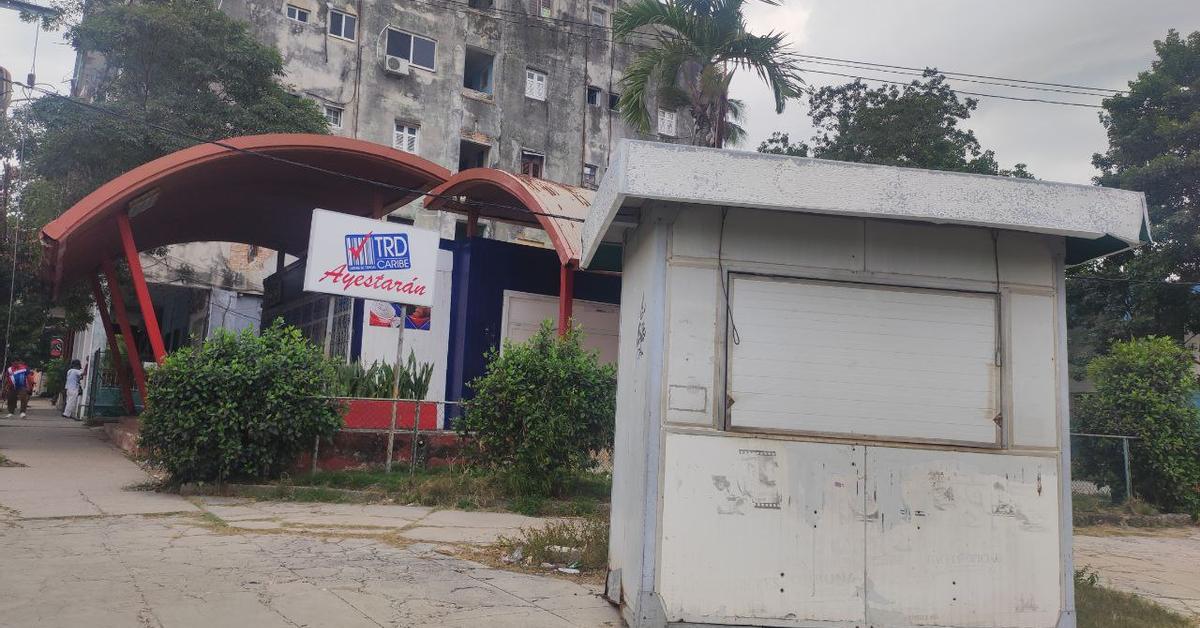
On Ayestarán Street, a closed and rusty stall has lost the stickers that, on the outside, advertised the magazines that were sold in the tiny store a few years ago. Later, another has been delivered to a private merchant who, instead of official publications, offers small tubes of instant glue, colored pencils and school accessories, all imported. On the way I did not come across a single newspaper seller, an occupation almost extinct in Havana.
A herbalist wraps a sprig of basil in a leaf for me. Havana Tribune. The printed version of the official newspapers will also be missed in home repairs where they were used to avoid dirtying the floor with paint and in toilets throughout the country where they replaced toilet paper. Now, with its reduction, we lose not a news ally but a practical resource for cleaning glass windows or picking up dog droppings.
The provincial media, with few exceptions, copy and paste the articles written in Havana
A friend’s son is about to graduate in Journalism, but now there are no classes at his Faculty, due to the energy collapse. The young man began his career full of passion to become a reporter by investigating stories, seeking testimonies and compiling sources. Along the way, however, he lost the hope of practicing his profession in Cuba and now he just wants to obtain his diploma and emigrate. While he waits for in-person teaching to return, he writes for an independent newspaper that pays him in foreign currency.
Older journalists are in a worse situation. In my neighborhood, a photographer from an official magazine complains that they no longer give him gas to be able to go on his motorcycle to take photos of facts or events. Coverage on the streets is at a minimum in media that until a few decades ago enjoyed extensive resources and priority in the delivery of benefits. Credentials to access festivals, welcome cocktails at exhibitions and even the odd “gift” when they concluded reporting on an industry with foreign investors, were part of the attraction of the profession. However, being a state reporter today brings more headaches than benefits.
My neighbor complains that his newsroom is empty. “The last few times I’ve gone I’ve only seen the custodian,” he tells me. The provincial media, except few exceptionsthey copy and paste the notes that are written in Havana. There are news headlines that go days without being updated and others live by rehashing texts that appear on social networks where a neighbor reports a water leak or thanks the bus driver for having stopped at the stop. Instead of those powerful loudspeakers that did not rest, the publications controlled by the Cuban regime have become clumsy digital sheets that barely have recognized signatures, extensive reports or news.
Next to me in line to wait for the elevator, a neighbor looks at the cover of a media published in Miami on her mobile screen. The headline that catches your eye talks about “economic collapse” in Cuba and the photo shows the starving and sad face of an old man. Granma Not only has he lost the battle for the role, he has long been defeated in his attempts to monopolize the Cuban audience. The granny It neither informs nor convinces and, from now on, it does not help in Cuban bathrooms either.