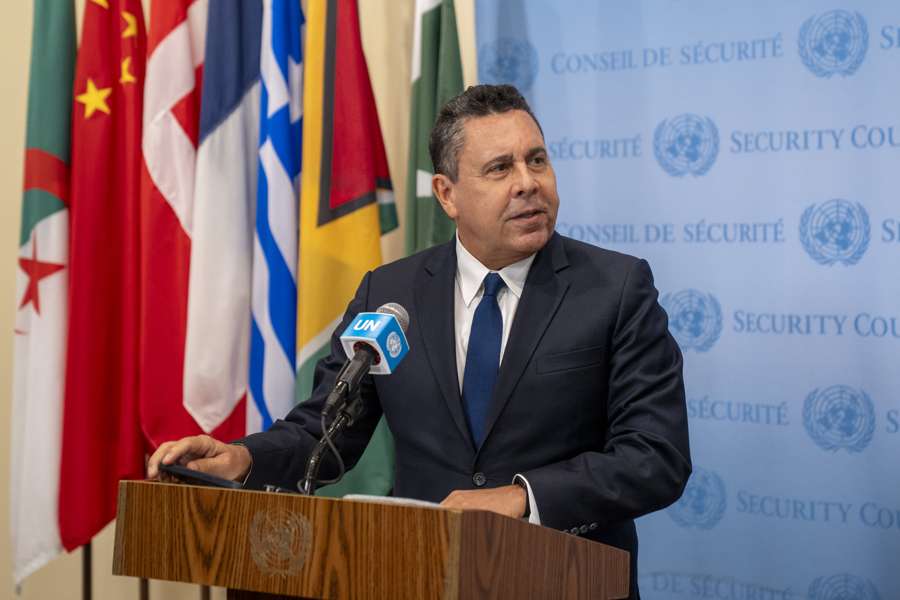
In a firm intervention full of denunciations, the ambassador and permanent representative of Venezuela to the United Nations, Samuel Moncada, alerted the Security Council about what he described as a “campaign of disinformation and systematic aggression” by the United States against his country. Moncada urged the international community to act urgently to avoid a new catastrophe in Latin America.
“The conflict does not exist, it is manufactured by the United States. They promote an endless war, fueled by their addiction to oil, the same one that led them to invade Iraq and Afghanistan. It is time to prevent that history from being repeated in Venezuela,” declared the diplomat.
Moncada also denounced the militarization of the Caribbean, the extrajudicial execution of civilians, the harassment of humble fishermen and the kidnapping of 78 Venezuelan girls and boys in US territory, separated from their families and used as political hostages. “Children should not be used as instruments of extortion. What right does the US have to terrorize innocent people?” he questioned.
Despite the provocations, the ambassador reaffirmed Venezuela’s commitment to peace: “We are a worthy country, which has never participated in international wars. But if we are attacked, we will exercise our right to defense, as established by the United Nations Charter.”
Three concrete actions to stop the threat
Given the seriousness of the situation, Venezuela proposed three urgent measures to the Security Council:
- * Formal recognition of the threat to international peace and security. Requests that it be officially determined that the US military escalation in the Caribbean represents a danger to regional stability.
- * Immediate preventive measures. It demands that concrete actions be taken to prevent the situation from worsening on the ground, including the cessation of military maneuvers and hostile acts.
- * Binding resolution to protect Venezuelan sovereignty. It proposes that the Security Council approve a resolution in which all its members – including the United States – commit to respecting the sovereignty, independence and territorial integrity of Venezuela.
Moncada concluded with a call to global conscience: “Venezuela does not give in to blackmail. Our willingness to dialogue should not be confused with subordination. We were already the tomb of an empire, and if we are attacked, we will defend ourselves with all the tools we have. Venezuela is ours, it is not the United States.”
The Venezuelan proposal will be evaluated in the next sessions of the Council, amid growing geopolitical tensions in the region.