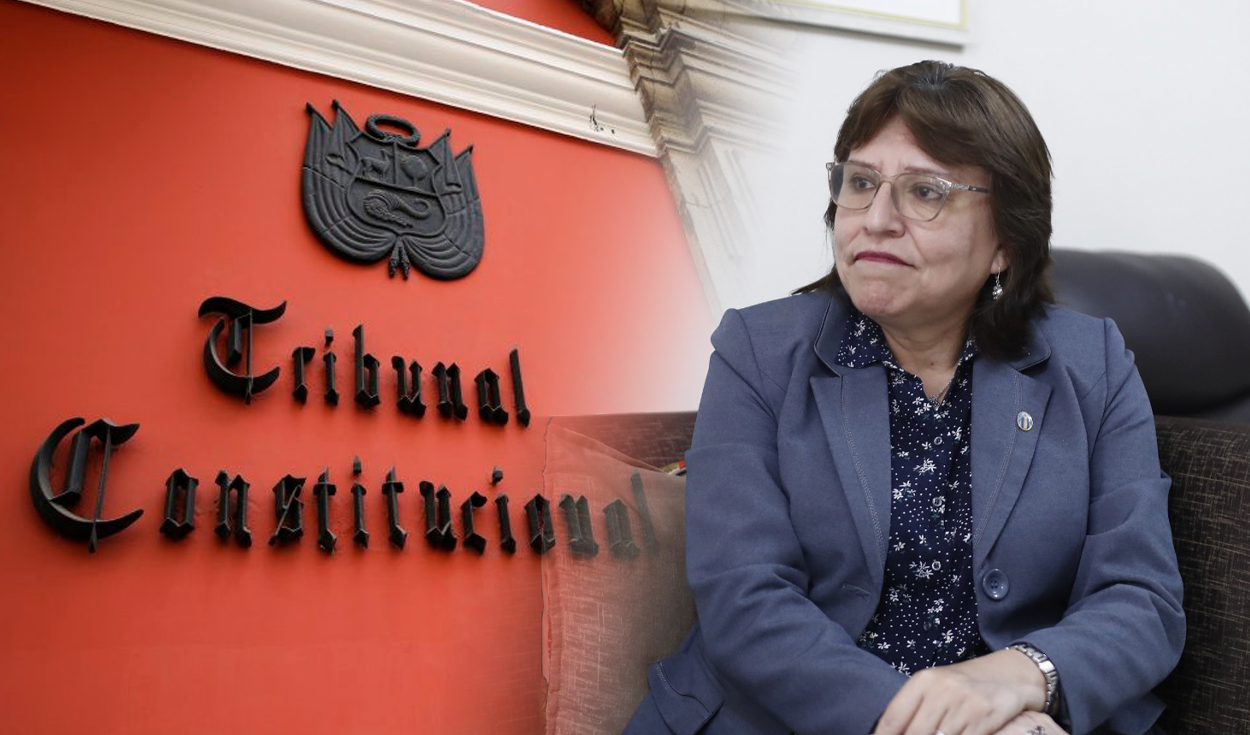
The Plenary of Constitutional Court (TC)through File No. 00006-2025-PCC/TC, approved the request presented by the National Board of Justice (JNJ) and ordered the provisional suspension of two protection proceedings presented before the Judiciary that, in the opinion of the TC, seriously threatened its constitutional powers. One of them was the protection process and the precautionary measure that provided for the replacement of Delia Espinoza in the position of prosecutor of the Nation. Meanwhile, the second suspended process was the precautionary measure that sought the annulment of the contest to the selection of members of the JNJ.
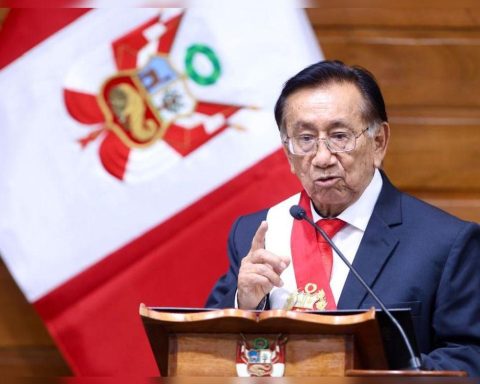
The decision was adopted on December 1, with the majority of votes in favor of the magistrates. It had a reasoned vote from the president of the TC, Luz Pacheco Zerga, and the singular votes of judges Domínguez Haro, Gutiérrez Ticse and Monteagudo Valdez.
YOU CAN SEE: Board of Supreme Prosecutors advances the appointment of a new National Prosecutor for 2026
Arguments of the Constitutional Court for the suspension
The Constitutional Court justified its decision by specifying that the precautionary measures met the presumptions of plausibility of the infringement of jurisdiction and danger in the delay.
Regarding the nullity of the election of the members of the JNJ, the TC considered that declaring said nullity would mean “deactivating, in practice, this constitutional body”, paralyzing the performance of its functions and emptying its powers of content. He described the claim for annulment as one that exceeds the decision-making power of the judges and that, in addition, could be “manifestly inadmissible” through the means of protection.
As for the Delia Espinoza casethe TC emphasized that the disciplinary jurisdiction of the JNJ over supreme magistrates is an exclusive and exclusive attribution that is stated in article 154.3 of the Political Constitution. The TC determined that, by ordering the provisional suspension of a disciplinary procedure, the constitutional court was “manifestly obstructing, with an anomalous shield, the exercise of the disciplinary power assigned directly by the Supreme Rule to the JNJ.”
The referee concluded that there is an “imminent and serious risk” that the jurisdiction of the JNJ will be affected before the Constitutional Court can issue a substantive ruling in the jurisdictional process, which would make the damage to its powers irreparable.
Therefore, the Constitutional Court ordered the suspension of the effects of the judicial resolutions questioned in both cases, maintaining the status quo until the conflict of powers between the JNJ and the Judiciary is definitively resolved.
Foundation of singular vows
The magistrates Domínguez Haro, Gutiérrez Ticse and Monteagudo Valdez cast singular votes in which they agreed to declare unfair the request for a precautionary measure presented by the National Board of Justice (JNJ). Their dissent was based on the argument that the request did not meet the requirement of danger in delay.
Specifically, regarding the Delia Espinoza Casethe magistrates indicated that, if the JNJ complied with the judicial resolutions that provisionally ordered the reinstatement of Mrs. Espinoza in the position of Prosecutor of the Nation, this action would not be irreversible. They argued that compliance with a temporary precautionary measure does not imply that the JNJ permanently loses its disciplinary powers.
Consequently, the magistrates maintained that, if the amparo process were finally resolved against the plaintiff, the disciplinary sanctions imposed by the JNJ would not be without effect. Since there was no “alleged irreversible and permanent damage”, they considered that there was no imminent risk necessary to justify the precautionary measure that the Plenary Session of the Constitutional Court did grant.