The impact already appears in the official numbers. According to data from Banxico, the value of Mexican steel exports to the United States shows a drop of 12% between January and October 2025 compared to the same period in 2024.
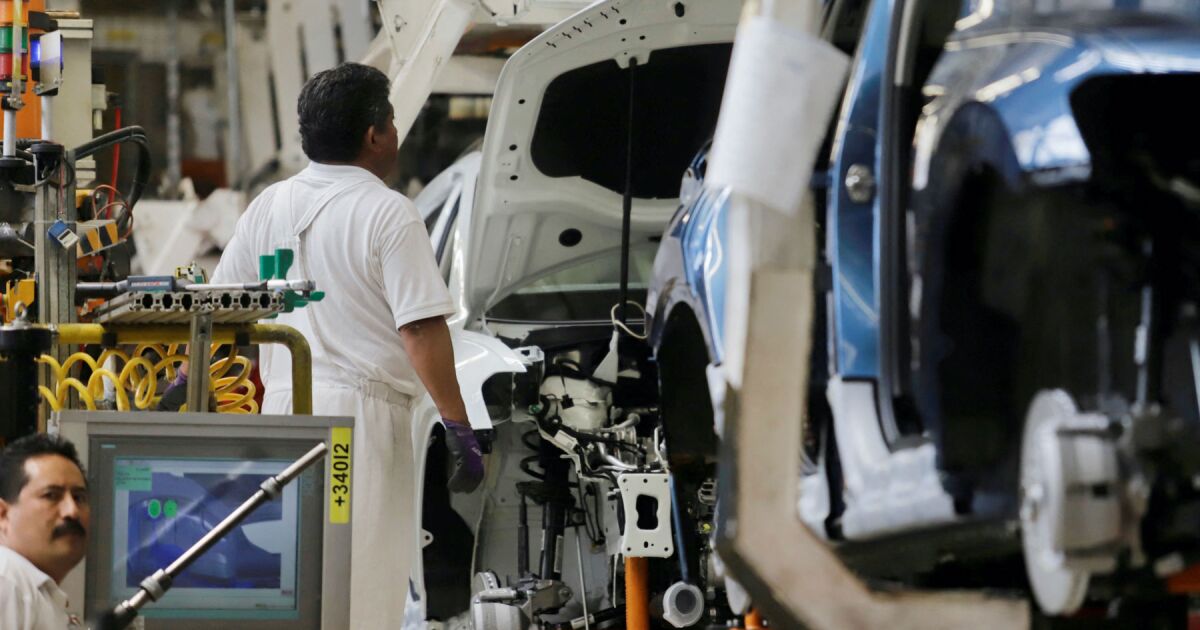
In transportation materials, a category that includes cars and trucks, among other industrial products, the decline reaches 7%. This decline raises alarm bells in an industry that depends on the North American market and that grew with clear rules for decades.
In the automotive field, Marcelo Ebrard, Secretary of Economy, offers an explanation about the current system. The official describes a tariff discount scheme that rewards regional content. The greater the integration of Mexico, the United States and Canada within a product, the lower the effective rate. The mechanism offers an advantage over external competitors, but the Mexican industry does not accept this path as a definitive solution. Companies want to compete without any barriers and without legal uncertainty.
The Mexican Association of the Automotive Industry (AMIA) places as a priority the total elimination of these tariffs to preserve the strength of the North American production chain.
We have a 25% tariff that must be met and that must be done, said Rogelio Garza, president of the AMIA. American content can be discounted, he added, but it is not ideal nor what we want. We are going to fight for 0%, he stressed. That position sums up the feeling of the sector.
On November 1, the Trump administration also established a 25% tariff on imports of medium and heavy trucks and their parts, in addition to a 10% tax on buses. USMCA rules allow treaty-compliant vehicles to only pay tariffs on their non-U.S. content. Even so, for Mexico this measure introduces additional costs and alters free access to the most important market for its industrial exports. The private sector warns of damage to future projects.
In the case of metals, the front is even more sensitive. Trump maintains a 50% tariff on steel and aluminum. Secretary Ebrard confirmed numerous bilateral meetings to find a solution to this conflict. Mexico has no problem until we find the solution, because it doesn’t make sense,” he said. Companies in the steel industry repeat the same claim and ask for fair treatment for essential inputs. The Mexican government shares that concern.
Section 232 refers to a provision of United States law that authorizes the president to impose tariffs or restrictions on imports if they threaten national security. This rule allows investigations by the Department of Commerce to evaluate foreign products and measure their impact on strategic industries. With that analysis, the White House can establish trade protection measures. Trump used that tool for steel and aluminum with the argument of protecting the American industrial base.
In general terms, Mexican exports to the United States resist tariffs with an increase of 7% in the first 10 months of 2025 compared to 2024. This is because the tariff under the International Emergency Economic Powers Act (IEEPA) has a low impact for goods that comply with the USMCA and leaves out most of the exchange.
The taxes of this mechanism, currently under judicial review and with a possible ruling of unconstitutionality, apply to less than 15% of the products purchased by the United States from Mexico and Canada, according to calculations by the Tax Foundation.
For former USMCA negotiators, the important thing is that Mexico manages to remove tariffs under Section 232 and maintain the treaty without essential changes. The Secretary of Economy indicates that a fight continues on the table in relation to the tariffs that affect the country. So that? To improve the country’s position and avoid negative impacts, he says. But he also acknowledges that it will be difficult to maintain a zero-tariff trade agreement.