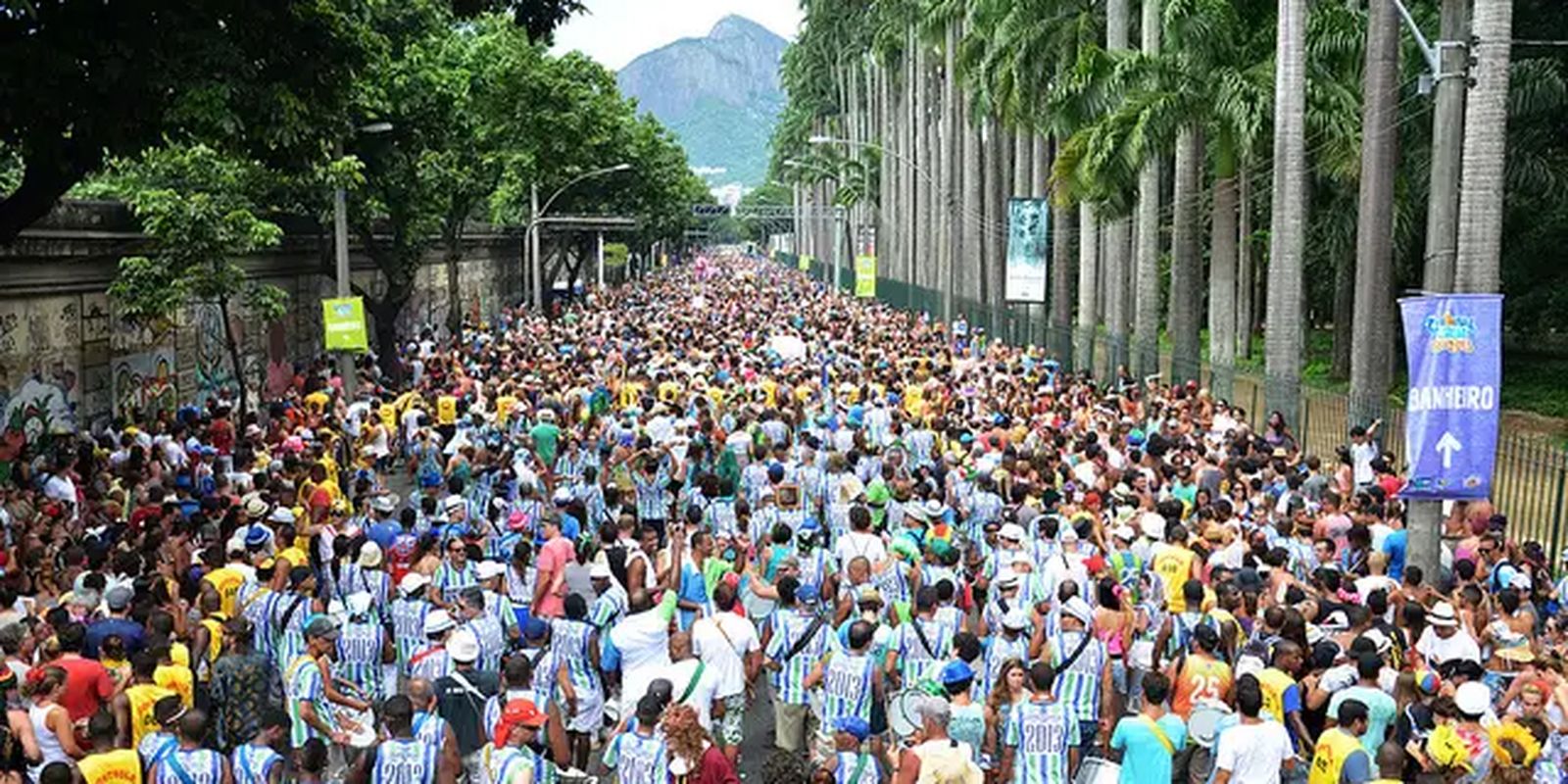
The Suvaco do Cristo street block will parade for the last time on February 8, the last Sunday before carnival. The costume is free and one of the sambas that will be played will be Eco no Ar, in which the block mocked the last-minute ecologists who participated in the United Nations Conference on the Environment, held in Rio de Janeiro, in June 1992.
“We completed 40 years and we think our cycle has come to an end. Duty done. We think we helped to revitalize the street carnival in Rio de Janeiro. It’s been 40 years of parade. Today, we have thousands of younger blocks, marching bands, diversity, and I think our mission is accomplished. We are satisfied. Our ship has reached the end, landed with the mission accomplished”, he told Brazil Agency the founder and president of Suvaco do Cristo, João Avelleira.
He clarified that the decision was not due to bureaucracy being large. The decision was made simply because 40 years represents a long time.
“At the same time, we feel represented and are sure that our DNA is in many of these blocks that are parading around today. We served as a stimulus for many of these small blocks.” To parade in the 2026 carnival, Suvaco do Cristo registered with Riotur, “as we have always done”, joining the other 802 blocks that requested authorization from the city hall.
Virtual Museum
A Virtual Museum is being prepared, where all the memory of the block will be deposited, with photos of the parades, sambas, recordings of the sambas.
“We are going to leave this memory recorded so that everyone can have access.” João Avelleira believes that the Suvaco do Cristo Virtual Museum will be accessible in its entirety in 2026. “I think it’s important work,” he said. He suggested that other blocks could follow the same example. The museum’s collection will be available to researchers and the general public, free of charge.
This year, the Suvaco do Cristo parade will be filmed, with a script by journalist Aydano André Motta, a carnival specialist, and screenwriter Leonardo Bruno, by Casé Filmes. According to João Avelleira, the filming will serve as a guide to tell the 40 years of Suvaco’s history “and the legacy we will leave too. We will finish in style”, he promised.
Extension project
The work to create the Virtual Museum is being done in partnership with the Computing Institute of the Federal University of Rio de Janeiro (UFRJ), under the leadership of professor Anamaria Martins Moreira, a friend of the block’s founder and one of the regular revelers at the parades.
“He wanted help with the block’s social networks, but I explained that computer science students are more basic, more ‘hardcore’ and not in that communication part”, Anamaria explained to Brazil Agency.
She knew, however, that the institute needed to increase extension projects, models in which students are required to do 10% of their undergraduate course hours in extension activities, that is, they have to interact with society in some way. This extension project was then created to gather the material from the block, catalog it, classify it and begin assembling the portal, which is the museum. The project brings together students of computing, history, art history and communication. “It’s multidisciplinary,” said the teacher.
First access
The first year of the Suvaco parade (1986) can now be accessed on website from the block (suvacodocristo.com.br) as an initial test.
“You can already have an idea of the structure. But there are things that we want to add, such as who was the flag bearer in the first parade, which was Sonia Matos.” Sonia also created the art for the first t-shirt. The idea is to have information relating to each year of the parades, gathering data on sambas, the historical context that took place in the country and the world, data on the composers and artists who made the blocks’ t-shirts. “This is all starting.”
Anamaria Martins Moreira highlighted that they are already in the website reports that appeared in the newspapers about the block in 1986. A documentary on the first 20 years of Suvaco, whose author is Paola Vieira, one of the founders of the group, will be included in the Virtual Museum’s collection. Regarding the film that will be shot this year, the teacher does not know if it will be possible to put it on the portal, due to copyright.
Now, Anamaria and her students are preparing data for 2012 to enter into the portal. The date was chosen because that year the block won the Serpentina de Ouro Award, created by the newspaper The Globeas best fantasy. She believes that from now on, the work will go faster, because the structure is in place and has gained a more colorful appearance, “a carnival appearance. Now, just duplicate the pages and change the content, eventually adapting it to different content. It’s an ambitious work, because it’s been 40 years and there’s a variety of things that have happened over that period. There are years when there are particular things that will require special sections.”
For February, she intends to at least complete the information for 2012. “Every year it will be there at the Museum”. As the block does not have many photos relating to the first parades, donations of materials will be requested later on via social media.