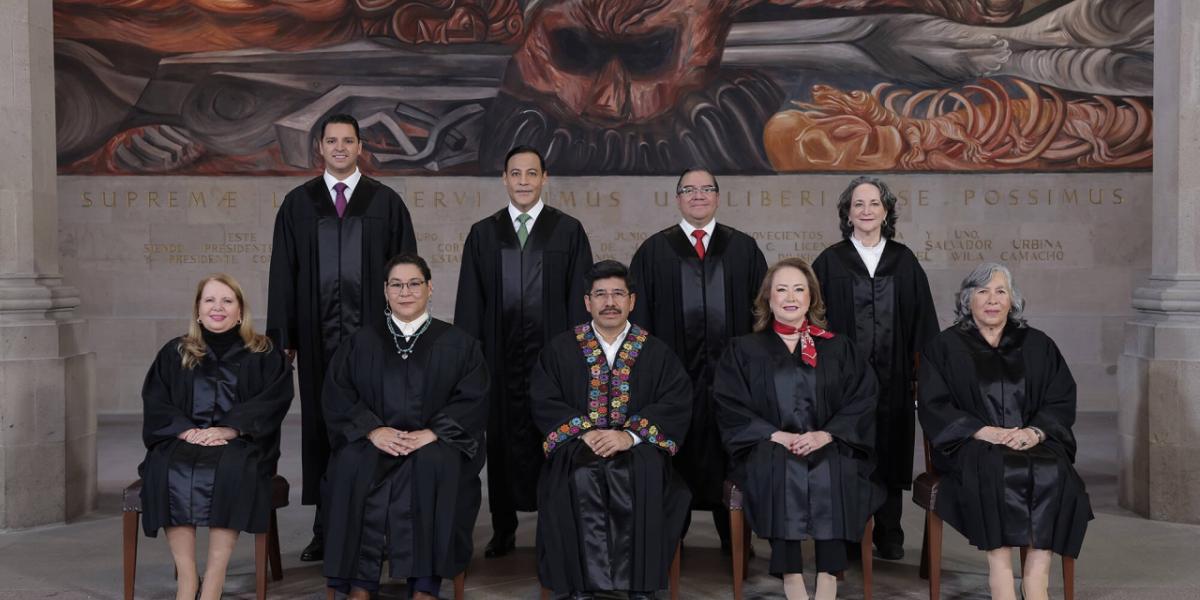
Mexico lived on September 1, 2025 a historical moment with the installation of the First Supreme Court of Justice of the Nation (SCJN) chosen by popular vote, An unprecedented fact that opens a stage marked by symbolisms, questions and the challenge of recovering citizen trust in a judicial system indicated by corruption and impunity.
A ceremony with symbolic load
The day began with a Indigenous ritual in the Zocalo capital Between dances, copal smoke and speeches in native languages, community authorities gave new ministers the “baton”symbol of legitimate power and connection with the original peoples. Minister President, Hugo Aguilar OrtizMixtec jurist of Oaxaca, thus became the second indigenous to lead the highest court, after Benito Juárez In the nineteenth century.
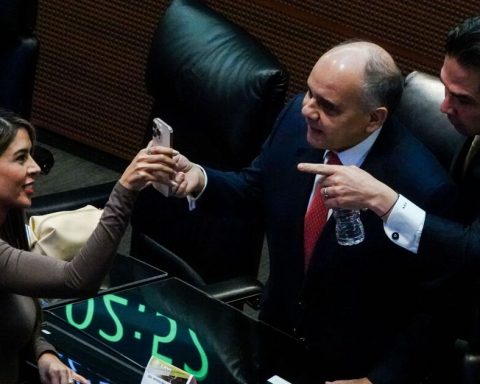
Later, the nine members of the Court went to the Senate to give protest to legislators, in a ceremony where there was no lack of political tensions: the PRI was absent and the PAN bench left the enclosure as a sign of rejection of the new judicial model.
At night, Aguilar symbolically opened the doors of the court headquarters on Pino Suárez street, declaring that the court will be “totally open” for citizens.
Who integrates the new Court?
The SCJN is now made up of nine ministers and ministers, instead of eleven. Among them are profiles that already occupied a seat in the court and that chose to submit to the election, such as Lenia Batres, Yasmín Esquivel and Loretta Ortiz, who They can extend their permanence between 15 and 17 years Thanks to the special rule that contemplates judicial reform.
Next to them arrive in recent choice, such as Sara Herrerías, María Estela Ríos, Giovanni Figueroa, Irving Espinosa and Aristides Guerrero, in addition to Aguilar, who will head the Court having been the most voted candidate. The duration of the charges varies between 8 and 17 years, which guarantees that this court has continuity in the long term.
Supreme Court 2025: How long will each new minister last?
Judicial Power in the center of the debate
The premiere of the new Court occurs in the middle of strong questions. On the one hand, participation in the elections barely reached 13% of the electoral roll, which generates doubts about the legitimacy of the process. In addition, opponents and civil organizations have denounced irregularities, use of official resources and links of some elected judges with organized crime.
In contrast, the official party Morena and her allies defended the election As a necessary step to “clean up” the Judiciary, which they accuse of being captured by economic and political interests.
News in operation
The new Court is not only reduced in number of members, it also changes its way of operating:
Itinerant sessions: He can hold hearings in different regions of the country, especially in indigenous and Afromexican communities, in coordination with local authorities.
Priority to fiscal and criminal: The ministers agreed to give preferential process to these issues, which concentrate most lag.
Automated system: A technological model will be implemented to discuss cases, in order to avoid discretion in the assignment of files.
More agile debate: The new regulation sets specific times for the exhibition of projects and discussion rounds.
Between hope and distrust
The start of this supreme cut moves between two narratives. On the one hand, the official discourse presented by the reform as the beginning of a stage of “Legality and justice for all”and on the other, the critical voices that warn about Risk of politicization and capture of the Judiciary by the government.
The truth is that Mexico travels towards an unprecedented model in the world, a court elected by popular vote, which must demonstrate whether this mechanism strengthens judicial independence or, on the contrary, exposes it even more to political and criminal pressures.
Luis Miguel González, editorial director of El Economista, and Diego Badillo, a policy reporter, analyze the challenges faced by the new ministers of the Supreme Court after assuming the position on September 1, the first signs of his agenda and the challenges raised by the new rules for the operation of the highest court.