A few weeks before the end of the year holidays, the National Superintendency for the Control of Security Services, Weapons, Ammunition and Explosives for Civil Use (Sucamec), attached to the Ministry of the Interior, reminds parents and adults caring for children and adolescents that they should not handle pyrotechnic products, even if they have supervision during lighting or activation.
This is because, although they may seem harmless due to their size, bright packaging or childish design, all pyrotechnics contain chemicals processed so that, through reactions after contact with fire or forceful impact on hard surfaces, they cause heat, sound, flashes of light, colored smoke or movement effects of varying intensity.
“A minor is not mature enough to act with the responsibility and care necessary to handle fireworks safely, following the manufacturer’s guidelines. Or, as has happened in previous festivities, the little ones suffer poisoning when putting these products in their mouths, as part of their games,” observed Sergio Contreras, spokesperson for Sucamec, before several parents during an information fair at the National Institute of Children’s Health (INSN), Breña headquarters, to prevent the most common accidents during the holidays.
According to doctors, cases of burns among minors due to irresponsible handling of fireworks or falling hot liquids increase by 30% during this season. Unfortunately, of every 10 pediatric patients treated for these emergencies, six come from the interior of the country.
FAIRS AND AUTHORIZED PRODUCTS
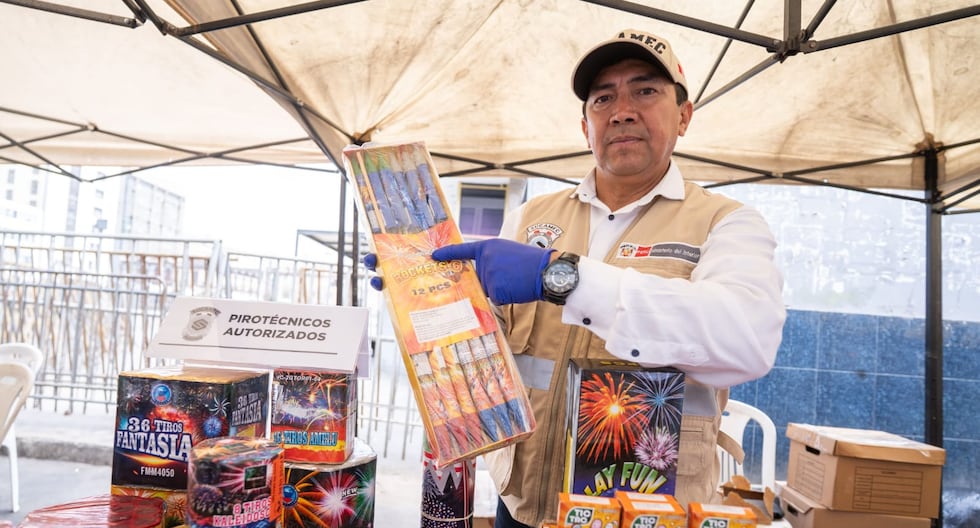
To prevent these accidents, Sucamec socializes these recommendations in various spaces, such as another preventive fair, this time in the Lima fencewhere citizens were urged to purchase authorized fireworks only at fairs that have permits, proving compliance with security measures both for storage and sale and for stores and other spaces where the public makes their purchases.
In this way, the possibility of accidents caused, for example, due to delays in ignition, which usually occur when climatic or storage conditions are not optimal and affects the quality of the pyrotechnician.
“In those cases, when the person returns to where he lit it because he assumes that it is useless, but in reality it was only a delay in the activation of the pyrotechnic, an accident can occur because the gunpowder remains active,” explained Contreras, who emphasized that, in accordance with current legislation, only pyrotechnics called deflagrants or lights have authorization for sale to the general public.
In the next few days, Sucamec will publish the list of authorized fireworks fairs in the countrythrough institutional social networks and other official channels.