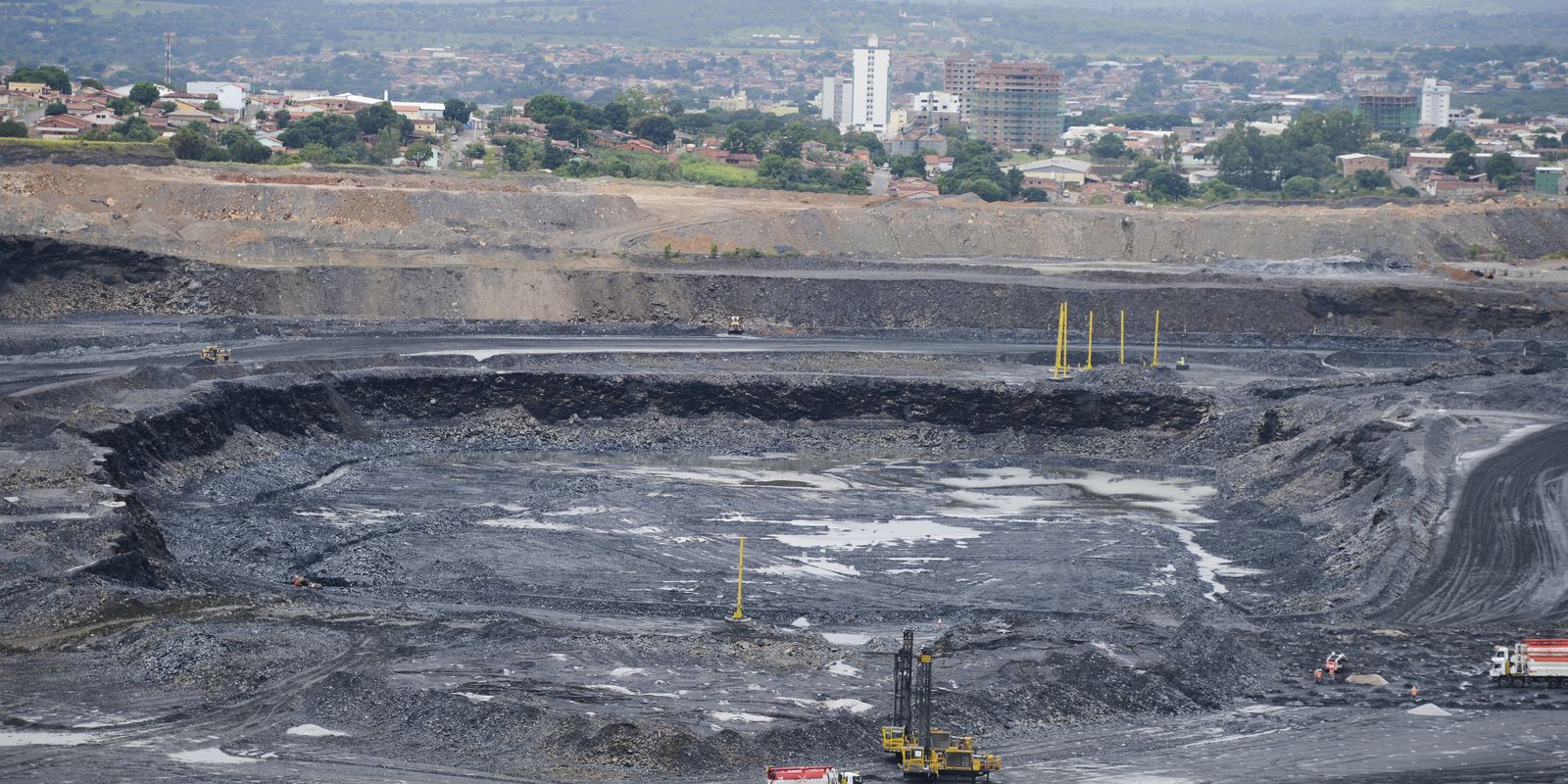
In Brazil, there is 257,591 active mining processes, of which 95,740, equivalent to 37%, present some type of inconsistency, according to the MapBiomas Mining Monitor, a platform launched this Tuesday (2). The tool consolidates data from more than 80 years of processes from the National Mining Agency (ANM) and allows cross-referencing with the history of the mined area based on annual maps of land coverage and use in the country.
According to the coordinator of the MapBiomas Mining team, César Diniz, the Monitor gathers and organizes scattered data, highlights atypical situations and presents the information in a clear, understandable way and with free access, both for inspection and control bodies, as well as for journalists, researchers and organized civil society.
“Its purpose is to support the Public Authorities in increasing transparency and improving processes related to the production, marketing and acquisition of products originating from mining activities”, he explains.
The data detailed on the platform indicates that most inconsistent processes present problems with permission. There are 84,466 processes, or 33% of the total, that do not have a mining concession, extraction registration, licensing, mining permission or research authorization with a valid usage guide.
“If the process is not in any of these stages, any extraction identified there is considered irregular due to the lack of a suitable mining title, characterizing the process as carrying a sign of mining in an inappropriate phase”, says Diniz.
There is also 7,738 processes, or 3% of the total, that operate in territories where the activity is prohibited by lawsuch as indigenous lands, full protection conservation units, extractive reserves (Resex) and private natural heritage reserves (RPPN).
In a total of 3,536 processes, overlapping inconsistencies were identified, with problems in the process and also in the location of the mining activity.
States
In terms of state, Minas Gerais, Bahia and Pará are the federation units with the highest number of mining processes in the country, representing 20.4%, 11.5% and 9.2% respectively. In the first two states, authorization for research is the type of process that prevails, while in Pará the request for mining is the most common process.
Although Minas Gerais has the largest number of processes, the Bahia is the state with the most procedural inconsistency, an irregularity present in more than half (53%) of the records in the ANM system.
The state of Pará proportionally presented the largest number of processes with temporal inconsistency, representing 4.19% of the state’s records. These are cases in which mineral extraction occurred before the period of validity of an authorization or when, despite adequate authorization, a restricted-use conservation unit or an indigenous territory is created, for example, after the license was granted.
Pará also has the highest percentage (4.83%) of processes that show signs of mining extraction beyond its territorial limits.
Default
The collection of Financial Compensation for the Exploration of Mineral Resources – the amount paid to municipalities, states and the Union to compensate for the impacts of the activity in the territories – can also be monitored through the platform. In cases where the tax is mandatory, a sample of the last six months shows default in 56.4% of processes.
In addition to viewing statistics such as the number, phase and distribution of mining processes, it is possible to apply filters to cut or cross-reference data. The Mining Monitor also allows the generation of a report per process, with eight indicators that include pure data, a summary of data crossing, satellite images, with annual mosaics and data sources.
“With more clarity and accessibility, everyone can identify irregularities more quickly, monitor the evolution of processes and act more efficiently in combating illegal practices in the mineral sector”, concludes César Diniz.