Despite advances in detection and treatment, women in Peru continue to face profound inequalities in access to oncological services. This is revealed by The Economist Impact study on gaps in equity in breast and cervical cancer care, prepared with the support of the Esperantra patient association.
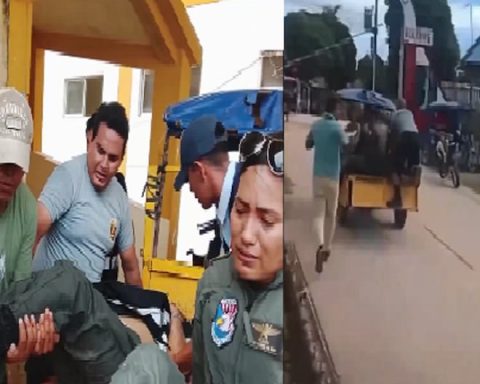
The report identifies a strong concentration of specialists and resources in Lima, which aggravates territorial gaps in access to diagnosis and treatment. According to the findings, More than half of the country’s active oncologists are located in the capital, while Arequipa concentrates around 10% and the Freedom only 5.3%. This unequal distribution forces thousands of patients to travel from regions to receive care, generating delays in diagnosis and less timely treatments.
The director of Esperantra, Karla Ruiz de Castillahighlighted that, when comparing the Peruvian case with the studies carried out by The Economist In four countries, only in Peru does cervical cancer cause more deaths than breast cancer. It indicated that breast cancer recorded 7,797 cases and caused 1,951 deaths, while cervical cancer, with 4,809 cases, caused 2,545 deaths by the year 2022. Both types of neoplasia show a growing trend.
The country has only three regional oncology institutes outside Lim, in Trujillo, Arequipa and Huancayo, which also have population cancer registries. However, these registries only cover about a third of the national population, limiting the State’s ability to plan and allocate resources effectively.
The study warns that the radiotherapy deficit is a national problem that also impacts cities like Trujillo and Arequipa. Currently, Peru lacks 16 external beam radiotherapy units and 17 brachytherapy units, a gap that could double by 2030.
Regarding prevention, only 47.5% of eligible women underwent a Pap test in the last three years, and only 41.7% a mammogram in the last two. As a result, half of breast cancer cases are detected in advanced stages.
Inequalities also have a territorial and ethnic component. While in Tumbes the mortality from cervical cancer was 4.8 per 100,000 women, in Loreto rose to 37.4. Among indigenous women in the Amazon, the prevalence of triple negative breast cancer, one of the most aggressive subtypes, reaches 31%, more than double that in the mountains (14%).
“The public system, although it provides free care to vulnerable women through the SIS, still does not guarantee equitable access to molecular tests or innovative medicines,” added Ruiz de Castilla. “Closing these gaps requires sustained investment, decentralization and evidence-based public policies”.