Listening to other people’s experiences, 60 -year -old Bernardino Freitas found that he was not alone. There was no reason to be ashamed. The man, born in Northern Miracema (to) and has been living for seven years in Brasilia (DF), even wanted to remember the glass with brandy to be in the past. “I went to seek help from CAPS (Psychosocial Care Center) when it had passed the limit.”

He noticed the “limit” when he saw himself in the morning until the evening at the bars and feeling his health. There were the feelings of the wife and children. The retiree sought help from health professionals and has been away from addiction to two years. Life without alcohol has gained another flavor.
“Today I feel much better,” says Bernardino. This Thursday (20), National Day to Combat Drugs and Alcoholism, he has in the routine participation in therapeutic group, in which he identifies with other stories. “Caps health professionals made me involve myself with treatment.”
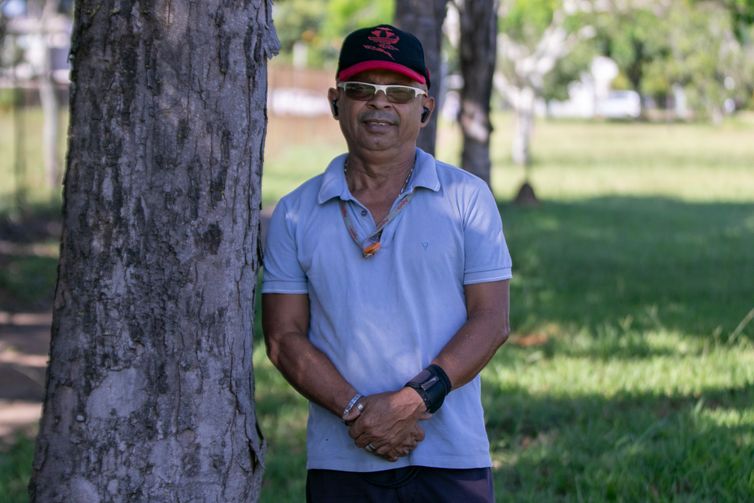
Retired Bernardino Teixeira is treated against alcoholism in Capes do Guará, DF administrative region. Photo Fabio Rodrigues-Pozzebom/Agência Brasil
The drink, according to Bernardino, gained importance when he was unable to work as a gardener, a profession of most of his life. A spine surgery caused it to retire at age 45. “It pushed me into addiction. I did well to ask for help. ”
SUS role
In Brazil, treatment against alcohol dependence is specialized, free and universal (in basic units and caps). Questioned by Brazil agencythe Ministry of Health reported that care for patients with alcoholism and other drugs in the Unified Health System (SUS) are performed by the Psychosocial Care Network (RAPs), which total 6,397 units across the country, including 3,019 Care Centers Psychosocial (CAPS).
“This structure makes Brazil one of the countries with the largest mental health network in the world,” the ministry added. Services include psychosocial interventions for each case, which can be performed individually or collectively, which includes family reception.
The ministry said Caps have free access, do not need prior appointment to perform the first service and have multiprofessional teams. These units serve people from all age groups. There are units with this feature that operates 24 hours and have beds for nightlife for up to 15 days in the month.
Service is free, but has challenges
In addition to the service network is free and access to the entire population, which is critical to combating the problem of alcoholism, there are challenges in the daily life of this public policy, says sociologist Mariana Thibes. She, who is a coordinator of the Health and Alcohol Information Center (CISA), organization of civil society of public interest and reference in research on the subject, understands, however, that “many challenges” remain in the prevention work of diseases caused by Ethlism.
For the researcher, it would be important in this struggle of health professionals, greater qualification for early identification of the problem in routine approaches, expansion of the availability of specialized drug treatment in most municipalities and increased number of specialized health professionals, such as psychiatrists and Psychologists in CAPS-AD (treatment against dependence on alcohol and drugs).
“In addition, we can highlight the barriers of access because of the stigma that the disease still has, which slows the search for help,” Mariana warned in an interview with Brazil agency. She understands that, thus, although Brazil has advanced in the main pillars of combating alcoholism in recent decades, much remains to be done.
Pandemic effects
The Covid-19 pandemic (which, as a health measure, made people need to isolate themselves at home) represented a challenge for those who suffer from alcoholism. “Many people started drinking more to face the difficulties of the moment,” recalls the sociologist.
She explains that patients were out of treatment because of the overcrowding of health services in view of pandemic priorities. “There was an increase in the number of deaths from alcoholism, not only in Brazil, but in the world. Some studies have been showing that these problems have not yet been reversed. Efforts on public policy will need to be done to happen. ”
Racism and machismo
One of the data the researcher cites is that 72% of women victims of alcohol dependence are black. Mariana Thibes explains that this number is not related to higher abusive consumption by this population. They are more victims because there is inequality in access to quality health services.
“Many black people live in areas with poor infrastructure, scarcity of medical resources and lack of qualified professionals, which limits access to proper health care,” he said.
Another element brought by the CISA coordinator is that racial discrimination in the health system may result in late diagnoses, inadequate treatments and lower quality care, impairing the health of the black population.
“Chronic stress, due to racial discrimination, can lead to mental health problems such as anxiety, depression, psychological trauma and substance abuse, including alcohol.” In addition, in the case of women, the impacts are greater because they live with gender discrimination.
Abusive advertising
THE Brazilian legislation (Law 9,294) today imposes restrictions on alcoholic advertising. Among the limitations are advertising permission only between 9 pm and 6am, and the mandatory warnings about the harm and risks of consumption. However, as Mariana Thibes explains, the channels of influencers and social networks in Brazil are not regulated.
The researcher’s alert is proven by 2021 research made by the specialized publication Journal of Studies on Alcohol and Drugs (from the US), which showed that 98% of Tik Tok alcohol publications portrayed the substance positively.
Signs and symptoms
Psychiatrist Olivia Pozzolo evaluates that the prevention of diseases related to alcohol consumption is the role of the state, but families can also play fundamental support. “Families are essential, both in the early identification of risk behavior, emotional support, and encouraging proper treatment and maintaining treatment,” says the expert, who is also a CISA researcher.
She explains that alcohol dependence can be recognized for characteristic signs and symptoms, such as the inability to reduce or control consumption, continuous use, despite having negative consequences in one’s life, and increased tolerance.
“Some ways of assisting are offering an environment of listening without judgment, encouraging the person to seek specialized treatment, participate in family support groups, where it is possible to share experiences and strategies and avoid situations that can encourage alcohol consumption.” Recovery is, according to evaluates, a continuous process and support can make a difference to those who face this condition.
Anonymous alcoholics
In addition to the support of the state and the family, a consolidated service in Brazil (and also in the world) came from organized society, the Brotherhood of Alcoholics Anonymous. In 2025, this initiative completes 90 years of history and is present in 180 countries. In Brazil, there are currently 3,802 groups that hold 8,665 meetings every week. In all, 93 groups hold 449 distance meetings. According to the president of the General Services of Alcoholics Anonymous of Brazil (Junaab), Lívia Pires Guimarães, so that the person can enter the activity the only requirement is the desire to stop drinking.
“Just that. If there is this desire, it is already able to be a member. There is no age or gender restrictions, social class and no other complementary matter, ”he said. She explains that the Brotherhood has a community characteristic. The entire AA service is done by alcoholics who are part of the recovery program. “All suggested, nothing is imposed. Those who want, who identify themselves, volunteer to be able to serve. There are no professionals hired in the Brotherhood of Alcoholics Anonymous. ”
In AA, there are non -alcoholic people in the administrative services structure. “The brotherhood is not secret, but keeps the anonymity of its members.” She states that this is a program that transcends the treatment of alcoholism. “Once entering the Brotherhood, the person will not be diagnosed or labeled.” The service can be accessed by the internet and whatsapp lines.
A person who lives in Rio de Janeiro, identified in this report as Ana, recalls that he began to consume alcohol at the age of 12. “I frequently dealt with blackouts, demoralizing, sometimes aggressive behaviors. My interaction with alcohol really took me to the bottom of the well, ”he recalls.
Ana* also remembers that at 17, her relationship with alcohol became intense and chronic. “At 18, I started to depend on stimulants in an attempt to pass the entrance exam, which became a cycle of studies and abusive use of substances.”
In college, people did not consume alcohol. So at the age of 19, he joined AA. “It saved my life. I managed to graduate and met my husband in the fellowship. We celebrate a beautiful wedding, without alcohol involvement. ” The couple does long -term projects and lives one day at a time, aware of avoiding the first sip.
A man, also a member of AA and Carioca, says he is aware that regularity in meetings has made it experience a new life. “This space is fundamental to my permanence without drinking and for my life to continue working as it works today. I have returned jobs, family, health, health, objective purposes, dreams, finally, everything was returned to me. ”