At the Posta del Chuy they defined a roadmap that seeks to move from paper to action in tourism
Entrepreneurs, departmental authorities and representatives from Brazil and Treinta y Tres participated in a key meeting where a work organization chart was outlined that integrates tourism, education, heritage and services, with the aim of boosting regional development.
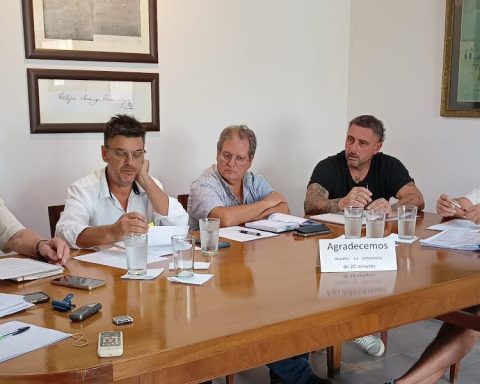
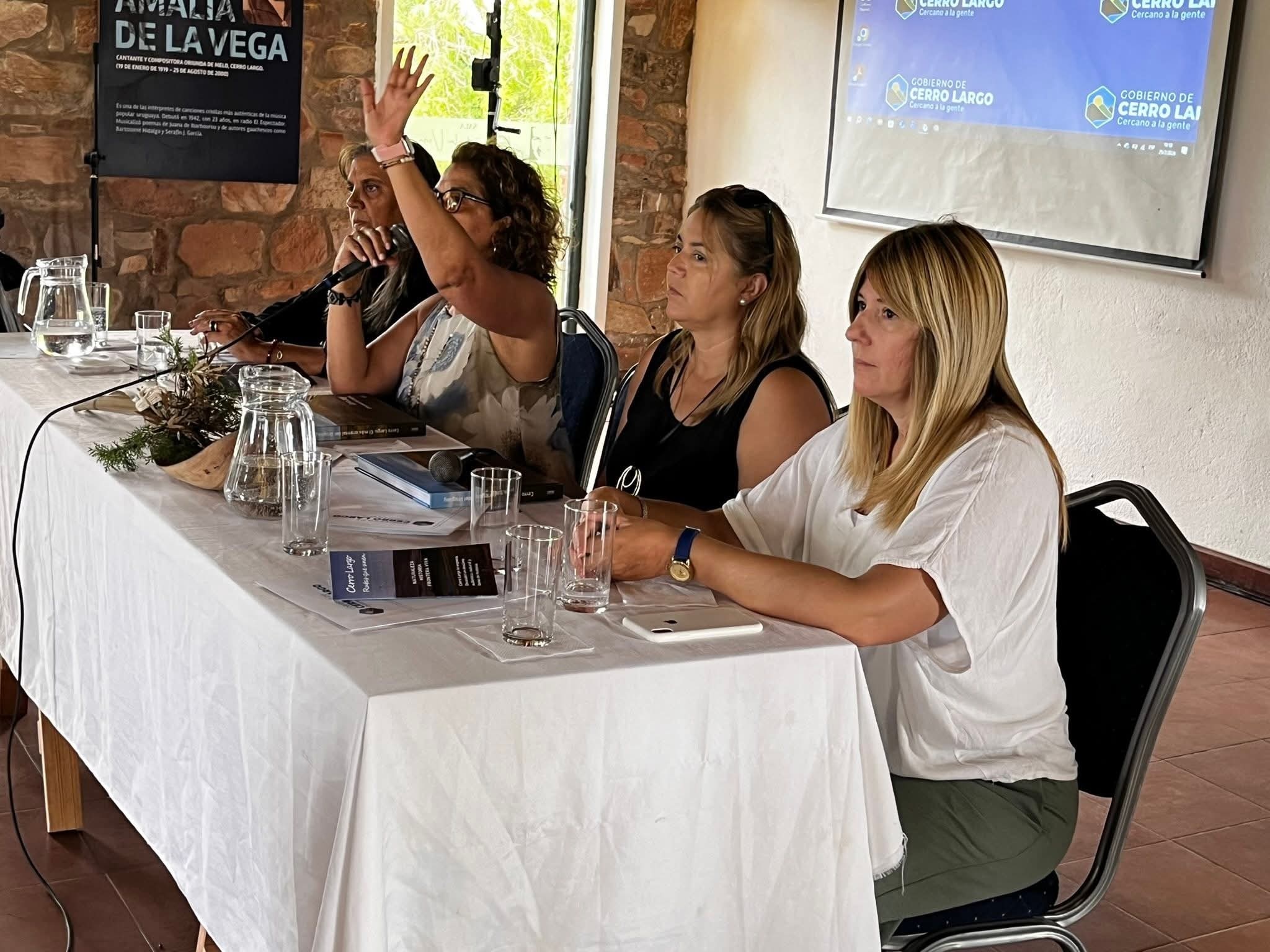
Today, the Posta del Chuy was the scene of a meeting considered strategic for the future of departmental tourism. The majority of tourism entrepreneurs, entrepreneurs in the gastronomic and hotel industry, representatives of food distribution, as well as political and educational authorities gathered there, in an event whose central axis was the construction of a concrete roadmap to strengthen the sector.
The meeting was attended by the departmental mayor Christian Morel, authorities from the Directorate of Tourism with Lizet Ruiz, the general director of Education and Culture teacher Lucy Larrosa, the head of Education Marcela Licha, the departmental inspector of Education, María José Dos Santos, teachers and professors in General, director of UTU David Amaral and high schools, in addition to representatives of the Municipality of Treinta y Tres through Dr. Yenifer Izquierdo, and the vice prefect of Bagé Brasil, together with representatives of the development area of the neighboring country and representatives of the mansion that was the scene of the first vote of women, an event that will now celebrate 100 years in Cerro Chato.
THE CALL WAS NOT MERELY PROTOCOLAR
The core purpose of the day was clear: that the ideas are not only captured on a blackboard or in a document, but that they are translated into real actions, coordinated and sustained over time.
A ROAD MAP WITH EDUCATION AND HERITAGE AXIS
One of the central blocks of the meeting was dedicated to the articulation between tourism and education.
A work scheme was made explicit that includes coordination with UDELAR and UTU, particularly in the areas of Tourism (Bachelor’s and Baccalaureate) and Gastronomy, betting that academic training dialogues directly with the productive reality of the territory.
It was also proposed to promote photographic exhibitions and workshops in coordination with the MEC, as well as strengthen the Science Club of School No. 6 with a heritage imprint. The intention is that new generations not only know their history, but also incorporate it as a cultural and tourist asset.
Along the same lines, it was proposed to organize educational outings for students of all levels, incorporating interactive spaces that allow a hands-on experience of local heritage. Added to this is the placement of images in public spaces and the creation of departmental circuits within the framework of Heritage Day.
THE BOOK AS A TOOL OF IDENTITY AND PROMOTION
Another highlight was the decision to introduce the book that rescues history and local figures on educational platforms, as well as coordinating with municipalities and mayors to present it together with actors from each area.
The proposal also includes the development of a musical repertoire inspired by the central figure of the book and the development of specific strategies to bring this material closer to the most vulnerable sectors, generating spaces of knowledge and belonging.
In each presentation, it was also agreed to collect local demands and survey new tourist places, in coordination with the Friends of Heritage group, transforming each cultural activity into an instance of territorial planning.
The date of May 15, Rural Education Day, was identified as a key opportunity to deploy part of these actions, integrating rural schools and communities in the deep interior.
TOURISM AND SERVICES: A COMPREHENSIVE LOOK
Beyond the educational and cultural component, the meeting made it clear that tourism cannot be developed in isolation. Hotel, gastronomy, transportation and food distribution entrepreneurs agreed that it is essential to consolidate a solid, coordinated and quality service offer.
The exchange made it possible to identify strengths and weaknesses, as well as the need to network, integrating the private sector with the municipalities, educational institutions and authorities of neighboring Brazil, enhancing the binational profile of the region.
The Brazilian vice prefect and the development representatives highlighted the importance of generating integrated circuits that transcend administrative borders, taking advantage of cultural and geographical proximity.
“GOING DOWN TO LAND” THE ORGANIZATION CHART
If something set the tone of the meeting, it was the insistence that this roadmap should not remain declarative. The outlined organizational chart establishes responsibilities, lines of action and a shared vision where tourism is positioned as the central axis of development, accompanied by education, culture and services.
The presence of the departmental inspector of Education and the general director Lucy Larrosa reaffirmed the commitment of the educational system to this process, while the departmental authorities expressed their willingness to accompany and coordinate the different initiatives.
The day at Posta del Chuy left a clear signal: there is political, business and educational will to work together. The challenge now will be to transform that collective energy into concrete, measurable and sustainable results.
Tourism, more than an economic activity, was presented as a tool of identity, regional integration and social development. And the final message was unanimous: it is time to move from paper to action.